
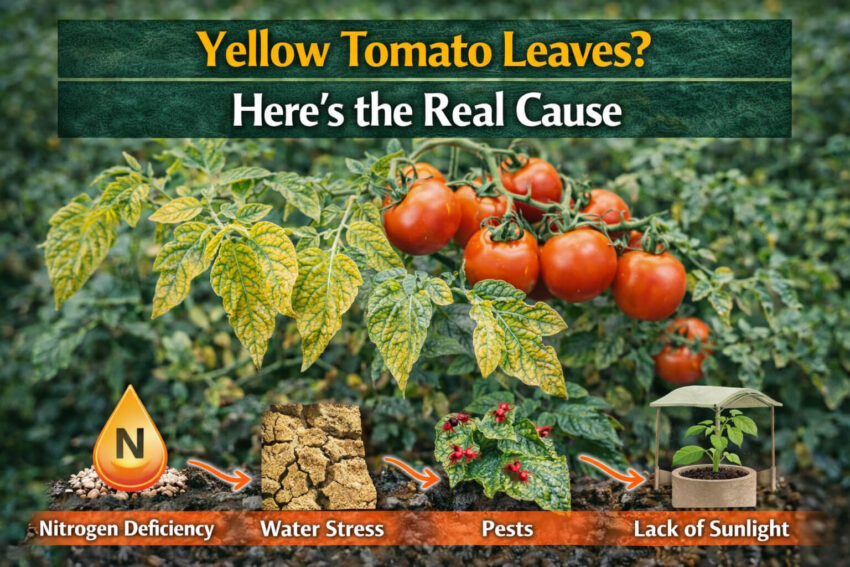
Yellow tomato leaves are a warning sign — but they don’t always mean disease. In most cases, the real cause is a care imbalance, especially watering or nutrients.
The most common mistake is overwatering. When soil stays too wet, roots can’t breathe. Oxygen drops, roots weaken, and the plant can’t absorb nutrients properly. The result? Pale, yellowing leaves and slow growth.
Another major cause is nitrogen deficiency. If the lower leaves turn yellow first while the top stays green, your tomato is likely lacking nitrogen. This nutrient supports leafy growth, and container plants often lose it quickly through frequent watering.
You might also see yellowing between the veins while the veins remain green — this signals magnesium deficiency, common in pots or after heavy rain.
Sometimes, though, yellowing of a few bottom leaves is simply natural aging as the plant focuses on fruit production.
The key is early diagnosis. Adjust watering, improve drainage, and feed consistently. Healthy roots lead to vibrant green leaves — and a stronger tomato harvest.
Key Takeaways
- Nitrogen deficiency is the most common cause of yellow tomato leaves, starting with older lower leaves that turn pale yellow while veins remain slightly green. Fix this by applying a balanced fertilizer or compost to restore nutrients to the soil.
- Overwatering and poor drainage create waterlogged roots that cannot absorb nutrients properly, leading to yellowing leaves throughout the plant. Allow the soil to dry between waterings and ensure pots have adequate drainage holes.
- Fungal diseases like early blight and Septoria leaf spot cause yellow leaves with dark spots or browning edges. Remove affected leaves immediately, improve air circulation around plants, and avoid overhead watering to prevent spread.
Primary Factors Behind Foliage Discoloration
Your tomato plants display yellow leaves when specific environmental and nutritional conditions fail to meet their needs. Nitrogen deficiency, overwatering, and poor drainage rank as the most common culprits behind this problem. Soil pH imbalances can also prevent your plants from absorbing crucial nutrients properly. Any yellowing pattern you notice provides clues about the underlying issue.
Nutrient and Mineral Deficiencies
Tomatoes require adequate nitrogen to maintain their green leaf color and healthy growth. Deficient plants show yellowing that begins with lower leaves and progresses upward through the plant. Magnesium and iron shortages create different patterns, with yellowing appearing between leaf veins while veins remain green. Any persistent discoloration signals your soil needs amendment or supplementation.
Improper Soil Moisture Levels
Waterlogged soil suffocates your tomato roots and triggers rapid leaf yellowing throughout the plant. Overwatering remains the leading moisture-related cause, creating conditions where roots cannot absorb oxygen or nutrients. Conversely, drought stress also produces yellow leaves as plants struggle to maintain normal functions. Any extreme in soil moisture disrupts your plant’s health.
You must establish a consistent watering schedule that keeps soil moist but never soggy. Check moisture levels by inserting your finger two inches into the soil-water only when it feels dry at this depth. Well-draining soil prevents water from pooling around roots and causing rot. Container-grown tomatoes need drainage holes to allow excess water to escape freely. Your watering frequency should adjust based on temperature, humidity, and rainfall patterns in your area.
How to Diagnose the Root Cause
Pinpointing the exact reason behind yellowing leaves requires a systematic approach that examines both visible symptoms and hidden soil conditions. You’ll need to observe leaf patterns carefully and test your soil’s nutrient composition. This two-step process eliminates guesswork and prevents wasting money on unnecessary treatments.
Identifying Patterned Chlorosis
Examining where yellowing appears on your tomato plants reveals specific nutrient deficiencies. Nitrogen deficiency causes lower leaves to yellow first, while magnesium issues create yellowing between veins on older leaves. Iron deficiency shows up as yellow younger leaves with green veins, helping you target the exact problem.
Performing Accurate Soil Testing
Testing your soil provides concrete data about pH levels and nutrient availability. You can purchase a home testing kit for $15-30 or send samples to your local extension office for comprehensive analysis. Results typically arrive within 7-10 days.
Professional soil tests measure nitrogen, phosphorus, potassium, and micronutrients while revealing your soil’s pH level. Your county extension service offers the most reliable testing at affordable prices, often including specific recommendations for tomatoes. Collect samples from multiple spots in your garden at root depth, mixing them together before sending 1-2 cups for analysis. Avoid testing immediately after fertilizing, as this skews results and leads to inaccurate recommendations.
Tips for Correcting Watering Habits
Adjusting your watering schedule can reverse yellowing leaves within weeks. Check soil moisture by inserting your finger two inches deep-water only when it feels dry. Overwatering causes root rot, while underwatering stresses plants. Install a drip irrigation system for consistent moisture delivery. Though patience is required, proper watering restores your tomato plant’s green foliage.
Implementing Deep Watering Techniques
Deep watering encourages strong root development that prevents nutrient deficiencies. Water slowly at the base for 20-30 minutes, allowing moisture to penetrate 6-8 inches deep. Shallow watering creates weak surface roots that can’t access nutrients. Schedule sessions twice weekly rather than daily sprinkling. Thou shalt see healthier plants with this method.
Utilizing Mulch to Retain Moisture
Organic mulch creates a protective barrier that reduces water evaporation by up to 70%. Apply 2-3 inches of straw, wood chips, or compost around your tomato base. This layer regulates soil temperature and prevents moisture loss during hot weather. Thou must replenish mulch as it decomposes naturally.
Proper mulching transforms your tomato bed into a self-regulating ecosystem that maintains consistent moisture levels. The decomposing organic matter feeds beneficial microorganisms while improving soil structure over time. Keep mulch 2-3 inches away from the stem to prevent fungal diseases and pest problems. Straw and shredded leaves work exceptionally well because they break down slowly and add nitrogen to the soil. Your plants will develop deeper root systems as they search for water beneath the mulch layer. Monitor the mulch thickness monthly, especially after heavy rains that can compact or wash away the material.
Environmental Factors Affecting Plant Health
Your tomato plants respond directly to their surrounding conditions, making environmental stress a leading cause of yellowing leaves. Temperature extremes, inadequate sunlight, and improper watering create physiological imbalances that manifest as chlorosis. Key environmental triggers include:
- Temperature fluctuations below 50°F or above 95°F
- Insufficient sunlight exposure (less than 6 hours daily)
- Excessive moisture or drought conditions
- Poor air circulation around plant foliage
After identifying which environmental factor affects your plants, you can implement targeted solutions to restore their vibrant green color.
Managing Temperature Fluctuations
Your tomato plants suffer cellular damage when temperatures drop below 55°F or exceed 90°F for extended periods. Cold stress halts chlorophyll production, while heat stress accelerates nutrient depletion. Protective measures become necessary during extreme weather events. After monitoring daily temperature ranges, adjust your care routine accordingly.
| Temperature Range | Recommended Action |
| Below 50°F | Use row covers or move containers indoors |
| 50-55°F | Apply mulch; reduce watering frequency |
| 85-95°F | Provide shade cloth; increase watering |
| Above 95°F | Mist foliage; ensure adequate moisture |
Ensuring Optimal Sunlight Exposure
Tomatoes require 6-8 hours of direct sunlight daily for proper chlorophyll synthesis and nutrient processing. Shade from buildings, trees, or overcrowded plantings restricts photosynthesis, causing lower leaves to yellow first. After assessing your garden’s light patterns, relocate containers or prune obstructing vegetation.
Light deficiency creates a cascading effect on plant health that extends beyond simple yellowing. Your tomato plants redirect energy from older leaves to newer growth when sunlight becomes limited, creating a bottom-up yellowing pattern distinct from nutrient deficiencies. South-facing locations in the Northern Hemisphere provide maximum sun exposure throughout the growing season. Reflective mulches can increase available light by up to 30%, particularly beneficial for plants in partially shaded areas. You’ll notice improved leaf color within 10-14 days of correcting light exposure issues, though severely affected leaves may not recover their green pigmentation.
Controlling Pests and Pathogens
Your tomato plants face constant threats from pests and diseases that cause yellowing leaves. Identifying the specific culprit requires careful observation of leaf patterns, spots, and plant behavior. Early intervention prevents widespread damage and saves your harvest. Organic and chemical treatments work differently depending on whether you’re battling insects or fungal infections.
Recognizing Signs of Early Blight
Dark brown spots with concentric rings resembling a target indicate early blight infection. This fungal disease starts on lower leaves and progresses upward, causing yellowing and leaf drop. You’ll notice the distinctive bull’s-eye pattern on older foliage first. Humid conditions accelerate the spread rapidly.
Eradicating Common Garden Pests
Aphids, whiteflies, and spider mites suck plant sap and cause yellowing. Inspect leaf undersides regularly for these tiny invaders. Neem oil or insecticidal soap provides effective control when applied weekly. Beneficial insects like ladybugs offer natural pest management without chemicals.
Hornworms and flea beetles also target tomato plants but cause different damage patterns than sap-sucking insects. You can handpick larger pests like hornworms in the early morning when they’re less active. Diatomaceous earth creates a protective barrier around plant bases that deters crawling insects. Companion planting with marigolds and basil repels many common tomato pests naturally. Rotating your tomato location each season breaks pest life cycles and reduces recurring infestations. Regular monitoring allows you to catch problems before they escalate into serious infestations.
How to Implement a Recovery Strategy
Your yellowing tomato plants need immediate action to reverse the damage and restore healthy growth. Start by identifying the specific cause you’ve determined, then apply targeted treatments within 24-48 hours. Monitor your plants daily for the first week to track improvement and adjust your approach if needed.
Pruning and Removing Damaged Growth
Remove all severely yellowed leaves using clean, sterilized pruning shears to prevent disease spread. Cut at the stem junction, leaving no stubs that could harbor pathogens. This allows your plant to redirect energy toward producing new, healthy foliage instead of supporting damaged tissue.
Applying Fast-Acting Organic Fertilizers
Fish emulsion and liquid kelp provide rapid nutrient absorption through both roots and leaves. Dilute according to package instructions and apply every 7-10 days. These organic options correct deficiencies quickly while improving soil health for long-term plant vigor.
Foliar feeding delivers nutrients directly through leaf surfaces, bypassing potential soil absorption issues that may have caused the yellowing. Spray early morning or late evening to prevent leaf burn, coating both upper and lower leaf surfaces. Compost tea serves as another excellent option, offering beneficial microorganisms alongside nutrients. You’ll typically see visible improvement within 5-7 days as chlorophyll production resumes. Combine foliar applications with soil drenching for maximum effectiveness, ensuring your plants receive nutrients through multiple pathways during recovery.
Summing up
With this in mind, yellow tomato leaves signal specific problems you can fix. Nitrogen deficiency, overwatering, and disease are the primary culprits behind discoloration. You should examine your plants closely to identify which issue affects them. Proper diagnosis leads to targeted solutions that restore your tomatoes to health. Take action quickly to prevent further damage and ensure a productive harvest.
FAQ
Q: What nutrient deficiency causes tomato leaves to turn yellow?
A: Nitrogen deficiency is the most common nutrient-related cause of yellowing tomato leaves. The lower leaves turn yellow first while the veins remain slightly greener, and the plant may appear stunted with slow growth. Magnesium deficiency creates a different pattern where yellowing occurs between the leaf veins while the veins stay green, typically affecting older leaves first. Iron deficiency causes the newest, youngest leaves at the top of the plant to turn yellow while the veins remain dark green. You can correct nitrogen deficiency by applying a balanced fertilizer or compost, magnesium deficiency with Epsom salt solution (1 tablespoon per gallon of water), and iron deficiency by adjusting soil pH to 6.0-6.8 or using chelated iron supplements.
Q: Can overwatering or underwatering cause yellow leaves on tomato plants?
A: Both watering extremes can cause tomato leaves to yellow, though they show different symptoms. Overwatered tomatoes develop yellow leaves that feel soft and may show signs of wilting despite wet soil, often accompanied by root rot and a musty smell from the soil. The yellowing typically starts with lower leaves and spreads upward as roots suffocate from lack of oxygen. Underwatered plants show yellowing leaves that feel dry and crispy, with the entire plant appearing droopy and stressed. Tomato plants need consistent moisture with soil that stays evenly moist but not waterlogged. Check soil moisture by inserting your finger 2 inches deep-water when the top inch feels dry. Proper drainage is imperative, and tomatoes typically need 1-2 inches of water per week, adjusted for temperature and rainfall.
Q: What diseases cause tomato leaves to turn yellow and how can I identify them?
A: Several fungal and bacterial diseases cause yellowing in tomato leaves with distinct patterns. Early blight creates yellow leaves with dark brown spots that have concentric rings like a target, starting on lower leaves and moving upward. Fusarium wilt causes yellowing on one side of the plant or one branch, with leaves that wilt during the day and may recover at night, and you’ll see brown streaks if you cut the stem. Septoria leaf spot produces yellow leaves covered with small dark spots with light centers, spreading rapidly during wet weather. Bacterial canker causes yellowing with brown edges and wilting, often with brown streaks on stems. Prevention includes crop rotation, avoiding overhead watering, spacing plants for air circulation, and removing infected leaves immediately. Fungal diseases respond to copper-based fungicides applied early, while bacterial infections require removing affected plants to prevent spread.