
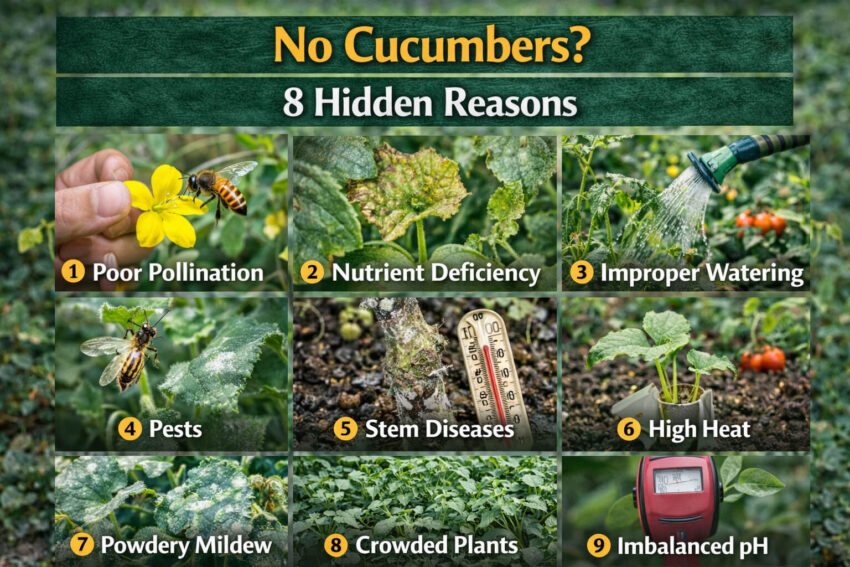
Many gardeners face the frustrating problem of cucumber plants failing to produce fruit despite healthy-looking vines. You might be making common mistakes with pollination, watering, or soil conditions that prevent your plants from setting cucumbers. This guide reveals eight overlooked factors affecting your harvest, helping you diagnose issues and transform your garden into a productive cucumber paradise.
Key Takeaways
- Cucumber plants need consistent watering and specific soil conditions to produce fruit – irregular moisture, poor drainage, or nutrient-deficient soil can prevent cucumbers from forming even when plants appear healthy.
- Temperature extremes and poor pollination are common culprits behind missing cucumbers – plants struggle when nighttime temperatures drop below 60°F or rise above 90°F, while lack of pollinators means flowers won’t develop into fruit.
- Overcrowding, diseases, and incorrect variety selection often go unnoticed as reasons for low yields – spacing plants too closely reduces air circulation and invites fungal problems, while some varieties require specific growing conditions to thrive.
Assessing Environmental Stress Factors
Your cucumber plants respond dramatically to environmental pressures that disrupt their growth cycles. Temperature extremes, inconsistent watering, and humidity imbalances can halt fruit production entirely. You’ll notice these stressors through:
- Wilted leaves during peak heat hours
- Yellowing foliage from water stress
- Stunted growth in unfavorable conditions
Perceiving these warning signs early allows you to intervene before permanent damage occurs.
Managing Extreme Temperature Fluctuations
Temperature swings create physiological shock that prevents cucumber plants from setting fruit properly. Your plants thrive between 70-85°F but struggle when nighttime temperatures drop below 60°F or daytime heat exceeds 90°F.
| Temperature Range | Plant Response |
| Below 60°F | Slowed growth, poor pollination |
| 70-85°F | Optimal fruit development |
| Above 90°F | Flower drop, stress symptoms |
Evaluating Soil Moisture Consistency
Your cucumber plants demand consistent soil moisture throughout their growing season. Irregular watering patterns cause stress that triggers the plant to abort developing fruits. You should maintain soil moisture at 1-2 inches deep without creating waterlogged conditions.
Checking soil moisture daily helps you establish the right watering schedule for your specific conditions. Your finger inserted two inches into the soil should feel slightly damp but not wet. Drip irrigation systems or soaker hoses provide the most consistent moisture delivery, reducing the stress caused by alternating wet and dry periods. You can also apply organic mulch around plants to retain moisture and regulate soil temperature, creating the stable environment cucumbers need for continuous fruit production.
Solving Pollination Problems
Poor pollination ranks among the most common reasons for cucumber failure. Your cucumber plants produce separate male and female flowers, and pollen must transfer between them for fruit development. Without adequate pollination, you’ll notice small, misshapen cucumbers that yellow and drop off prematurely. Bees and other pollinators naturally handle this task, but their declining populations mean you may need to intervene manually.
Identifying Lack of Pollinator Insects
Watch your garden during morning hours when cucumber flowers open fully. Absence of buzzing bees or other insects visiting blooms signals a pollination problem. Female flowers appear with a tiny cucumber-shaped swelling at their base, while male flowers grow on thin stems. If you see abundant flowers but no insect activity for several consecutive days, hand-pollination becomes necessary.
How to Hand-Pollinate for Guaranteed Fruit
Hand-pollination takes just minutes and guarantees fruit set when pollinators are scarce. Pick a male flower, remove its petals to expose the pollen-covered stamen, then gently brush it against the sticky stigma inside a female flower. Complete this process in early morning when pollen remains most viable, and you’ll see results within days.
Your success rate improves dramatically when you understand the timing and technique. Male flowers typically outnumber females by five to one, so you’ll have plenty of pollen sources available. Use a single male flower to pollinate three to four female blooms before discarding it. The female flower’s stigma should appear moist and sticky for best results. Repeat this process daily during peak flowering season to maximize your cucumber harvest. You can also use a small, soft paintbrush as an alternative tool, swirling it inside male flowers first to collect pollen, then transferring it to female blooms. This method works especially well if you’re uncomfortable removing flowers from the plant.
Correcting Nutrient Imbalances
Your cucumber plants require precise nutrient ratios to produce fruit successfully. Soil testing reveals which elements are deficient or excessive, allowing you to make targeted corrections. Apply balanced fertilizers or specific amendments based on your test results. Proper nutrient management transforms barren vines into productive cucumber plants within weeks.
Balancing Nitrogen for Fruit Production
Excessive nitrogen creates lush foliage but prevents flowering in cucumber plants. You need to reduce nitrogen levels while increasing phosphorus and potassium during the fruiting stage. Switch to a fertilizer with a lower first number, such as 5-10-10. Your plants will redirect energy toward flower and fruit development instead of leaf growth.
Supplementing Micronutrients for Vine Health
Micronutrient deficiencies often go unnoticed but severely impact cucumber production. Boron, zinc, and magnesium are crucial for flower formation and fruit set. Apply a foliar spray containing these trace elements every two weeks. Your vines respond quickly to micronutrient supplementation with improved flowering.
Calcium deficiency manifests as blossom end rot and poor fruit development in cucumbers. You can prevent this by adding gypsum or calcium nitrate to your soil before planting. Magnesium supports chlorophyll production and photosynthesis, which directly affects fruit yield. Foliar applications work faster than soil amendments because plants absorb nutrients directly through their leaves. Iron and manganese deficiencies cause yellowing leaves and weak vine growth. Your cucumber plants need these micronutrients in small amounts, but their absence creates cascading problems throughout the growing season. Regular monitoring and timely supplementation ensure your vines maintain optimal health for maximum fruit production.
Mitigating Hidden Pest and Disease Impact
Your cucumber plants face invisible threats beneath the soil and on leaf surfaces that can destroy your harvest before symptoms become obvious. Underground pests like cucumber beetles and wireworms attack roots while fungal spores silently colonize plant tissues. You need to implement preventive monitoring and early intervention strategies to protect your crop from these hidden dangers.
Detecting Subterranean Root Damage
Carefully excavate soil around the base of struggling plants to inspect roots for brown lesions, tunneling, or rot. Healthy cucumber roots appear white and firm, while damaged ones show discoloration and mushiness. You should check multiple plants weekly during peak growing season to catch infestations early.
Treating Early-Stage Fungal Infections
Fungal diseases often establish themselves days before visible symptoms appear on leaves. You can apply organic copper-based fungicides or neem oil as preventive treatments when conditions favor infection. Remove affected leaves immediately to prevent spore spread throughout your garden.
Your best defense against fungal problems involves creating an unfavorable environment for pathogen development. Space plants adequately to ensure proper air circulation, and water at the soil level rather than overhead to keep foliage dry. You should apply fungicides in the early morning when temperatures are cooler, ensuring complete coverage of leaf surfaces. Rotating your cucumber plantings to different garden areas each season prevents soil-borne fungi from building up to damaging levels. Sulfur-based products work exceptionally well for powdery mildew, while Bacillus subtilis offers biological control for various fungal threats without harsh chemicals.
Optimizing Sunlight and Airflow
Your cucumber plants require at least 6-8 hours of direct sunlight daily to produce fruit successfully. Poor air circulation creates humid microclimates that invite fungal diseases and reduce pollination rates. Position your plants where morning sun can dry dew quickly, and space them 12-18 inches apart to prevent overcrowding that blocks light penetration.
Adjusting Trellis Systems for Maximum Exposure
Vertical trellising directs cucumber vines upward, ensuring every leaf receives optimal sunlight throughout the day. Your trellis should face south or southeast to capture maximum sun exposure. Adjust the angle of support wires to prevent leaves from shading lower sections where fruit develops most prolifically.
Pruning Techniques to Reduce Foliage Density
Selective pruning opens up your cucumber canopy, allowing sunlight and air to reach interior branches where flowers form. Remove yellowing lower leaves and trim excess lateral shoots weekly. This practice reduces disease pressure while directing plant energy toward fruit production rather than unnecessary foliage growth.
Your pruning strategy should focus on removing the oldest leaves first, starting from the bottom of the plant and working upward. Cut stems cleanly at a 45-degree angle using sterilized shears to prevent disease transmission between plants. Target any leaves showing signs of mildew or pest damage immediately, as these compromise the entire plant’s health. Limit yourself to removing no more than 20-30% of foliage at one time, as excessive pruning shocks the plant and reduces its photosynthetic capacity. The best time for pruning is mid-morning after dew has dried but before afternoon heat stress sets in.
Tips for Selecting Resilient Varieties
Selecting the right cucumber varieties makes all the difference in achieving a bountiful harvest. Disease-resistant cultivars protect your plants from common pathogens while climate-adapted selections thrive in your specific growing conditions. You should prioritize varieties bred for your region’s challenges, whether that’s humidity, drought, or temperature extremes. Perceiving variety characteristics helps you match plants to your garden’s unique environment.
Choosing Heat-Tolerant Cultivars
Heat-tolerant varieties maintain productive flowering even when temperatures soar above 90°F. Your standard cucumber plants often drop flowers and slow fruit production during extreme heat stress, but specialized cultivars like ‘Diva’ and ‘Marketmore 76’ continue performing. These selections feature enhanced pollen viability that ensures successful pollination in hot conditions. Perceiving temperature patterns in your area guides you toward the most suitable heat-resistant options.
Understanding Parthenocarpic vs. Seeded Types
Parthenocarpic cucumbers develop fruit without pollination, making them ideal for greenhouse growing or areas with limited pollinator activity. Your seeded varieties require insect pollination but often produce more flavorful fruits with better texture. Seedless types eliminate bitter seeds while maintaining consistent fruit quality regardless of pollinator presence. The choice between these types depends on your growing environment and pollination resources.
| Parthenocarpic Types | Seeded Types |
| No pollination needed | Requires bee activity |
| Seedless or minimal seeds | Full seed development |
| Consistent fruit shape | Variable fruit appearance |
| Ideal for greenhouses | Best for outdoor gardens |
| Higher initial cost | More economical seeds |
Parthenocarpic varieties offer you guaranteed fruit set in challenging conditions where pollinators are scarce or weather disrupts normal bee activity. Your decision should factor in whether you’re growing indoors, in high tunnels, or in open gardens with active pollinator populations.
- Pollination independence ensures consistent yields
- Seed cavity size affects fruit texture and taste
- Growing location determines best variety type
- Fruit quality standards vary between categories
The selection between parthenocarpic and seeded cucumbers impacts your entire growing strategy and harvest expectations.
| Characteristic | Impact on Growing |
| Fruit development speed | Parthenocarpic types mature faster |
| Weather sensitivity | Seeded types more affected by conditions |
| Flavor profile | Seeded varieties often more complex |
| Storage capability | Both types store similarly when fresh |
| Market preference | Seedless types command premium prices |
Final Words
Now you understand the hidden factors preventing your cucumber plants from producing fruit. You can address poor pollination, incorrect watering, nutrient imbalances, temperature stress, overcrowding, pest damage, disease issues, and variety selection problems. Apply these solutions to your garden, and you’ll see healthy cucumber production return. Your plants have specific needs that, when met properly, will reward you with an abundant harvest throughout the growing season.
FAQ
Q: Why aren’t my cucumber plants producing fruit even though they look healthy?
A: Your cucumber plants might be experiencing pollination problems, which is one of the most common hidden reasons for no fruit production. Female flowers need pollen from male flowers to develop cucumbers, but inadequate bee activity or weather conditions can prevent this process. Temperature extremes also play a major role – cucumbers stop setting fruit when nighttime temperatures drop below 50°F or daytime temperatures exceed 90°F consistently. Check your watering schedule as well, since inconsistent moisture levels cause plants to abort flowers and young fruit. The soil might lack vital nutrients like phosphorus and potassium, which are necessary for fruiting rather than just leaf growth.
Q: What soil and environmental factors could be preventing cucumber production?
A: Soil pH imbalance is a frequently overlooked culprit that prevents cucumber plants from producing fruit. Cucumbers thrive in soil with a pH between 6.0 and 7.0, and readings outside this range block nutrient absorption even when fertilizers are present. Compacted or poorly draining soil creates root stress that redirects plant energy away from fruiting. Your garden location might not receive enough direct sunlight – cucumbers need at least 6-8 hours of full sun daily to produce fruit. High nitrogen fertilizers cause excessive leaf growth at the expense of flowers and fruit development. Plants grown too close together compete for resources and create poor air circulation, which leads to stress and reduced fruit production.
Q: Can plant age and variety selection affect cucumber production?
A: Plant maturity timing affects when you’ll see cucumbers, and many gardeners give up too early before their plants reach the fruiting stage. Different varieties have varying days-to-harvest requirements, ranging from 50 to 70 days after planting. Some cucumber varieties require specific growing conditions – certain types need trellising to produce well, while others are bred for container growing. You might have purchased parthenocarpic varieties that produce fruit without pollination but require specific temperature ranges to perform properly. Hybrid varieties sometimes have specific spacing and care requirements that differ from standard types. Old or improperly stored seeds have reduced germination rates and can produce weak plants that struggle to set fruit.