
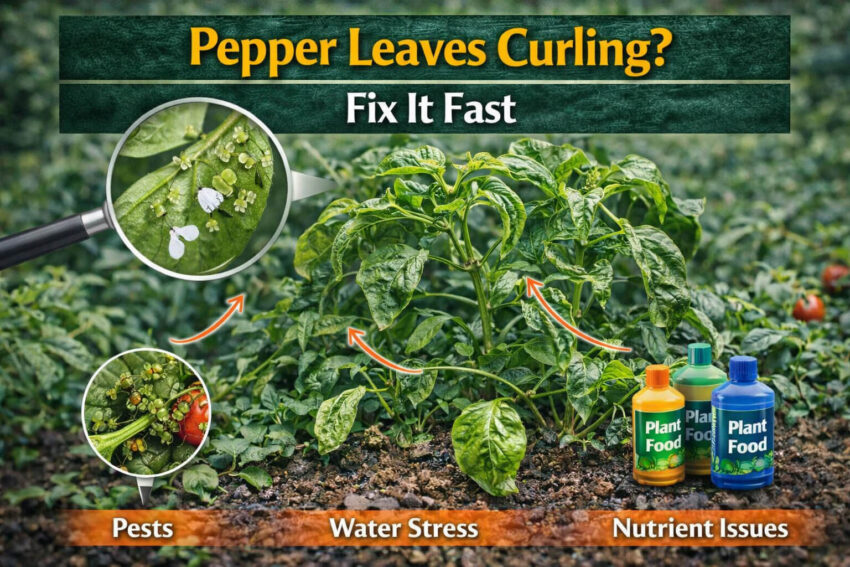
There’s no need to panic when you notice your pepper leaves curling-this common problem has straightforward solutions. You’re likely dealing with water stress, pest infestations, or environmental factors that affect your plants. Understanding the root cause helps you take immediate action to restore your peppers to health and prevent permanent damage to your crop.
Key Takeaways
- Pepper leaf curling typically signals environmental stress, with overwatering, underwatering, and extreme temperatures being the most common culprits that you can quickly identify and correct.
- Pest infestations from aphids, spider mites, and whiteflies cause leaves to curl and distort, requiring immediate treatment with insecticidal soap or neem oil to prevent spread to healthy plants.
- Nutrient imbalances, particularly calcium deficiency or nitrogen excess, lead to abnormal leaf curling that resolves within 1-2 weeks once you adjust your fertilization schedule and soil pH levels.
Key Factors Leading to Pepper Leaf Curl
Your pepper plants face multiple threats that cause their leaves to curl and distort. Environmental stress, watering issues, pest infestations, and nutrient deficiencies rank among the most common culprits. Each factor triggers a defensive response in your plants, manifesting as curled or twisted foliage. The key to recovery lies in identifying which specific condition affects your peppers.
Impact of Heat Stress and Intense Light
Temperatures exceeding 85°F (29°C) cause your pepper leaves to curl inward as a protective mechanism. Direct sunlight during peak afternoon hours intensifies this reaction, forcing plants to minimize water loss through reduced leaf surface exposure. The leaves will naturally uncurl once you provide shade or cooler conditions.
Effects of Overwatering and Poor Drainage
Excessive moisture suffocates your pepper roots, leading to oxygen deprivation and leaf curl. Waterlogged soil prevents proper nutrient uptake and creates conditions for root rot development. The damaged root system cannot support healthy foliage, resulting in curled, yellowing leaves throughout the plant.
Your soil structure plays a direct role in preventing water-related leaf curl problems. Compacted soil or containers without adequate drainage holes trap water around the roots for extended periods. Check your watering schedule by testing soil moisture two inches below the surface-it should feel slightly dry before you water again. Clay-heavy soils require amendments like perlite or compost to improve drainage, while sandy soils need organic matter to retain appropriate moisture levels. Installing proper drainage prevents the cascade of problems that begin with waterlogged roots and end with severely curled, drooping pepper leaves.
How to Diagnose Destructive Pest Activity
Examine your pepper plants carefully for tiny moving insects and sticky residue on leaf surfaces. Check the undersides of curled leaves where pests typically hide and feed. You’ll need a magnifying glass to spot smaller culprits that cause significant damage. Look for webbing, stippling, or distorted new growth as telltale signs.
Identifying Aphids and Thrips on Foliage
Aphids appear as small, pear-shaped insects clustered on stems and leaf undersides, leaving behind honeydew. Thrips are slender, fast-moving pests that create silvery streaks and black specks on leaves. Both insects cause leaves to curl, yellow, and become distorted through their feeding activity.
Detecting Broad Mite and Spider Mite Signs
Broad mites are microscopic pests that cause severe leaf curling, bronzing, and stunted growth at growing tips. Spider mites create fine webbing between leaves and cause stippling that appears as tiny yellow dots. Your plants may show downward-curling leaves with a dusty appearance underneath.
Inspect the newest growth on your pepper plants where broad mites concentrate their feeding activity. Leaves become glossy, brittle, and severely distorted when these microscopic pests attack. Spider mites thrive in hot, dry conditions and multiply rapidly, creating visible webs in heavy infestations. You can confirm spider mite presence by shaking a leaf over white paper-tiny moving specks indicate an active infestation. Both mite species cause irreversible damage to affected foliage, so early detection saves your plants from permanent harm.
How to Correct Soil Nutrient Imbalances
Balanced soil nutrition directly impacts your pepper plant’s leaf health and overall vigor. Test your soil with a pH meter or testing kit to identify specific deficiencies causing leaf curl. Apply targeted fertilizers or amendments based on test results rather than guessing. Organic compost and balanced NPK fertilizers restore equilibrium and prevent further leaf distortion within weeks.
Addressing Calcium and Magnesium Deficiencies
Calcium deficiencies cause downward curling and brown leaf edges in pepper plants. Apply calcium chloride or gypsum at recommended rates to correct this issue quickly. Epsom salt provides magnesium that prevents interveinal chlorosis and curling. Mix one tablespoon per gallon of water and apply as a foliar spray every two weeks.
Managing Nitrogen Levels for Healthy Leaves
Nitrogen imbalances trigger severe leaf curling in both directions. Too little nitrogen causes upward curl with yellowing, while excess nitrogen creates dark green, downward-curling leaves. Blood meal or fish emulsion corrects deficiencies, while flushing soil with water reduces toxicity.
Your pepper plants need consistent nitrogen throughout their growing season, but the amount varies by growth stage. Seedlings require lower nitrogen concentrations to develop strong root systems without excessive foliage. Mature plants producing fruit benefit from moderate nitrogen levels that support leaf health without sacrificing pepper production. Monitor your plants weekly for color changes-pale yellow-green leaves signal insufficient nitrogen, while abnormally dark foliage indicates overfeeding. Adjust your fertilization schedule based on these visual cues rather than following rigid feeding routines.
Effective Tips for Rapid Pest Eradication
Pests attacking your pepper plants require immediate action to prevent further leaf curling and damage. You’ll need to identify the specific invaders first-aphids, spider mites, and whiteflies are common culprits. Consider these proven methods:
- Spray affected plants with neem oil solution
- Apply insecticidal soap directly to pests
- Release beneficial insects like ladybugs
- Remove heavily infested leaves by hand
Though pest control seems daunting, consistent treatment yields rapid results within days.
Applying Organic Neem Oil and Insecticidal Soap
Organic solutions work effectively without harming your pepper plants or beneficial insects. Mix neem oil at recommended concentrations and spray thoroughly on leaf undersides where pests hide. Insecticidal soap suffocates soft-bodied insects on contact, making it perfect for aphid infestations. Thou must apply these treatments during cooler evening hours to prevent leaf burn.
Introducing Beneficial Insects to the Garden
Ladybugs and lacewings provide natural pest control by consuming hundreds of aphids daily. Release these predators near affected pepper plants during early morning or evening hours. Beneficial insects establish colonies that offer long-term protection against recurring infestations. Thou should avoid chemical pesticides when using this biological approach.
Your garden becomes a balanced ecosystem when beneficial insects patrol your pepper plants regularly. Ladybugs alone can consume up to 5,000 aphids during their lifetime, while lacewing larvae aggressively hunt spider mites and whiteflies. Provide these helpers with proper habitat by planting flowers like marigolds and yarrow nearby. Avoid disturbing the soil where ground beetles nest, as they also prey on pest eggs and larvae. You can purchase beneficial insects from garden centers or online suppliers, typically arriving in containers ready for release.
How to Optimize the Pepper Growing Environment
Your pepper plants thrive when you maintain temperatures between 70-85°F during the day and 60-70°F at night. Position plants where they receive 6-8 hours of direct sunlight daily, ensuring proper spacing of 18-24 inches between each plant for adequate airflow and nutrient access.
Regulating Humidity and Air Circulation
Keep humidity levels between 50-70% to prevent leaf curl and fungal diseases. Install fans or ensure natural airflow around your plants, as stagnant air promotes pest infestations and moisture-related problems that cause leaves to curl and droop.
Implementing Proper Mulching and Shading
Apply 2-3 inches of organic mulch around pepper plants to regulate soil temperature and moisture retention. Provide 30-50% shade cloth during extreme heat above 90°F to prevent stress-induced leaf curling and sunscald damage.
Organic materials like straw, wood chips, or shredded leaves work best for mulching your pepper beds. The mulch layer acts as insulation, keeping soil temperatures consistent and reducing water evaporation by up to 70%. During peak summer months, you’ll need to monitor your plants for heat stress signs. Shade cloth installation becomes necessary when temperatures consistently exceed 90°F, as excessive heat causes leaves to curl upward in self-defense. Remove or adjust shading as temperatures cool to ensure plants still receive adequate light for photosynthesis and fruit production.
Maintenance Tips for Preventing Future Curling
Proactive care keeps your pepper plants healthy and prevents leaf curling from recurring. Regular monitoring helps you catch problems early before they escalate into serious damage. Key preventive measures include:
- Inspecting leaves weekly for pests and disease symptoms
- Maintaining proper soil moisture through consistent watering
- Ensuring adequate air circulation between plants
- Applying balanced fertilizers at recommended intervals
Assume that prevention requires less effort than treating established problems.
Selecting Disease-Resistant Pepper Varieties
Choosing disease-resistant cultivars significantly reduces your risk of encountering leaf curl issues. Many modern pepper varieties offer built-in protection against common viral and bacterial pathogens that cause foliage distortion. Check seed catalogs for resistance ratings before purchasing, focusing on varieties bred for your specific growing region. Assume that investing in quality seeds saves time and frustration later.
Establishing a Consistent Fertilization Schedule
Balanced nutrition prevents nutrient deficiencies that trigger leaf curling in pepper plants. Apply a complete fertilizer every 2-3 weeks during the growing season, adjusting based on soil test results. Avoid over-fertilizing with nitrogen, which causes excessive foliage growth at the expense of fruit production. Assume that consistency matters more than quantity when feeding your peppers.
Your fertilization approach should match your pepper plants’ developmental stages throughout the season. Young seedlings require higher nitrogen levels to establish strong vegetative growth and healthy leaf development. Once flowering begins, shift to formulations with increased phosphorus and potassium to support fruit set and maturation. Organic options like compost tea or fish emulsion provide slow-release nutrients that won’t burn roots or cause salt buildup in the soil. Monitor your plants’ response to feeding by observing leaf color and growth rate-dark green, sturdy foliage indicates proper nutrition, while yellowing or stunted growth signals adjustments are needed. Soil testing every season gives you precise data about existing nutrient levels and pH, allowing you to customize your fertilization program for optimal results.
Final Words
Now you have the knowledge to diagnose and fix curling pepper leaves quickly. You can identify whether pests, watering issues, nutrient deficiencies, or environmental stress causes the problem. Act fast when you spot symptoms to prevent permanent damage. Your pepper plants will recover and thrive when you apply the right solutions consistently. Healthy leaves mean productive plants and abundant harvests.
FAQ
Q: What causes pepper plant leaves to curl and how can I identify the problem?
A: Pepper leaves curl due to several common issues that affect plant health. Overwatering creates soggy soil conditions that damage roots and cause leaves to curl downward. Underwatering leads to upward leaf curling as plants try to conserve moisture. Aphids and other pests feed on leaf undersides, causing distortion and curling. Temperature stress from heat above 85°F or cold below 60°F triggers protective curling. Check your soil moisture by inserting a finger two inches deep – it should feel slightly moist but not wet. Inspect leaf undersides with a magnifying glass for tiny insects. Monitor your growing environment’s temperature with a simple thermometer to rule out heat or cold stress.
Q: How do I fix curled pepper leaves caused by watering problems?
A: Adjust your watering schedule based on the specific problem you’ve identified. For overwatered plants, stop watering immediately and let the top 2-3 inches of soil dry out completely before watering again. Improve drainage by adding perlite or sand to your soil mix if growing in containers. For underwatered plants, water deeply until moisture drains from the bottom of the pot, then establish a consistent schedule. Water when the top inch of soil feels dry to the touch. Use room-temperature water in the early morning to allow excess moisture to evaporate during the day. Most pepper plants need watering every 2-3 days in hot weather and once weekly in cooler conditions. The leaves should begin to flatten and return to normal within 3-7 days of correcting watering issues.
Q: What’s the fastest way to treat pest-related leaf curling on pepper plants?
A: Start treatment immediately when you spot pests to prevent further damage. Spray affected plants with a strong stream of water to knock off aphids, whiteflies, and spider mites from leaf surfaces. Mix 1 tablespoon of dish soap with 1 quart of water in a spray bottle and apply to all leaf surfaces, especially undersides, every 3 days for two weeks. Neem oil works as a natural pesticide – dilute according to package directions and spray in the evening to avoid leaf burn. Introduce beneficial insects like ladybugs that eat aphids and other harmful pests. Remove heavily infested leaves and dispose of them in sealed bags to prevent pest spread. Most plants show improvement within 5-10 days of consistent treatment, with new growth appearing healthy and uncurled.