
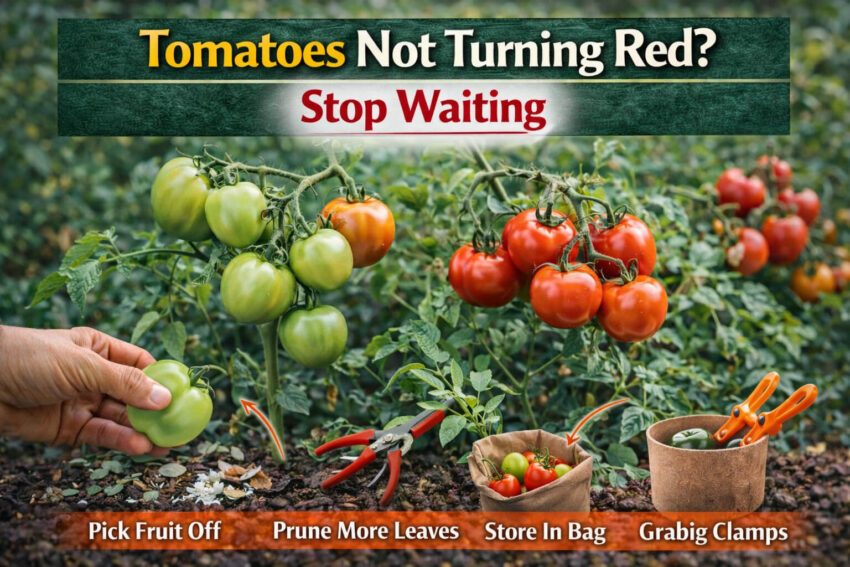
Most gardeners waste weeks staring at stubborn green tomatoes, but you can trigger ripening in just days with the right techniques. Your tomatoes might be stuck due to temperature extremes above 85°F or below 50°F, which halt the production of lycopene and carotene pigments. You’ll discover proven methods to rescue your harvest, from ethylene gas exposure to strategic pruning, ensuring you enjoy ripe tomatoes before frost arrives.
Key Takeaways
- Temperature plays the biggest role in tomato ripening-fruit stops turning red when temperatures climb above 85°F or drop below 50°F, as the heat-sensitive pigments lycopene and carotene can’t develop properly in extreme conditions.
- Picking green tomatoes at the mature stage and ripening them indoors speeds up the process while maintaining flavor-store them at room temperature in a paper bag or cardboard box away from direct sunlight for best results.
- Pruning excess foliage and reducing nitrogen fertilizer in late summer redirects the plant’s energy toward ripening existing fruit rather than producing new growth, helping you harvest more tomatoes before the first frost.
Environmental Factors Delaying Ripening
Your tomatoes remain stubbornly green when temperature extremes interfere with the ripening process. Several conditions can halt lycopene production:
- Temperatures above 85°F block red pigment development
- Nights below 50°F slow ripening significantly
- Excessive nitrogen promotes foliage over fruit maturation
- Inconsistent watering stresses plants and delays color change
Though patience seems logical, understanding these factors helps you take corrective action immediately.
Temperature Thresholds for Lycopene Production
Lycopene synthesis requires specific temperature ranges that many gardeners overlook. Your tomatoes produce the red pigment lycopene only when conditions fall within optimal parameters. Temperatures consistently above 85°F or below 50°F completely halt this chemical process, leaving fruit perpetually green regardless of time elapsed.
| Temperature Range | Ripening Effect |
| Below 50°F | Lycopene production stops |
| 50°F – 65°F | Slow ripening occurs |
| 65°F – 75°F | Optimal ripening speed |
| 75°F – 85°F | Acceptable ripening continues |
| Above 85°F | Lycopene production halts |
Impact of Excessive Nitrogen and Soil Moisture
Overfeeding your plants with nitrogen-rich fertilizers redirects energy toward leaf growth instead of fruit ripening. Excess nitrogen creates lush, dark green foliage while tomatoes stay unripe for weeks. Inconsistent soil moisture compounds this problem by stressing plants and preventing proper nutrient uptake during the ripening phase.
Balanced fertilization becomes imperative once fruit sets on your vines. You should switch to low-nitrogen, high-phosphorus formulas when tomatoes reach full size to encourage ripening. Soil moisture needs consistency-water deeply when the top two inches dry out rather than frequent shallow watering. Mulching around plants helps maintain even moisture levels and prevents the wet-dry cycles that delay color development. Your watering schedule directly affects how quickly tomatoes transition from green to red, so establishing a regular routine produces better results than sporadic attention.
The Biological Process of Color Transformation
Your tomatoes undergo a complex chemical transformation when shifting from green to red. This process involves the breakdown of chlorophyll and the synthesis of lycopene, the pigment responsible for that vibrant red color. Temperature plays a critical role in this change, with optimal ripening occurring between 68-77°F.
Understanding the Role of Ethylene Gas
Ethylene gas acts as the natural ripening hormone that triggers color change in your tomatoes. Your fruit produces this gas internally, signaling the plant to begin converting starches into sugars while breaking down cell walls. Blocking ethylene production through extreme temperatures will halt ripening completely.
The Significance of the Breaker Stage
The breaker stage marks the point of no return in tomato ripening. Your tomato shows its first blush of color at this phase, typically a pale pink or yellow tint at the blossom end. Picking at this stage ensures successful ripening off the vine.
Your tomatoes have already developed their full flavor potential once they reach the breaker stage. This means you can safely harvest them and bring them indoors to finish ripening without sacrificing taste. The fruit will continue producing ethylene gas and complete its color transformation within 7-14 days at room temperature. Leaving them on the vine past this point only increases risk of pest damage, cracking, or sunscald. You’ll actually get better results by picking at breaker stage and controlling the ripening environment yourself, ensuring consistent temperature and protection from weather extremes that could damage your crop.
How to Accelerate Ripening on the Vine
Your tomatoes will ripen faster when you actively manipulate their growing conditions. Stop feeding nitrogen-rich fertilizers once fruits have formed, as excess nitrogen diverts energy to foliage instead of ripening. Redirect the plant’s resources by removing new flower clusters that won’t mature before frost, allowing existing fruits to color up quickly.
Strategic Pruning and Topping Techniques
Cutting off the top growing tip four weeks before your first expected frost forces your plant to channel all energy into existing fruits. Remove excess foliage around fruit clusters to increase sun exposure and air circulation. Prune away any suckers and new growth that compete for resources your ripening tomatoes desperately need.
Managing Irrigation to Stress the Plant
Reduce watering by 30-40% when fruits reach full size to trigger a survival response that accelerates ripening. Your plant interprets drought stress as a signal to reproduce quickly, converting green tomatoes to red. Avoid complete water deprivation, which causes cracking and blossom-end rot instead.
Controlled water stress works because tomato plants prioritize seed production when they sense environmental threats. You’ll notice color changes within 5-7 days of reducing irrigation frequency. Water deeply but less often-perhaps twice weekly instead of daily-to maintain just enough moisture for the ripening process. Monitor soil moisture carefully by checking two inches below the surface; the soil should feel barely damp, not bone dry. This technique proves especially effective for late-season fruits that struggle to ripen as temperatures drop, giving you a final harvest before frost arrives.
Proven Methods for Ripening Tomatoes Indoors
Bringing your green tomatoes inside gives you complete control over the ripening process. You can accelerate or slow down ripening by adjusting temperature and humidity levels in your home. Room temperature between 65-75°F produces the best flavor and color in your tomatoes. Keep them away from direct sunlight, which can cause uneven ripening and tough skin.
Utilizing the Paper Bag and Fruit Method
Place your green tomatoes in a paper bag with a ripe banana or apple to speed up the process. These fruits release ethylene gas, which triggers ripening within 3-5 days. Fold the bag loosely to allow some air circulation while trapping the gas inside for maximum effectiveness.
Optimal Countertop Storage Conditions
Your kitchen counter provides an ideal ripening station when set up correctly. Store tomatoes stem-side down to prevent moisture loss and arrange them in a single layer without touching. Check daily for ripeness and remove any showing soft spots to prevent spoilage.
Temperature consistency matters more than you might think when ripening tomatoes on your counter. Avoid placing them near heat sources like stoves or in cold drafts from air conditioning vents. Fluctuating temperatures can cause the fruit to develop poor texture and bland flavor. Your tomatoes will ripen evenly when kept in a stable environment away from windows. The stem-side-down position also reduces pressure on the delicate shoulder area, preventing bruising that could lead to rot before full ripeness develops.
Tips for Harvesting Underripe Tomatoes
Your green tomatoes need proper handling to ripen successfully indoors. Pick tomatoes when they reach full size but before any frost damage occurs. You should look for these signs of readiness:
- Fruit has reached mature size for its variety
- Surface shows a slight color change from dark to lighter green
- Tomato feels firm but not hard when gently squeezed
- Seeds inside have developed completely
Assume that tomatoes showing any of these characteristics will ripen off the vine with proper storage conditions.
Identifying Maturity Before the First Frost
Check your tomatoes daily once nighttime temperatures drop below 50°F. Mature green tomatoes display a glossy sheen and feel slightly softer than immature fruit. You can cut one open to verify-developed seeds indicate readiness for indoor ripening. Assume that any tomato reaching full varietal size will continue developing flavor indoors.
Sorting by Ripeness to Prevent Spoilage
Separate your harvested tomatoes into three distinct groups based on color: completely green, breakers showing pink, and those with visible red. Different ripeness stages require different storage temperatures for optimal results. Assume that proper sorting prevents ethylene gas buildup that accelerates decay.
Your sorting system directly impacts how long tomatoes stay fresh during indoor ripening. Fully green tomatoes need warmer temperatures around 65-70°F to trigger color development, while breakers ripen best at 55-60°F. You should store each group separately in shallow boxes or paper bags with good air circulation. Check sorted tomatoes every two days and remove any showing soft spots or mold. This method prevents one spoiling fruit from contaminating your entire harvest through ethylene exposure and bacterial spread.
Troubleshooting Persistent Green Fruit
Your tomatoes might stay green due to temperature extremes above 85°F or below 50°F, which halt lycopene production. Check for nutrient imbalances, particularly excess nitrogen that promotes foliage over ripening. Some tomatoes need up to 90 days to mature, so verify your variety’s expected timeline before assuming problems exist.
Variety-Specific Ripening Timelines
Different tomato varieties have dramatically different maturation periods ranging from 55 to 90 days. Heirloom varieties typically require longer ripening times than hybrid cultivars. You should consult your seed packet or plant tag to confirm the expected days-to-maturity for accurate harvest predictions.
Managing Airflow and Sunlight Exposure
Proper air circulation and filtered sunlight exposure directly impact ripening speed. Your plants need adequate spacing between vines to prevent humidity buildup. Prune excessive foliage blocking fruit access to light, but avoid removing too many leaves which protect tomatoes from sunscald.
Strategic pruning techniques can accelerate the ripening process while protecting your fruit. Remove lower leaves that touch the ground to improve airflow and reduce disease risk. Thin out dense interior growth to allow dappled sunlight to reach developing tomatoes without exposing them to harsh afternoon rays. You’ll want to maintain enough leaf coverage to shade fruit during peak heat hours, as direct sun above 90°F can actually prevent ripening rather than encourage it. Space your plants at least 24-36 inches apart when planting to ensure proper ventilation throughout the growing season.
Final Words
On the whole, you can solve the problem of green tomatoes by addressing temperature issues, adjusting watering practices, and picking fruit at the breaker stage. Your tomatoes will ripen indoors just as effectively as on the vine when conditions aren’t ideal. You have multiple proven methods at your disposal, from paper bag ripening to ethylene gas techniques. Take action now rather than waiting for nature to cooperate with your timeline.
FAQ
Q: Why are my tomatoes still green when they should be ripe?
A: Temperature plays the biggest role in tomato ripening. Tomatoes stop producing lycopene and carotene (the pigments that create red color) when temperatures drop below 50°F or rise above 85°F. Your green tomatoes might be stuck in limbo because nighttime temperatures have gotten too cool or daytime heat has become excessive. The variety you planted also matters – some tomatoes take 80-90 days to ripen while others need only 55-60 days. Check your seed packet to confirm you haven’t simply underestimated the time needed. Lack of proper nutrients, particularly potassium and phosphorus, can slow down the ripening process as well.
Q: Can I pick green tomatoes and ripen them indoors?
A: You can absolutely harvest mature green tomatoes and ripen them inside your home. Look for tomatoes that have reached full size and show a slight color change from dark green to lighter, whitish-green. Place them in a cardboard box or paper bag at room temperature, around 65-75°F. Adding a ripe banana or apple to the container speeds up ripening because these fruits release ethylene gas, which triggers the color change. Check your tomatoes every few days and remove any that show signs of rot. Avoid placing them in direct sunlight or in the refrigerator, as both conditions will prevent proper ripening. Most green tomatoes will turn red within 2-4 weeks using this method.
Q: What can I do to help tomatoes ripen faster on the vine?
A: Pruning away excess foliage allows more sunlight to reach the fruit and concentrates the plant’s energy on ripening existing tomatoes rather than producing new growth. Remove any new flowers that appear, since these blooms will only create more green tomatoes that won’t have time to ripen. Reduce watering to moderate levels – stressed plants redirect their resources toward seed production, which speeds up fruit maturation. Some gardeners gently tug or twist tomatoes still attached to the vine to partially restrict nutrient flow, which can trigger faster ripening. You can also try the “root pruning” technique: push a shovel into the soil about 6-8 inches from the plant’s base to cut some roots, creating mild stress that encourages ripening.