
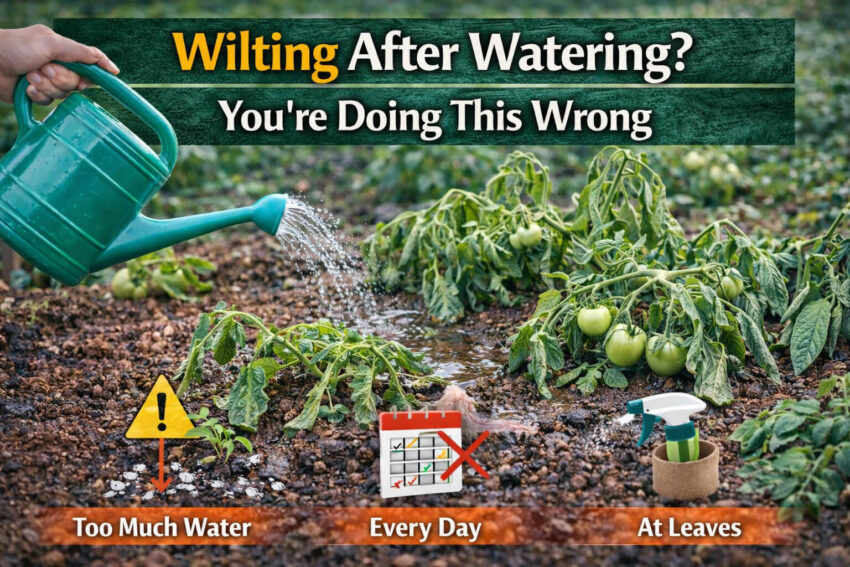
This common gardening mistake confuses many plant owners who watch their greenery droop despite regular watering. You’re likely overwatering or watering at the wrong time, which damages roots and prevents proper moisture absorption. Root rot from excessive water causes more plant deaths than underwatering ever could. Your wilting plants need a different approach, and we’ll show you exactly how to fix this problem today.
Key Takeaways
- Overwatering kills more houseplants than underwatering because it suffocates roots and prevents oxygen absorption. Check the soil moisture 2-3 inches deep before watering, and only water when it feels dry to the touch.
- Wilting after watering often signals root rot, poor drainage, or waterlogged soil rather than thirst. Ensure your pots have drainage holes and use well-draining soil mixtures that allow excess water to escape freely.
- Temperature shock from cold water can cause plants to wilt even when properly hydrated. Use room-temperature water and avoid watering during the hottest part of the day to prevent stress on your plants.
Identifying the Root Cause: Why Plants Wilt After Watering
Your plant’s wilting after watering signals a problem beneath the surface, not a lack of moisture. Waterlogged soil prevents roots from accessing oxygen, causing them to suffocate and fail. This counterintuitive response occurs because damaged roots can’t absorb water properly, leaving your plant dehydrated despite wet soil. Check the soil texture, drainage holes, and root health to determine what’s actually happening.
Distinguishing Between Overwatering and Root Rot
Overwatering creates consistently soggy conditions, while root rot is the fungal infection that follows. Your plant’s roots appear brown, mushy, and emit a foul odor when rot has set in. Overwatered roots remain white or tan but stay waterlogged. Catching the distinction early means you can still save your plant by adjusting watering habits.
The Science of Oxygen Deprivation in Saturated Soil
Plant roots require oxygen to perform cellular respiration and absorb nutrients effectively. Saturated soil fills air pockets with water, blocking oxygen from reaching root cells. Without adequate oxygen, roots begin dying within 24-48 hours. Your plant then wilts because damaged roots can’t transport water upward, regardless of soil moisture levels.
Roots function through aerobic respiration, converting oxygen and glucose into energy for nutrient uptake and growth. When water displaces all soil air, roots switch to anaerobic respiration, producing toxic compounds like ethanol that damage cell membranes. This metabolic shift weakens the entire root system rapidly. Your plant’s vascular tissue becomes compromised, preventing water movement through xylem vessels. Healthy soil maintains 25% air space between particles, but oversaturated conditions reduce this to nearly zero. The resulting oxygen deficit triggers a cascade of cellular damage that manifests as wilting leaves, yellowing foliage, and eventual plant death if conditions don’t improve.
Critical Factors Affecting Moisture Retention
Your plant’s survival depends on understanding how soil composition, container type, and environmental conditions work together to control water availability. Different potting mixes retain moisture at varying rates, while temperature and humidity levels directly influence evaporation speed. Root health also plays a significant role in water uptake efficiency. After identifying these variables, you can adjust your watering approach accordingly.
Evaluating Soil Drainage and Aeration
Compacted soil creates waterlogged conditions that suffocate roots and prevent oxygen circulation. You need to test your potting mix by squeezing a handful-it should crumble easily rather than form a tight ball. Perlite, vermiculite, or orchid bark improves aeration when mixed into dense substrates. After repotting, your plants will show improved resilience to watering inconsistencies.
Impact of Pot Material and Drainage Holes
Terracotta pots absorb moisture and allow evaporation through their porous walls, requiring more frequent watering than plastic containers. Glazed ceramic and plastic materials trap humidity longer, which benefits moisture-loving species but risks overwatering others. Drainage holes are non-negotiable for preventing root rot. After selecting appropriate containers, monitor how quickly soil dries between waterings.
Container choice affects your entire watering schedule in ways you might not expect. Metal pots conduct temperature extremes that can stress roots, while self-watering planters maintain consistent moisture levels for forgetful gardeners. The size matters too-oversized containers hold excess water that roots cannot access, creating stagnant zones where fungal pathogens thrive. Your pot’s color even influences soil temperature, with dark containers heating up faster in direct sunlight. Multiple drainage holes work better than a single central opening, allowing water to escape from various points and preventing saturation pockets.
How to Perform a Proper Soil Moisture Assessment
Accurate soil moisture testing prevents the guessing game that leads to overwatering. Your plants need consistent moisture levels at root depth, not just surface wetness. Two reliable methods will help you determine when your plants actually need water versus when they’re simply showing stress from other issues.
Utilizing the Manual Finger Test Method
Insert your index finger two to three inches deep into the soil, away from the plant’s base. Dry soil at this depth means it’s time to water, while dampness indicates sufficient moisture remains. This free technique works best for containers and small garden beds where you can easily reach root zones.
Implementing Moisture Meters for Precision
Moisture meters eliminate guesswork by providing numerical readings of soil saturation levels. Digital models measure moisture at various depths, perfect for large planters or garden beds. Your investment pays off through reduced plant loss and water conservation.
Quality moisture meters feature probe lengths between 6 to 12 inches, allowing you to test different soil layers where roots actively absorb water. Choose models with clear analog or digital displays that show readings from dry to wet zones. Test multiple spots around each plant since moisture distributes unevenly, especially in clay-heavy or sandy soils. Calibrate your meter monthly according to manufacturer instructions to maintain accuracy, and clean probes after each use to prevent corrosion that skews readings.
Expert Tips for Immediate Plant Recovery
Your overwatered plant needs swift action to survive. Stop watering immediately and move the plant to a well-ventilated area with indirect light. Check these recovery steps:
- Remove the plant from its pot to inspect root damage
- Trim away any black or mushy roots with sterilized scissors
- Allow the root ball to air dry for several hours
- Replace waterlogged soil with fresh, well-draining potting mix
Any recovery attempt requires patience, as your plant may take weeks to show improvement.
Aerating the Soil to Improve Airflow
Compacted soil prevents oxygen from reaching roots, worsening waterlogged conditions. Gently poke holes throughout the soil using a chopstick or pencil, reaching down to the root zone without damaging roots. This technique creates air channels that help excess moisture evaporate faster. Any aeration should be done carefully to avoid further stressing your struggling plant.
Repotting Strategies for Severely Waterlogged Plants
Severely waterlogged plants require immediate repotting to prevent root rot from spreading. Remove all soggy soil from the roots and inspect for brown, slimy tissue. Select a pot with multiple drainage holes and use fresh, airy potting mix. Any delay in repotting can result in total plant loss.
The repotting process demands attention to detail and proper technique. Shake off the old, waterlogged soil completely, then rinse roots under lukewarm water to remove remaining debris. Prune damaged roots back to healthy white or tan tissue using clean shears. Your new pot should be only slightly larger than the root system, as oversized containers retain too much moisture. Mix perlite or coarse sand into your potting soil at a 1:3 ratio to enhance drainage. Water sparingly after repotting-just enough to settle the soil-and wait until the top two inches dry before watering again.
Adjusting Hydration Based on Environmental Conditions
Your plant’s water needs fluctuate dramatically based on temperature, humidity, and air circulation in your home. During hot, dry conditions, soil dries faster and plants require more frequent watering. Winter heating systems can create desert-like conditions, while summer air conditioning may reduce evaporation rates. Monitor your specific environment rather than following rigid schedules.
Calculating Light Exposure and Evaporation Rates
Bright light increases photosynthesis and water consumption, meaning plants in sunny spots need up to twice as much water as those in shade. Check soil moisture by inserting your finger two inches deep-dry soil indicates watering time. South-facing windows create the highest evaporation rates, requiring more attentive care.
Modifying Care for Seasonal Growth Cycles
Plants enter dormancy periods during fall and winter, requiring significantly less water than their active growing season. Reduce watering frequency by half when growth slows. Overwatering dormant plants causes root rot since they can’t absorb excess moisture efficiently.
Your plant’s metabolic rate drops during shorter days, and cooler temperatures slow cellular processes that normally consume water. Watch for visual cues like reduced leaf production or slower stem growth to identify dormancy. Spring triggers renewed growth, so you’ll need to gradually increase watering as temperatures rise and daylight extends. Tropical houseplants may not fully dormant but still experience slowed growth in winter months. Adjust your watering schedule every few weeks as seasons change, testing soil moisture before each session to prevent the dangerous cycle of waterlogging inactive roots.
Developing a Proactive Watering Routine
Success with houseplants requires you to shift from reactive to proactive watering habits. Your plants need a predictable schedule based on their specific needs rather than random watering when you notice drooping. Prevention beats rescue every time, and establishing patterns helps you identify problems before wilting occurs.
Observing Plant Cues and Foliage Changes
Your plant communicates its needs through subtle signals long before dramatic wilting appears. Check leaf texture, color shifts, and soil moisture at least twice weekly. Drooping stems, yellowing edges, or curling leaves indicate you’ve already missed the optimal watering window.
Establishing Consistency Without Over-Saturation
Consistent watering schedules prevent both drought stress and root rot. Set specific days for checking each plant rather than watering everything simultaneously. Your succulents and ferns have different requirements, so tailor your routine to individual species needs.
Calendar reminders help you maintain regular inspection intervals without relying on memory alone. Track your watering dates and plant responses in a simple journal or smartphone app to identify patterns over time. Your goal is finding the sweet spot where soil dries slightly between waterings but never becomes bone-dry. Moisture meters eliminate guesswork by showing exact soil conditions two inches below the surface. Test different watering frequencies during the first month with new plants, adjusting based on how quickly their soil dries. Seasonal changes affect water needs dramatically-plants consume less during winter dormancy and more during active summer growth.
Summing up
Summing up, you must address the root causes when your plants wilt after watering. Check for overwatering, poor drainage, root rot, and temperature shock before assuming your plant needs more water. You should examine soil moisture levels, ensure proper pot drainage, and water at appropriate times. Your wilting plants are signaling specific problems that require targeted solutions, not just additional watering.
FAQ
Q: Why do my plants wilt even though I just watered them?
A: Your plants are likely experiencing root shock from overwatering or improper watering technique. When you water too frequently or dump large amounts of water at once, the soil becomes waterlogged and prevents oxygen from reaching the roots. This suffocates the root system and causes the same drooping symptoms as underwatering. The roots can’t function properly without oxygen, so they fail to absorb water and nutrients even though moisture is present. Check if your soil feels soggy or if water pools on the surface. Your plant needs well-draining soil and a watering schedule based on soil dryness, not a fixed calendar routine. Stick your finger two inches into the soil-if it feels dry at that depth, it’s time to water.
Q: How can I tell if I’m watering my plants incorrectly?
A: Several warning signs indicate poor watering habits. Yellow leaves combined with wet soil suggest overwatering, while brown, crispy edges usually mean underwatering. The pot’s weight tells you a lot-lift it after watering and then again a few days later to learn what “thirsty” feels like for that specific plant. Poor drainage is another common culprit; if water sits on top of the soil for more than a few seconds, your potting mix is too dense or your drainage holes are blocked. Root rot produces a foul smell from the soil and mushy, dark roots instead of firm, white ones. Temperature matters too-cold water can shock roots and cause temporary wilting, so use room-temperature water for all your plants.
Q: What’s the correct way to water plants to prevent wilting?
A: Water deeply but less frequently rather than giving small amounts daily. Pour water slowly around the entire soil surface until it drains from the bottom holes, ensuring the entire root ball gets moistened. Empty the drainage tray after 15-30 minutes so roots don’t sit in standing water. The top inch or two of soil should dry out between waterings for most houseplants, though specific needs vary by species. Succulents and cacti need the soil to dry completely, while ferns prefer consistently moist (not wet) conditions. Time of day affects results too-morning watering allows excess moisture to evaporate during the day, reducing disease risk. Your pot must have drainage holes; without them, even perfect watering technique will fail because salts and excess water have nowhere to go.