
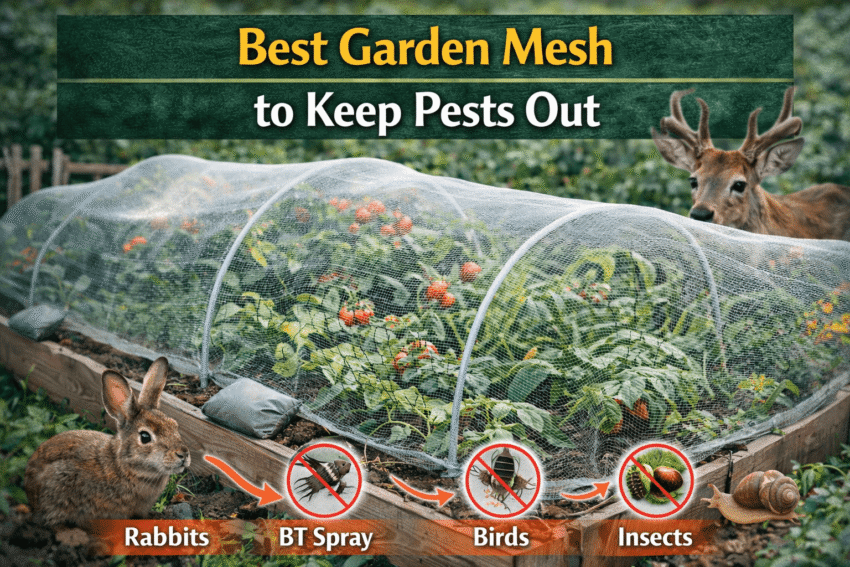
Many gardeners struggle with destructive pests that can ruin months of hard work in just days. You need the right garden mesh to create an effective barrier against insects, birds, and small animals while allowing sunlight and water to reach your plants. This guide will help you choose the most protective mesh for your specific garden needs and pest problems.
Key Takeaways
- Fine mesh netting with holes smaller than 1mm provides the most effective barrier against common garden pests like aphids, whiteflies, and flea beetles, while still allowing water, air, and sunlight to reach your plants.
- Row covers made from lightweight polyester or polypropylene mesh protect vegetables and flowers from insect damage without the need for chemical pesticides, and they can increase yields by creating a warmer microclimate for plants.
- Installing mesh barriers early in the growing season prevents pest infestations before they start, and proper anchoring with ground staples or buried edges stops insects from crawling underneath to access your crops.
Essential Factors for Choosing Quality Mesh
Selecting the right garden mesh requires careful consideration of several key elements that determine long-term performance. You need to evaluate material composition, mesh opening size, and UV resistance to ensure effective pest protection. Your choice should balance durability with proper airflow and light penetration for healthy plant growth. Knowing these factors helps you invest in mesh that delivers lasting value.
- Material durability and weather resistance
- UV protection for extended lifespan
- Mesh opening size appropriate for target pests
- Gauge thickness and tensile strength
- Breathability and light transmission rates
Evaluating Material Durability and UV Protection
Quality garden mesh must withstand constant sun exposure and varying weather conditions throughout growing seasons. UV-stabilized materials prevent degradation, cracking, and brittleness that compromise pest barriers. Polyethylene and polypropylene meshes with UV inhibitors typically last 3-5 years compared to untreated versions that fail within months. Knowing material specifications ensures your investment protects gardens season after season.
Understanding Mesh Opening Sizes and Gauges
Different pests require specific mesh opening dimensions to create effective barriers. Fine mesh (0.6mm-1mm) blocks tiny insects like aphids and thrips, while medium mesh (2mm-5mm) stops larger pests like beetles and butterflies. Your target pest determines the appropriate gauge, with smaller openings providing better protection but potentially reducing airflow. Knowing proper sizing prevents pest infiltration without compromising plant health.
Mesh gauge measurements can confuse gardeners since manufacturers use different systems to classify opening sizes. The number typically refers to holes per square inch or millimeter dimensions between threads. Higher gauge numbers indicate smaller openings, which block more pest species but may restrict beneficial insect access and air circulation. You should match mesh specifications to your specific pest problems-vegetable gardens plagued by carrot flies need ultra-fine 0.8mm mesh, while fruit protection from birds works well with 10mm-15mm netting. Consider your local pest population and plant requirements before selecting a gauge, as overly restrictive mesh can create humidity problems and reduce pollination opportunities for crops requiring insect activity.
Identifying Your Garden Pests and Needs
Before selecting the right garden mesh, you must identify which pests threaten your plants. Different intruders require varying mesh sizes and materials for effective protection. Your local climate and growing season also influence pest populations. Accurate identification saves money by preventing unnecessary purchases of inappropriate barriers.
Distinguishing Between Insect and Animal Intruders
Insects like aphids, beetles, and caterpillars need fine mesh with openings smaller than 1mm, while larger animals such as rabbits, deer, and birds require sturdier barriers with bigger gaps. Examining damage patterns helps determine the culprit-chewed leaves suggest insects, whereas missing vegetables indicate animal activity.
Assessing the Vulnerability of Specific Crops
Certain vegetables attract more pests than others, making them priority candidates for mesh protection. Brassicas face constant threats from cabbage moths, while tender seedlings appeal to birds and slugs. Your crop selection directly determines your mesh requirements.
Leafy greens and soft fruits represent the most vulnerable plants in any garden, requiring immediate protection from the moment you plant them. Strawberries attract birds, slugs, and insects simultaneously, demanding multi-layered defense strategies. Carrots and root vegetables need protection mainly during their early growth stages when flies lay eggs near the soil surface. Tomatoes and peppers become targets once they start flowering, as various pests seek out the developing fruits. You should prioritize mesh installation around high-value crops that provide the greatest harvest returns, ensuring your investment in protective barriers pays off through increased yields and reduced losses.
How to Install Garden Mesh Effectively
Proper installation determines whether your garden mesh successfully blocks pests or leaves vulnerable entry points. You’ll need to bury the bottom edge at least 6 inches deep to prevent burrowing animals from tunneling underneath. Secure the mesh tightly to your frame structure, checking for any gaps larger than the pests you’re targeting.
Constructing Sturdy Support Hoops and Frames
PVC pipes, metal conduit, or bamboo stakes work well as support structures for your mesh covering. Space your hoops every 3-4 feet along garden beds to prevent sagging. Drive stakes at least 12 inches into the ground for stability against wind and weather conditions.
Tensioning and Anchoring Techniques to Close Gaps
Taut mesh prevents pests from pushing through loose sections to reach your plants. Use heavy-duty clips, zip ties, or garden staples every 12 inches along the frame perimeter. Weight the bottom edges with soil, landscape pins, or wooden boards to eliminate ground-level openings.
Your mesh will only perform as well as its anchoring system allows. Start at one corner and work systematically around the perimeter, pulling the material tight before securing each attachment point. Double-check all seams and overlaps where separate mesh pieces meet, as these junctions often create the weakest points in your barrier. Inspect your installation weekly during the first month, as settling soil and weather exposure can create new gaps. Wind can lift poorly anchored edges, so consider using sandbags or landscape fabric pins along the base in exposed locations. Test your barrier by gently pushing against the mesh from various angles to identify any loose sections that need reinforcement.
Tips for Maintaining Optimal Plant Health
Your garden mesh works best when combined with proper plant care practices. Regular monitoring helps you spot any gaps or tears that pests might exploit. Key maintenance tasks include:
- Inspecting mesh weekly for damage or wear
- Cleaning accumulated debris from mesh surfaces
- Adjusting tension to prevent sagging
- Checking anchor points remain secure
Recognizing early signs of pest activity allows you to address problems before they escalate.
Ensuring Proper Sunlight and Water Penetration
Select mesh with appropriate aperture sizes that allow adequate light transmission for photosynthesis while blocking pests. Your plants need at least six hours of sunlight daily, so choose lighter-colored mesh that won’t create excessive shade. Water must pass through freely to prevent pooling. Recognizing your specific crop requirements helps you choose the right mesh density.
Managing Airflow to Prevent Fungal Growth
Proper air circulation prevents moisture buildup that encourages fungal diseases and mildew. Position your mesh to allow natural ventilation while maintaining pest protection. Avoid wrapping mesh too tightly around plants, as stagnant air creates ideal conditions for pathogens. Recognizing signs of poor airflow includes condensation on leaves and musty odors.
Your mesh installation should balance protection with breathability to maintain a healthy growing environment. Leave strategic gaps near the ground or top edges where air can flow through without compromising pest barriers. During humid weather, you may need to temporarily lift sections of mesh to increase ventilation. Monitor humidity levels inside covered areas, especially in enclosed structures or cold frames. Plants showing yellowing leaves, stunted growth, or visible mold indicate insufficient airflow that requires immediate adjustment to your mesh configuration.
Seasonal Care and Mesh Longevity
Your garden mesh requires regular maintenance throughout the growing season to maintain its protective qualities. Inspect your mesh weekly for tears, holes, or weakened areas where pests might penetrate. UV exposure and weather conditions gradually degrade mesh materials, so you’ll need to replace sections showing significant wear. Proper seasonal care extends mesh lifespan up to five years.
Best Practices for Cleaning and Debris Removal
Debris accumulation reduces airflow and creates pest hiding spots on your mesh surfaces. Gently brush off leaves, dirt, and organic matter using a soft-bristled broom every two weeks. Rinse stubborn residue with a garden hose on low pressure. Avoid harsh chemicals or pressure washers that damage mesh fibers and reduce effectiveness.
Proper Storage Methods During the Off-Season
Clean, dry mesh before storing to prevent mold growth and material degradation. Fold your mesh loosely and store in a cool, dry location away from direct sunlight. Rodents can chew through improperly stored mesh, so use sealed containers or elevated storage areas.
Your off-season storage approach directly impacts how many seasons you’ll get from your investment. Roll larger mesh pieces around cardboard tubes to prevent permanent creasing that weakens the material structure. Label each stored piece with its dimensions and the garden area it covers for quick identification next spring. Keep mesh away from sharp tools, fertilizers, or chemicals that could cause deterioration. A climate-controlled garage or shed offers the best protection against temperature extremes and moisture. Check stored mesh mid-winter for any pest damage or moisture problems, addressing issues immediately to salvage your materials.
Troubleshooting Common Exclusion Issues
Problems with garden mesh installations can compromise your pest protection system. Regular inspections every two weeks help you catch issues before they escalate into major pest invasions. You’ll need to address tears, sagging sections, and growth-related adjustments to maintain effective barriers throughout the growing season.
Repairing Tears and Reinforcing Weak Points
Patch small tears immediately using waterproof repair tape or mesh patches to prevent pest entry. You should reinforce stress points at corners and stakes with doubled mesh or additional fasteners. Replace sections larger than six inches rather than attempting repairs, as compromised areas attract persistent pests.
Adjusting Mesh Height for Plant Growth
Your plants will quickly outgrow initial mesh installations during peak growing seasons. Raise support structures every 3-4 weeks to accommodate vertical growth while maintaining proper tension. Check that mesh doesn’t constrict stems or create pressure points on developing foliage.
Monitoring plant height becomes vital as vegetables and flowers reach their mature size. You can use adjustable hoops or telescoping stakes that extend upward without complete reinstallation. Leave 6-8 inches of clearance above the tallest growth point to prevent leaves from pressing against the mesh, which can cause damage and create entry points for small insects. Tomatoes, pole beans, and climbing plants require particularly careful attention, as their rapid growth can push through or distort mesh within days. Consider installing taller permanent frames for these vigorous growers, or plan to upgrade your mesh height at specific growth milestones based on your plant varieties’ expected mature dimensions.
Final Words
So you now have the knowledge to select the right garden mesh for your pest protection needs. Your choice depends on the specific insects you’re targeting, your garden size, and your budget. Quality mesh with proper installation will save you from chemical pesticides while protecting your crops effectively. You can enjoy healthier plants and better harvests when you invest in the appropriate netting solution for your garden.
FAQ
Q: What mesh size works best for keeping different garden pests out?
A: The mesh size you need depends on which pests are targeting your garden. Fine mesh with holes measuring 0.6mm to 0.8mm blocks tiny insects like thrips, aphids, and flea beetles while still allowing air and water to reach your plants. Standard mesh with 1mm to 2mm holes works well against larger pests such as cabbage moths, carrot flies, and whiteflies. Butterfly netting with 7mm openings prevents butterflies and larger moths from laying eggs on your vegetables but won’t stop smaller insects. Bird netting features larger 15mm to 19mm openings that protect fruit trees and berry bushes from birds while permitting beneficial pollinators to access flowers. Most gardeners find that 1mm mesh offers the best balance between pest protection and plant health for general vegetable garden use.
Q: How should I install garden mesh to ensure maximum pest protection?
A: Proper installation requires securing the mesh completely around your plants with no gaps for pests to enter. Start by creating a frame using PVC pipes, bamboo stakes, or metal hoops that stand at least 12 inches above your tallest plants to prevent the mesh from touching leaves. Drape the mesh over this frame and bury the bottom edges 4 to 6 inches deep in the soil, or weight them down with boards, bricks, or soil-filled tubes. Check that all corners and seams overlap by at least 6 inches and secure them with clips or clothespins. Inspect the entire structure weekly for tears, holes, or gaps that pests could exploit. Access points for watering and harvesting should use zippered panels or overlapping flaps that you can seal tightly after each use. The mesh must remain in place from planting until harvest for crops that pests target throughout their growing cycle.
Q: Can garden mesh affect plant growth or reduce crop yields?
A: Garden mesh actually improves plant health and yields when you choose the right type and install it correctly. Quality mesh allows 85% to 95% of sunlight to penetrate, which provides enough light for photosynthesis and healthy growth. The mesh creates a microclimate that reduces wind damage, moderates temperature swings, and maintains higher humidity levels around plants. This protected environment often results in faster growth rates and earlier harvests compared to exposed plants. Some gardeners report 20% to 30% higher yields when using mesh because plants suffer no pest damage and can direct all their energy toward producing fruit rather than recovering from insect attacks. White or transparent mesh reflects some heat during summer, preventing stress on heat-sensitive crops like lettuce and spinach. The main consideration is ensuring adequate space between the mesh and plant tops, as direct contact can damage leaves and restrict growth. Proper ventilation prevents fungal diseases that might develop in overly humid conditions under poorly installed mesh.