
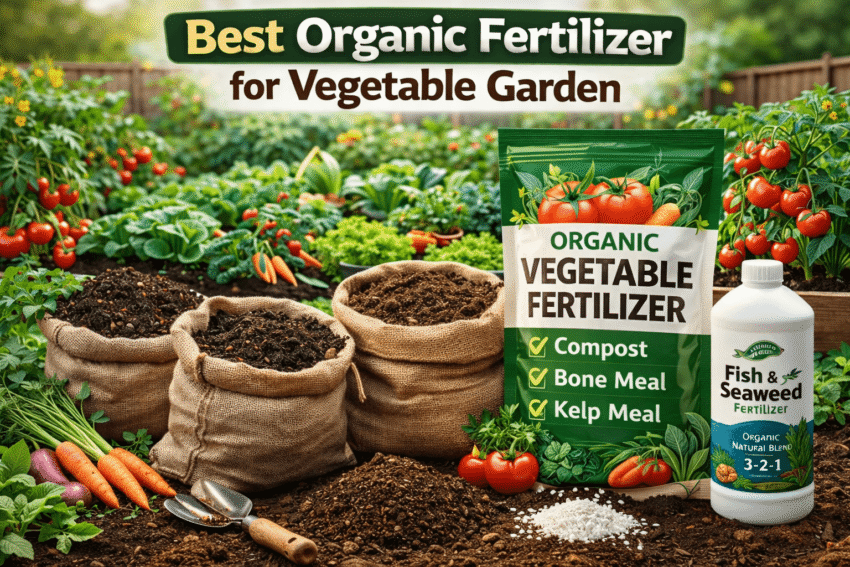
Organic fertilizers transform your garden by feeding soil microbes that naturally nourish plants, unlike synthetic options that can burn roots and damage ecosystems. You’ll discover proven options like compost, worm castings, and bone meal that boost yields without harmful chemicals. These natural amendments improve soil structure while delivering sustained nutrition your plants need to thrive throughout the growing season.
Key Takeaways
- Compost stands as the most versatile organic fertilizer, enriching soil with beneficial microorganisms while improving drainage and moisture retention for healthier plant growth across all garden types.
- Worm castings deliver concentrated nutrients in a form that plants absorb immediately, making them perfect for seedlings and transplants that need a gentle yet effective nutritional boost.
- Fish emulsion provides quick-release nitrogen that produces visible results within days, though its strong odor makes it better suited for outdoor gardens rather than indoor plants.
- Bone meal serves as an excellent phosphorus source for flowering plants and root vegetables, but it works slowly and requires several weeks to break down before plants can access its nutrients.
- Blood meal offers the highest nitrogen content among organic options, promoting lush green foliage, but overapplication can burn plants and requires careful measurement according to package directions.
Top-Performing Animal-Based Fertilizers
Animal-based fertilizers deliver concentrated nutrients directly from organic sources, making them some of the most effective amendments for your garden. You’ll find these products work faster than plant-based alternatives because they break down more readily in soil. Blood meal, bone meal, and composted manures have proven their worth across generations of gardeners seeking reliable, natural nutrition for their plants.
Utilizing blood meal and bone meal for nitrogen and phosphorus
Blood meal provides 13% nitrogen content, making it perfect when your plants need rapid green growth during vegetative stages. Bone meal complements this by supplying 15% phosphorus for strong root development and flowering. You should apply blood meal sparingly-excessive use can burn plants and attract animals-while bone meal works best mixed into planting holes.
Benefits of composted poultry and steer manure
Composted manures offer balanced NPK ratios with beneficial microorganisms that improve soil structure over time. Poultry manure contains higher nitrogen levels than steer manure, making it ideal for leafy vegetables. Your soil texture improves dramatically as these amendments increase water retention and create thriving microbial communities.
Properly aged manure transforms your garden beds into nutrient-rich growing environments without the risks of fresh manure. You can apply composted poultry manure at 10-20 pounds per 100 square feet, while steer manure tolerates heavier applications up to 40 pounds. The composting process eliminates pathogens and weed seeds that plague fresh manure, and reduces the strong ammonia smell that can damage plant roots. Your plants absorb nutrients gradually as microbes continue breaking down organic matter, providing sustained feeding throughout the growing season. Steer manure works particularly well for building long-term soil health in flower beds and around perennials where you want steady, gentle nutrition rather than quick bursts of growth.
Highly Effective Plant-Based Soil Amendments
Plant-based fertilizers deliver slow-release nutrients that feed your soil’s beneficial microorganisms while nourishing your crops. You’ll find these organic amendments break down naturally, creating a sustainable feeding cycle that synthetic fertilizers simply can’t match. Your plants absorb nutrients gradually, reducing the risk of fertilizer burn and nutrient runoff into local waterways.
Alfalfa and soybean meal for steady growth
Both meals provide nitrogen-rich protein sources that decompose steadily over several weeks, making them perfect for long-season crops. You can apply alfalfa meal at 2-5 pounds per 100 square feet, while soybean meal works best at similar rates. Triacontanol in alfalfa acts as a natural growth stimulant for faster root development.
Seaweed and kelp extracts for micronutrient density
Ocean-harvested kelp contains over 60 trace minerals that terrestrial fertilizers typically lack, including iodine, zinc, and manganese. You’ll notice improved plant resilience against drought and disease when applying these extracts monthly. Cytokinins and auxins present in seaweed naturally boost cell division and root growth throughout your garden.
Seaweed products come in multiple forms-liquid concentrates, dried meal, or fresh kelp-each offering distinct application benefits for your specific gardening needs. Liquid extracts work fastest, absorbing through leaves within hours for rapid micronutrient correction. Dried kelp meal breaks down more slowly in soil, providing sustained mineral release over 3-4 months. You can use both foliar sprays and soil drenches simultaneously without risk of over-application, since seaweed’s natural growth hormones remain balanced. Cold-processed extracts preserve the most beneficial compounds, though they cost more than heat-treated alternatives.
Mineral-Sourced Enhancers for Long-Term Fertility
Natural rock minerals provide slow-release nutrients that feed your soil for years rather than weeks. Your garden benefits from these geological powerhouses because they break down gradually, creating a stable foundation for continuous plant growth. Rock-based amendments work particularly well in depleted soils where synthetic fertilizers have stripped away imperative micronutrients.
Rock phosphate for sustainable root development
Phosphorus from rock phosphate releases slowly into your soil, promoting strong root systems and flower production without the runoff problems of chemical alternatives. You’ll see improved fruiting and seed development as this mineral amendment breaks down over several growing seasons, making it ideal for perennial beds and orchards.
Greensand and rock dust for trace element replenishment
Greensand delivers potassium, iron, and over 30 trace minerals that plants need in small quantities but cannot thrive without. Rock dust from volcanic or glacial sources similarly provides a broad spectrum of micronutrients that synthetic fertilizers typically lack in your garden soil.
Your soil structure improves dramatically when you apply these mineral amendments because they enhance water retention and aeration while feeding beneficial microorganisms. Greensand, derived from ancient ocean deposits, works especially well in sandy soils that drain too quickly. Application rates typically range from 5-10 pounds per 100 square feet, and you’ll notice the effects building over time as microbes break down the particles. Rock dust from basalt or granite contains silica that strengthens plant cell walls, making your crops more resistant to pests and disease. You can apply these amendments any time of year since they won’t burn plants, though working them into beds before planting gives the best results.
How-to Guide: Applying Organic Fertilizers Correctly
Proper application determines whether your organic fertilizers deliver results or waste away. You’ll need to match application methods to your fertilizer type and plant needs. Timing matters just as much as technique-apply during active growing seasons when plants can absorb nutrients efficiently. Water thoroughly after application to activate the fertilizer and prevent root burn.
Techniques for top-dressing and soil incorporation
Spreading granular fertilizers across your soil surface works well for established plants and lawns. Work the fertilizer into the top 2-3 inches of soil using a rake or cultivator for better nutrient absorption. Keep fertilizer at least 4 inches away from plant stems to avoid burning.
Brewing and using compost tea for liquid feeding
Compost tea provides instant nutrient delivery through foliar spraying or soil drenching. Steep finished compost in water for 24-48 hours, strain, and apply directly to leaves or roots. This method works perfectly for container plants and quick nutrient boosts.
Brewing compost tea requires a 5-gallon bucket, quality finished compost, and dechlorinated water. You’ll want to maintain aeration during brewing by stirring several times daily or using an aquarium pump to prevent anaerobic bacteria growth. The ideal brewing temperature ranges between 60-80°F for optimal microbial activity. Your finished tea should smell earthy and pleasant-any foul odor indicates harmful bacteria and the batch should be discarded. Dilute concentrated tea at a 10:1 ratio for foliar applications, or use full strength for soil drenching around plant bases. Apply your freshly brewed tea within 4 hours for maximum beneficial microorganism activity, as these organisms die off quickly once removed from their oxygen source.
Expert Tips for Maximizing Nutrient Absorption
Optimizing your organic fertilizer application requires strategic planning and soil knowledge. You need to consider several factors that directly impact how plants absorb nutrients:
- Test your soil composition before applying fertilizers
- Water thoroughly after application to activate nutrient release
- Apply fertilizers to moist soil for better absorption
- Avoid over-application which causes nutrient runoff
Assume that proper technique doubles your fertilizer’s effectiveness.
Timing applications according to seasonal growth cycles
Plants demand different nutrient levels throughout their growth stages. You should apply nitrogen-rich fertilizers during active growth periods in spring and early summer. Phosphorus applications work best during root development and flowering phases. You’ll waste resources applying fertilizers during dormancy periods. Assume that synchronized timing increases nutrient uptake by 40%.
Managing soil pH to optimize fertilizer efficiency
Your soil’s pH level directly controls nutrient availability to plant roots. Most organic fertilizers perform best in slightly acidic to neutral soil (pH 6.0-7.0). You can adjust pH using lime to raise it or sulfur to lower it. Test your soil pH twice yearly for accurate readings. Assume that incorrect pH locks nutrients away from plants.
Balanced pH creates the chemical environment where nutrient molecules remain soluble and accessible. You’ll find that iron, manganese, and zinc become unavailable in alkaline soils above pH 7.5, while aluminum toxicity threatens plants in acidic conditions below pH 5.5. Your organic matter naturally buffers pH fluctuations, but extreme readings require correction. Calcium and magnesium absorption depends heavily on proper pH ranges. You can use organic amendments like compost to gradually stabilize pH levels over time. Regular monitoring prevents deficiency symptoms before they appear in your plants.
To Wrap Up
With these considerations in mind, you can confidently select organic fertilizers that deliver real results for your garden. Compost, worm castings, fish emulsion, and bone meal stand out as proven options that improve soil health and boost plant growth. You’ll achieve the best outcomes by matching the right fertilizer to your specific plants and soil conditions. Test your soil regularly and adjust your feeding schedule based on your garden’s response.
FAQ
Q: What makes compost the most reliable organic fertilizer for home gardens?
A: Compost stands out as the gold standard because it improves soil structure while feeding plants. This decomposed organic matter contains balanced nutrients that release slowly over time, preventing the burning that chemical fertilizers can cause. Your garden soil becomes more porous and water-retentive when you add compost regularly. Microorganisms thrive in compost-enriched soil, creating a living ecosystem that protects plant roots from diseases. You can make it free at home using kitchen scraps and yard waste, or purchase finished compost from local suppliers. Apply a 2-3 inch layer around plants each spring for best results.
Q: How does fish emulsion compare to other liquid organic fertilizers?
A: Fish emulsion delivers fast-acting nitrogen that produces visible growth within days of application. This liquid fertilizer contains NPK ratios around 5-1-1, making it perfect for leafy vegetables and plants needing a quick boost. The smell dissipates within 24 hours despite initial concerns from new users. You should dilute it according to package directions, typically 1 tablespoon per gallon of water. Plants absorb nutrients through both roots and leaves when you spray it directly on foliage. Use fish emulsion every 2-3 weeks during the growing season for vegetables, flowers, and container plants.
Q: Why do experienced gardeners prefer aged manure over fresh manure?
A: Fresh manure burns plants because it contains high ammonia levels and active pathogens that harm both crops and humans. Aged manure has been composted for at least 6 months, allowing harmful bacteria to die off and nutrients to stabilize into plant-friendly forms. Chicken manure offers the highest nitrogen content, while cow and horse manure provide better soil conditioning. The aging process eliminates weed seeds that would otherwise sprout throughout your garden beds. Test your soil before applying manure since over-application can create nutrient imbalances. Work aged manure into soil 2-4 weeks before planting for optimal results.
Q: Can bone meal really improve flowering and root development?
A: Bone meal provides concentrated phosphorus (typically 15% or higher) that directly supports root growth and flower production. This slow-release fertilizer works best when mixed into the soil at planting time since phosphorus doesn’t move easily through soil. Bulbs, roses, and flowering perennials show dramatic improvement when bone meal is added to their planting holes. The calcium content also helps prevent blossom end rot in tomatoes and peppers. Results appear gradually over weeks rather than days because soil microbes must break down the bone particles. Apply 1-2 tablespoons per plant for flowers or mix 5-10 pounds per 100 square feet when preparing new beds.
Q: What advantages does worm castings offer that regular compost doesn’t?
A: Worm castings contain 5 times more nitrogen, 7 times more phosphorus, and 11 times more potassium than ordinary topsoil. This vermicompost includes beneficial microbes and enzymes that regular compost lacks in such concentrated amounts. Plants grown with worm castings show increased disease resistance and produce higher yields in university studies. You cannot over-apply this gentle fertilizer since it won’t burn even the most delicate seedlings. The water-holding capacity improves dramatically in soils amended with castings. Mix 1 part worm castings to 4 parts potting soil for containers, or side-dress outdoor plants with 1/4 cup per plant monthly during the growing season.