
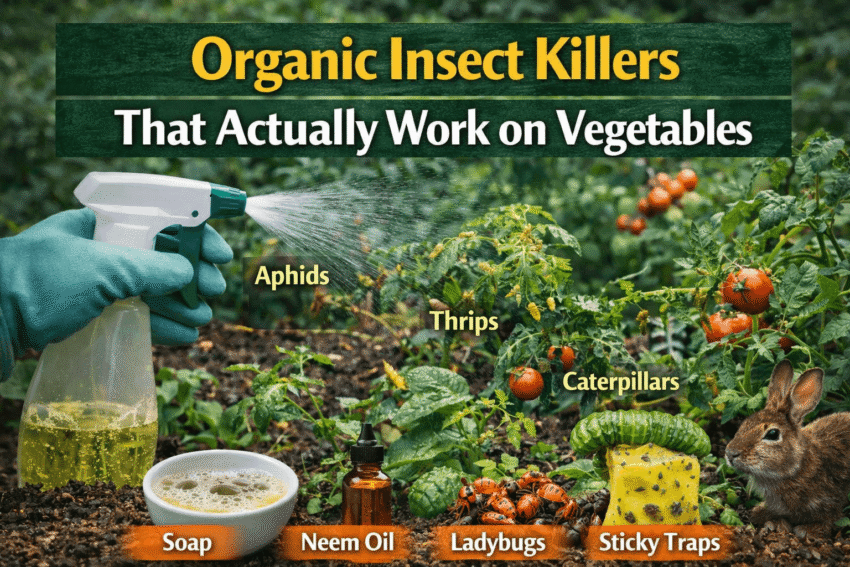
Organic pest control protects your vegetable garden without harmful chemicals that damage soil health and beneficial insects. You can eliminate common garden pests using natural solutions like neem oil, diatomaceous earth, and insecticidal soaps that target destructive bugs while keeping your produce safe for consumption. These proven methods deliver effective results when applied correctly and consistently throughout the growing season.
Key Takeaways
- Neem oil stands out as one of the most effective organic insect killers for vegetable gardens, working against aphids, whiteflies, and spider mites by disrupting their feeding and reproductive cycles. Apply it in the early morning or evening to prevent leaf burn, and reapply every 7-14 days for consistent protection.
- Diatomaceous earth provides mechanical pest control by damaging the exoskeletons of soft-bodied insects like slugs, beetles, and caterpillars. Sprinkle food-grade DE around the base of plants and on leaves after morning dew dries, though you’ll need to reapply after rain or heavy watering.
- Spinosad-based sprays offer fast-acting control against difficult pests including tomato hornworms, cabbage loopers, and leaf miners while remaining safe for beneficial insects once dried. This naturally-derived compound works best when applied directly to pests during active feeding times, typically in late afternoon.
Essential Factors for Selecting Organic Pesticides
Choosing the right organic pesticide requires careful consideration of several key elements. You need to evaluate the product’s effectiveness against your specific pest problem, its safety profile for your family and pets, and its compatibility with your garden ecosystem. Consider these factors:
- Active ingredient concentration and formulation type
- Application frequency and weather resistance
- Impact on beneficial insects like bees and ladybugs
- Harvest interval requirements before consumption
Knowing these variables helps you make informed decisions that protect both your crops and the environment.
Assessing Ingredient Safety for Edible Crops
Organic doesn’t automatically mean completely harmless to humans. You must verify that any pesticide you apply to vegetables has been approved for food crops and check the pre-harvest interval-the waiting period between application and safe consumption. Read product labels thoroughly to understand proper dilution ratios and protective equipment requirements. Some natural substances like neem oil and pyrethrin are generally recognized as safe when used correctly on edibles.
Understanding Targeted vs. Broad-Spectrum Effects
Pesticides fall into two categories based on what they kill. Targeted products attack specific pest types, such as Bacillus thuringiensis (Bt) which only affects caterpillars, while broad-spectrum options eliminate multiple insect species indiscriminately. Your choice depends on whether you’re battling a single pest or multiple invaders simultaneously. Knowing the difference prevents unnecessary harm to beneficial garden inhabitants.
Targeted pesticides offer precision control with minimal ecological disruption. You can use products to eliminate cabbage worms without harming pollinators or predatory insects that naturally control aphids and mites. Broad-spectrum organic options like insecticidal soaps and horticultural oils kill on contact but don’t discriminate between pests and helpers. These products work best when applied strategically during times when beneficial insects are less active, such as early morning or late evening. Your pest identification skills determine which approach serves your garden best-a single troublesome species warrants targeted treatment, while severe multi-pest infestations may require broader action.
How to Create Effective Homemade Solutions
Making your own organic insect killers gives you complete control over what touches your vegetables. You’ll save money while avoiding synthetic chemicals that harm beneficial insects. Simple kitchen ingredients combined with proven botanical extracts create powerful pest deterrents. Your homemade solutions work just as effectively as commercial products when properly formulated.
Formulating neem oil leaf applications
Mix one teaspoon of pure neem oil with one quart of water and a few drops of liquid castile soap as an emulsifier. Spray this solution on both sides of leaves during early morning or evening hours. The mixture disrupts insect feeding patterns and reproductive cycles without harming your plants.
Crafting botanical soap and oil sprays
Combine two tablespoons of liquid castile soap with one tablespoon of vegetable oil in a gallon of water. This creates an effective spray that suffocates soft-bodied pests like aphids and whiteflies on contact.
The soap breaks down the protective coating on insect bodies, while the oil component helps the solution stick to leaf surfaces longer. You can enhance this basic recipe by adding crushed garlic, cayenne pepper, or necessary oils like peppermint and rosemary. Test your spray on a small section of plant first to ensure it doesn’t cause leaf burn. Apply the mixture every five to seven days, or after rainfall washes it away. Store any unused portion in a labeled container away from direct sunlight, and shake well before each application to keep ingredients properly mixed.
Tips for Proper Application and Timing
Successful pest control depends heavily on when and how you apply organic insecticides to your vegetable plants. You’ll achieve better results by treating infestations during their early stages rather than waiting for severe damage. Consider these key factors for maximum effectiveness:
- Apply treatments every 5-7 days for active infestations
- Reapply after rain or heavy watering
- Test products on small plant sections first
- Any organic spray works best when pests are visible
Identifying the best time of day for treatment
Early morning or late evening provides optimal conditions for applying organic insecticides to your vegetables. Direct sunlight can cause some organic solutions to evaporate quickly or burn plant leaves. Cooler temperatures allow sprays to remain wet longer, giving active ingredients more time to work against target pests.
Ensuring complete coverage of plant surfaces
Thorough application requires you to spray both upper and lower leaf surfaces where insects hide and feed. Many pests, including aphids and whiteflies, congregate on leaf undersides away from direct view. Your spray pattern should coat stems, leaf joints, and developing fruit areas completely.
You need to use a quality spray bottle or garden sprayer that produces a fine mist rather than heavy droplets. Hold the nozzle 6-8 inches from plant surfaces and move in a steady, sweeping motion to prevent dripping or pooling. Pay special attention to new growth where soft tissue attracts feeding insects. Inspect your plants from multiple angles to catch missed spots, and don’t forget to treat the soil surface around plant bases where certain larvae and beetles may hide. Proper coverage means every accessible plant surface receives a light, even coating of your chosen organic treatment.
Biological Factors in Natural Pest Management
Nature provides its own pest control system through predatory insects, beneficial microorganisms, and parasitic wasps that target vegetable garden pests. You can harness these biological agents by creating habitats that support their life cycles and reproduction. Companion planting, insectary strips, and reducing pesticide use all encourage these natural allies to establish populations in your garden. Perceiving your garden as an ecosystem rather than a production system transforms pest management effectiveness.
Attracting beneficial predatory insects
Ladybugs, lacewings, and hoverflies consume thousands of aphids, mites, and soft-bodied pests throughout their lifespans. You’ll draw these predators by planting nectar-rich flowers like alyssum, yarrow, and dill around your vegetable beds. Providing shallow water sources and avoiding broad-spectrum insecticides protects existing populations. Perceiving these insects as garden partners changes your entire pest management approach.
Utilizing microbial soil amendments
Beneficial bacteria and fungi in your soil actively suppress plant pathogens and strengthen root systems against pest damage. You can introduce these microorganisms through compost teas, mycorrhizal inoculants, and bacterial soil drenches. Regular applications build populations that outcompete harmful organisms. Perceiving soil health as pest prevention addresses problems before they emerge.
Bacillus thuringiensis (Bt) stands as the most widely used microbial insecticide, producing proteins toxic to specific caterpillars, beetles, and mosquito larvae while remaining harmless to humans and beneficial insects. You apply Bt strains directly to foliage where target pests feed, and the bacteria must be ingested to work effectively. Beauveria bassiana offers another option-this entomopathogenic fungus infects soft-bodied insects like aphids, whiteflies, and thrips upon contact, spreading through pest populations naturally. Soil drenches containing beneficial nematodes hunt down root-feeding grubs and larvae underground, providing protection you can’t achieve with foliar sprays. These microbial solutions require proper timing and environmental conditions to work optimally, but they integrate perfectly into organic growing systems without disrupting beneficial insect populations or leaving harmful residues on your harvest.
How to Use Physical Barriers and Traps
Physical barriers and traps offer you a non-toxic defense system that stops pests before they damage your crops. You can protect entire rows of vegetables or target specific problem insects without introducing any chemicals into your garden. These methods work best when you install them early in the growing season and maintain them regularly throughout the harvest period.
Installing floating row covers
Drape lightweight fabric directly over your vegetable beds, securing the edges with soil, stakes, or landscape staples. The breathable material allows sunlight and water to reach your plants while blocking flying insects like cabbage moths and flea beetles. Remove the covers when plants need pollination or when temperatures rise too high.
Deploying pheromone and sticky traps
Hang pheromone lures near susceptible crops to attract and capture male insects before they can mate. Place yellow sticky cards throughout your garden to monitor pest populations and trap whiteflies, aphids, and fungus gnats. Position traps at plant height for maximum effectiveness.
Pheromone traps work by mimicking the scent female insects release to attract mates, which disrupts the breeding cycle in your garden. You should check these traps weekly and replace them according to manufacturer instructions, typically every four to six weeks. Sticky traps require more frequent attention since they fill up quickly during peak pest season. Clean debris from sticky surfaces or replace cards when they lose adhesiveness. Strategic placement matters-you’ll catch more pests by positioning traps upwind of your crops and adjusting heights as your vegetables grow taller.
Expert Tips for Preventing Re-infestation
Stopping pests from returning requires consistent monitoring and proactive garden management. Check your vegetable plants weekly for early signs of insect activity, including egg clusters and leaf damage. Remove affected foliage immediately and dispose of it away from your garden. Assume that prevention takes less effort than treating a full-blown infestation.
- Inspect plants during early morning hours when pests are most active
- Rotate crop locations each season to disrupt pest breeding cycles
- Clean garden tools regularly to avoid spreading insects between plants
- Encourage beneficial insects like ladybugs and lacewings to establish populations
Maintaining optimal soil nutrition
Healthy soil creates strong plants that naturally resist pest attacks. You’ll need to test your soil pH annually and amend it with compost or organic matter as needed. Well-nourished vegetables develop thicker cell walls and produce defensive compounds that deter insects. Balanced nutrition strengthens your plants’ immune systems against common garden pests.
Implementing strategic companion planting
Certain plant combinations naturally repel insects through their scent and chemical properties. Plant marigolds, basil, and nasturtiums alongside your vegetables to create protective barriers. These companion plants confuse pests and mask the smell of your crops. Assume that strategic placement reduces chemical-free pest control needs by up to forty percent.
Companion planting works because many herbs and flowers emit volatile compounds that insects find repulsive. Garlic planted near tomatoes deters aphids, while dill attracts parasitic wasps that prey on caterpillars. You can create layered defenses by interplanting aromatic species throughout your vegetable beds rather than grouping similar crops together. This diversity makes it harder for pests to locate their preferred host plants and establish colonies. Strong-smelling companions like onions, chives, and chrysanthemums provide season-long protection when positioned at regular intervals around susceptible vegetables.
Final Words
Now you have proven methods to protect your vegetable garden from pests without synthetic chemicals. You can rely on neem oil, insecticidal soap, diatomaceous earth, and beneficial insects to control harmful bugs effectively. Your success depends on early detection and consistent application of these organic solutions. You’ll achieve the best results by combining multiple methods and monitoring your plants regularly for signs of infestation.
FAQ
Q: What are the most effective organic insect killers for vegetable gardens?
A: Neem oil stands out as one of the best organic options for controlling vegetable pests. This natural pesticide disrupts the life cycle of aphids, whiteflies, and spider mites while remaining safe for beneficial insects when applied correctly. Insecticidal soap works excellently against soft-bodied insects like mealybugs and thrips by breaking down their protective outer coating. Bacillus thuringiensis (Bt) targets caterpillars specifically, making it perfect for controlling cabbage worms and tomato hornworms without harming other garden inhabitants. Diatomaceous earth creates a physical barrier that dehydrates slugs, beetles, and other crawling pests on contact. Pyrethrin, derived from chrysanthemum flowers, provides fast-acting control for a broad spectrum of vegetable pests including cucumber beetles and squash bugs.
Q: How often should I apply organic insect killers to my vegetable plants?
A: Application frequency depends on the specific product and pest pressure in your garden. Neem oil requires reapplication every 7-14 days, or after heavy rainfall washes it away from plant surfaces. You should spray insecticidal soap every 4-7 days until the pest population is under control, always applying in early morning or evening to prevent leaf burn. Bt products need weekly applications since they break down quickly in sunlight and only affect actively feeding caterpillars. Diatomaceous earth must be reapplied after rain or irrigation because moisture reduces its effectiveness. Monitor your plants daily during peak growing season to catch infestations early, which reduces the total number of treatments needed throughout the season.
Q: Are organic insect killers safe to use on vegetables right before harvest?
A: Most organic insect killers have short pre-harvest intervals, making them safer than synthetic pesticides for late-season use. Insecticidal soap and neem oil can be used up to the day of harvest when washed off thoroughly with water before eating. Bt products typically have zero-day waiting periods since the bacteria only affect insect larvae and pose no risk to humans. Diatomaceous earth requires simple rinsing before consumption as it’s a mineral-based powder with no toxic properties. Pyrethrin products usually need 12-24 hours before harvest, though this varies by formulation. Always read the product label for specific pre-harvest interval instructions, and wash all vegetables thoroughly regardless of when you last applied any treatment to ensure the cleanest produce possible.