
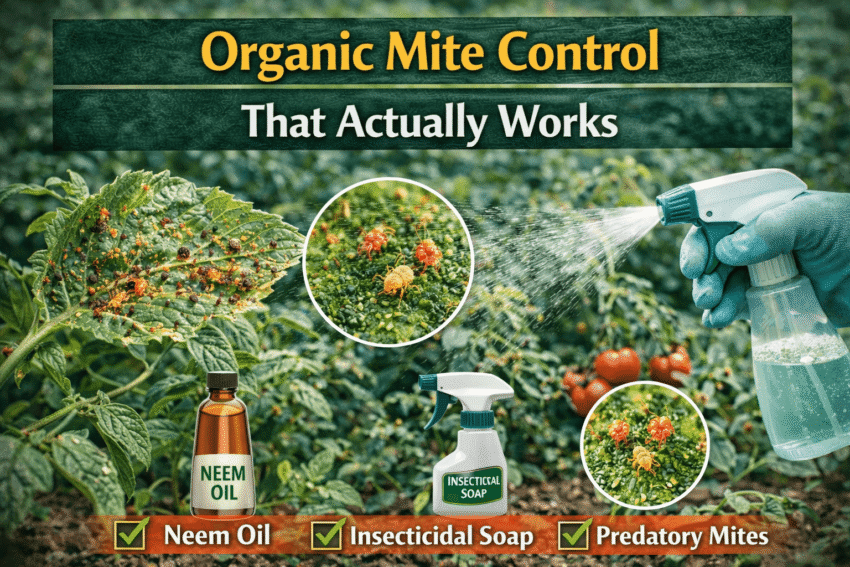
Just discovered mites destroying your plants? You’re facing one of gardening’s most persistent pests, but effective organic solutions exist. Chemical pesticides can harm beneficial insects and contaminate your soil, making natural methods the smarter choice. This guide shows you proven organic treatments that eliminate mites while protecting your garden’s ecosystem and keeping your plants healthy.
Key Takeaways
- Neem oil spray provides one of the most effective organic solutions for mite infestations, working by disrupting the pests’ hormonal systems and preventing reproduction. Apply it every 7-14 days, coating both the tops and undersides of leaves where mites typically hide and feed.
- Predatory mites like Phytoseiulus persimilis offer biological control that targets spider mites without harming plants or beneficial insects. These natural predators can eliminate entire mite populations within 2-3 weeks and establish long-term protection in gardens and greenhouses.
- Regular hosing down of plants with strong water sprays physically removes mites and their eggs while creating humid conditions that discourage future infestations. This simple mechanical method works best as a preventive measure when combined with proper plant spacing and air circulation.
Factors in Identifying Mite Infestations
Your garden’s health depends on catching mite infestations before they spiral out of control. Several indicators point to their presence, including:
- Stippling or bronzing on leaf surfaces
- Fine webbing between stems and leaves
- Yellowing or curling foliage
- Premature leaf drop
Perceiving these symptoms early gives you the best chance at effective organic intervention.
Recognizing Early Warning Signs and Foliage Damage
Tiny yellow or white dots on leaves signal spider mite feeding activity. You’ll notice these spots appear first on older, lower leaves before spreading upward. The underside of leaves often harbors colonies that produce fine silk webbing. Perceiving damage at this stage prevents widespread destruction of your plants.
Understanding Mite Species and Life Cycles
Two-spotted spider mites are the most common garden pests, completing their life cycle in just 5-20 days depending on temperature. Hot, dry conditions accelerate reproduction rates dramatically. Different species target specific plants, with some preferring vegetables while others attack ornamentals. Perceiving which species you’re dealing with determines your control strategy.
Temperature plays a defining role in mite population explosions. Temperatures above 80°F create ideal breeding conditions where females lay up to 20 eggs daily. Each egg hatches within three days, producing larvae that mature through two nymphal stages before reaching adulthood. You’re facing potential population doubling every few days during peak season. Cool weather below 60°F slows their development significantly, which explains why infestations worsen in summer months. Some species overwinter as adults in soil cracks or plant debris, emerging when conditions improve in spring.
How to Implement Initial Cultural Controls
Your first line of defense against mite infestations involves simple cultural practices that disrupt pest populations before they spiral out of control. Remove debris, weeds, and plant residues from around your garden beds since mites thrive in dusty, cluttered environments. Spacing plants properly improves air circulation and creates conditions less favorable for mite reproduction.
Strategic Pruning and Disposal of Infested Material
Inspect your plants regularly and immediately remove heavily infested leaves or branches to prevent mites from spreading. Seal the pruned material in plastic bags before disposal-never compost infested plant matter. Clean your pruning tools with rubbing alcohol between cuts to avoid transferring mites to healthy plants.
Utilizing High-Pressure Water Stream Techniques
Blasting mites off plants with strong water jets provides instant population reduction without chemicals. Direct the spray to leaf undersides where mites congregate, repeating every three days for two weeks. This method works best for sturdy plants that can withstand forceful water pressure.
Water pressure disrupts mite colonies by physically dislodging adults, nymphs, and eggs from plant surfaces. Most mites cannot climb back onto plants once knocked to the ground, where they either desiccate or become prey for ground-dwelling predators. You’ll need a hose nozzle that produces at least 50 PSI for effective results, though adjustable spray wands work well for delicate ornamentals. Early morning applications allow foliage to dry quickly, preventing fungal issues that might arise from prolonged moisture. Focus your efforts on new growth and leaf undersides, rotating the plant if possible to reach all surfaces thoroughly.
Tips for Using Biological Control Agents
Successful deployment of biological control agents requires careful planning and execution. You must release predatory mites at the first sign of pest activity rather than waiting for heavy infestations to develop. Application timing directly impacts success rates, as beneficial insects need time to establish populations before pest numbers explode. Consider these key factors:
- Release rates should match your infestation severity
- Multiple small releases outperform single large applications
- Monitor populations weekly to assess establishment
Perceiving early warning signs allows you to intervene before damage becomes irreversible.
Selecting the Correct Predatory Mite Species
Different predatory mite species target specific pests and thrive under varying conditions. Phytoseiulus persimilis excels at controlling spider mites in humid environments, while Neoseiulus californicus tolerates drier conditions and feeds on multiple prey types. Your climate, crop type, and target pest determine which species will deliver optimal results. Perceiving these distinctions prevents wasted investment in incompatible biological controls.
Optimizing Environmental Conditions for Beneficial Insects
Temperature and humidity levels directly affect predatory mite survival and reproduction rates. Most beneficial species perform best between 70-80°F with 60-70% humidity, though requirements vary by species. Your growing environment must support these parameters for biological controls to establish thriving populations. Perceiving environmental limitations helps you adjust conditions before releasing expensive beneficial insects.
Creating the right microclimate often determines whether your biological control program succeeds or fails. You can improve conditions by adjusting irrigation schedules to maintain proper humidity, using shade cloth to moderate temperatures, and ensuring adequate air circulation without excessive drying. Avoid pesticide applications for at least two weeks before and after releasing beneficials, as chemical residues kill predatory mites just as effectively as pests. Your plants should receive balanced nutrition since stressed or nitrogen-overloaded foliage attracts more pests and creates unfavorable conditions for beneficial insects. Monitor both pest and predator populations using a hand lens to track establishment progress and make adjustments as needed.
How to Formulate and Apply Organic Sprays
Proper formulation of organic mite sprays requires precise measurements and timing to achieve effective results. You’ll need to prepare fresh batches before each application since most organic solutions lose potency within 24-48 hours. Apply sprays during early morning or late evening when beneficial insects are less active and temperatures stay below 85°F to prevent leaf burn.
Mixing and Applying Neem Oil Solutions
Combine one tablespoon of cold-pressed neem oil with one teaspoon of liquid castile soap in one gallon of water, shaking vigorously. Spray all leaf surfaces thoroughly, especially undersides where mites congregate. Repeat applications every 7-10 days, and never apply in direct sunlight to avoid phytotoxicity.
Creating Potassium Soap and Essential Oil Dilutions
Mix two tablespoons of potassium-based insecticidal soap with 10-15 drops of rosemary or peppermint imperative oil per quart of water. Test on a small leaf area first since some plants show sensitivity. Apply weekly until mite populations drop significantly.
Potassium soap works by breaking down the protective outer coating of mites, causing dehydration and death on contact. You can enhance this effect by adding imperative oils like eucalyptus, clove, or thyme, which contain compounds that disrupt mite respiratory systems. Always emulsify imperative oils with the soap before adding water to ensure even distribution. Store any unused dilution in a dark glass bottle for up to one week, though fresh mixtures work best. Your spray coverage should leave visible droplets on leaf surfaces without causing runoff.
Environmental Factors for Population Suppression
Your growing environment plays a decisive role in controlling mite populations naturally. Specific conditions either promote explosive reproduction or create hostile habitats that suppress their numbers effectively. Key factors include:
- Humidity levels between 40-60%
- Temperature management below 70°F
- Proper air movement throughout the canopy
Assume that optimizing these elements reduces chemical intervention needs significantly.
Managing Humidity and Temperature Levels
Spider mites thrive in hot, dry conditions above 80°F with humidity below 40%. You’ll see populations explode within days under these circumstances. Maintaining cooler temperatures and moderate moisture creates unfavorable breeding conditions. Assume that consistent environmental monitoring prevents outbreaks before they start.
| Condition | Optimal Range for Mite Suppression |
| Temperature | 65-70°F |
| Humidity | 50-60% |
| Leaf Surface Temp | Below 75°F |
Enhancing Air Circulation and Ventilation
Stagnant air creates perfect breeding grounds for mite colonies to establish themselves undetected. Oscillating fans and proper ventilation disrupt their webbing and make leaf surfaces less hospitable. Strategic airflow also reduces humidity pockets where populations concentrate. Assume that continuous air movement serves as your first line of defense.
Your ventilation system should create gentle, consistent movement without directly blasting plants. Position fans to move air horizontally across the canopy rather than straight down onto foliage. Cross-ventilation patterns work best, with intake and exhaust points positioned to create natural flow throughout your space. Plants with stronger stems and leaves resist mite damage better when air circulation strengthens their structure naturally. You’ll notice fewer webbed clusters forming when leaves constantly move slightly throughout the day.
Tips for Sustained Prevention and Monitoring
Long-term mite control depends on consistent vigilance and proactive measures. You’ll need to combine regular inspections with environmental adjustments to keep populations under control.
- Check plants weekly for early signs of infestation
- Maintain optimal humidity levels between 40-60%
- Rotate organic treatments to prevent resistance
- Keep growing areas clean and debris-free
This integrated approach ensures your plants remain protected year-round.
Establishing a Routine Inspection Schedule
Set aside time each week to examine leaf undersides and new growth where mites typically congregate first. Your inspection should include checking for webbing, stippling, and discoloration that indicates early activity. Use a magnifying glass to spot tiny pests before populations explode. This systematic monitoring allows you to intervene quickly with organic solutions.
Strengthening Plant Immunity Through Soil Health
Healthy soil creates naturally resilient plants that resist mite damage more effectively. You should enrich your growing medium with compost, worm castings, and beneficial microbes that support plant vigor. Balanced nutrition helps plants develop thicker cell walls that mites struggle to penetrate. This foundation-level defense reduces your reliance on intervention treatments.
Your soil ecosystem directly influences how well plants withstand pest pressure and recover from attacks. Mycorrhizal fungi and beneficial bacteria form symbiotic relationships with roots, improving nutrient uptake and water retention. Plants growing in biologically active soil produce higher levels of defensive compounds that naturally deter mites and other pests. You can boost soil life by avoiding synthetic fertilizers that kill beneficial organisms and instead using organic amendments like kelp meal, rock dust, and aged manure. The diverse microbial community also helps break down organic matter into plant-available nutrients, creating a self-sustaining cycle of health. Well-fed plants with access to complete nutrition show fewer pest problems and bounce back faster from any damage that does occur.
To wrap up
You now have proven organic methods to eliminate mites from your garden and home. Neem oil, diatomaceous earth, and predatory insects offer effective solutions without harmful chemicals. Your consistent application and monitoring will determine success in controlling these pests. Start with one method that fits your situation, then adjust based on results you observe over several weeks.
FAQ
Q: What are the most effective organic methods to eliminate spider mites on indoor and outdoor plants?
A: Neem oil stands as one of the most powerful organic solutions for spider mite infestations. Mix one tablespoon of cold-pressed neem oil with one teaspoon of mild liquid soap in a quart of water, then spray all plant surfaces thoroughly, paying special attention to leaf undersides where mites congregate. Insecticidal soap offers another proven option that works by breaking down the mites’ protective coating. You can purchase ready-made products or create your own by mixing two tablespoons of pure castile soap per quart of water. Predatory mites like Phytoseiulus persimilis provide biological control by feeding exclusively on spider mites. Release these beneficial insects according to package directions, and they’ll hunt down the pests naturally. Horticultural oils suffocate mites on contact and work best when applied during cooler parts of the day to prevent leaf burn.
Q: How often should I apply organic mite treatments to completely eliminate an infestation?
A: Spider mites reproduce every 5-7 days under optimal conditions, so you need to treat plants every 3-4 days for at least three weeks to break their life cycle. The first application kills adult mites but rarely eliminates all eggs, which hatch within days to create a new generation. Consistent treatment schedules prevent newly hatched mites from reaching reproductive maturity. Spray plants in the early morning or evening when temperatures stay below 80°F to maximize effectiveness and minimize plant stress. Check leaf undersides with a magnifying glass between treatments to monitor mite populations. You’ll know the infestation is under control when you stop seeing the characteristic stippling on leaves and can’t find any moving mites or webbing during close inspection. Some gardeners continue weekly preventive treatments for an additional month after the visible infestation disappears to catch any stragglers.
Q: Can I prevent spider mites from returning after successful organic treatment?
A: Regular plant inspection serves as your first line of defense against repeat infestations. Check your plants weekly, examining leaf undersides where mites first appear. Misting plants with plain water every few days creates humidity that spider mites hate, since they thrive in hot, dry conditions. Strong water sprays from a hose or spray bottle physically knock mites off plants and disrupt their colonies before they establish. Keeping plants properly watered and fed makes them more resistant to mite damage, as stressed plants attract these pests. Avoid over-fertilizing with nitrogen, which produces tender new growth that mites prefer. Introduce beneficial insects like ladybugs, lacewings, and predatory mites to your garden as a living defense system. Space plants properly to ensure good air circulation, since crowded conditions create the stagnant environment mites love. Quarantine new plants for two weeks before placing them near your existing collection to prevent introducing hidden mite populations.