
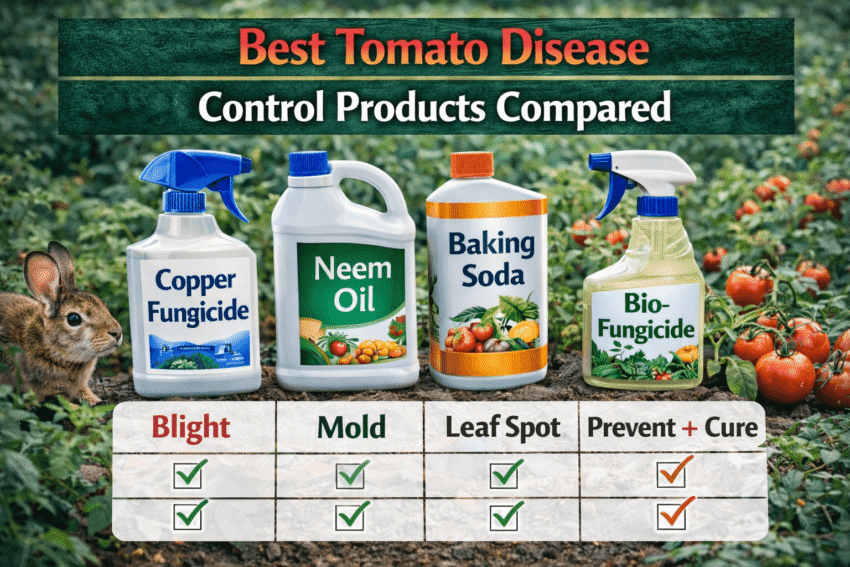
You need effective disease control to protect your tomato plants from devastating fungal and bacterial infections that can destroy entire harvests. This comprehensive guide compares the top treatment options, helping you choose the right product for early blight, late blight, septoria leaf spot, and other common tomato diseases. Your garden’s success depends on selecting proven solutions that work.
Key Takeaways
- Copper-based fungicides offer broad-spectrum protection against bacterial and fungal tomato diseases, making them effective for early blight, late blight, and bacterial speck. These products work best as preventative treatments applied before disease symptoms appear.
- Organic options like neem oil and Bacillus subtilis provide safer alternatives for home gardeners while still controlling common issues such as powdery mildew and septoria leaf spot. These biological controls require more frequent applications but leave no harmful residues on fruit.
- Chlorothalonil remains the most powerful synthetic fungicide for severe infections, though it requires careful timing and protective equipment during application. This chemical solution works well for late-stage disease management when organic methods prove insufficient.
Identifying Common Tomato Pathogens
Your tomato plants face threats from three main pathogen categories: fungi, bacteria, and viruses. Each type produces distinct symptoms that require different treatment approaches. Learning to spot these differences helps you select the most effective control products and prevents wasting money on incorrect treatments.
Recognizing Fungal Blights and Wilts
Fungal infections typically create circular spots with concentric rings or fuzzy growth on leaves and stems. You’ll notice symptoms starting on lower leaves and spreading upward during humid conditions. Early and late blight remain the most destructive fungal diseases, while Fusarium and Verticillium wilts attack through the root system.
Distinguishing Bacterial vs. Viral Spots
Bacterial spots appear as dark, water-soaked lesions with yellow halos, often accompanied by leaf drop. Viral infections cause mosaic patterns, leaf curling, and stunted growth without the water-soaked appearance. Temperature affects bacterial spread, thriving in warm, wet weather conditions.
Diagnosis accuracy becomes easier when you examine multiple plant parts simultaneously. Bacterial diseases spread rapidly through water splash and pruning tools, creating greasy-looking spots that may ooze in humid conditions. You can often see bacterial streaming when you cut an infected stem and place it in clear water. Viruses produce systematic symptoms throughout the entire plant, including distorted fruit with brown streaking inside. Your plants infected with viruses rarely recover and should be removed immediately to protect neighboring plants. Testing kits are available for confirmation when visual symptoms overlap between bacterial and viral infections.
Factors to Consider When Choosing Control Products
Selecting the right tomato disease control product requires careful evaluation of several key factors. You must consider the specific disease affecting your plants, application methods, safety requirements, and environmental impact. Cost-effectiveness and resistance management also play significant roles in your decision. The best product balances efficacy with practical considerations for your growing situation.
- Disease identification accuracy
- Application frequency and timing
- Safety for beneficial insects
- Pre-harvest interval requirements
- Resistance risk level
Active Ingredients and Mode of Action
Understanding how active ingredients work helps you select effective treatments and prevent disease resistance. Different compounds target pathogens through varied mechanisms-some disrupt cell membranes while others inhibit spore germination. Rotating products with different modes of action prevents resistant pathogen strains from developing. The label always indicates the FRAC code identifying the mode of action.
Organic vs. Synthetic Formulations
Your choice between organic and synthetic fungicides depends on certification requirements and personal preferences. Organic options like copper and sulfur offer natural disease control, while synthetic formulations often provide longer-lasting protection. Each type has distinct advantages for different growing situations. The decision impacts your harvest timeline and market opportunities.
Certified organic growers must use OMRI-listed products that meet strict standards for natural ingredients and processing methods. Organic fungicides typically require more frequent applications since they break down faster in the environment and may wash off more easily during rain. Synthetic products often deliver superior systemic protection that moves through plant tissues, providing defense against established infections. Your production goals, whether commercial organic certification or conventional farming, will guide which formulation type serves your needs best, though both categories include highly effective options when applied correctly.
Top-Rated Fungicides and Bactericides Compared
Your choice of disease control products can make or break your tomato harvest. Synthetic fungicides typically offer faster results, while organic options provide safer alternatives for edible crops. Each product category addresses specific pathogens, from early blight to bacterial spot, with varying contact and systemic action modes.
| Product Type | Best For |
| Copper-Based Fungicides | Bacterial diseases, early-stage fungal infections |
| Chlorothalonil | Broad-spectrum fungal prevention |
| Mancozeb | Late blight, early blight control |
| Bacillus subtilis | Organic fungal disease management |
| Neem Oil | Mild infections, preventive care |
| Sulfur-Based Products | Powdery mildew, organic gardening |
Efficacy of Copper-Based Treatments
Copper fungicides deliver excellent control against bacterial spot and bacterial speck when applied preventively. You’ll find fixed copper formulations work best during cool, wet conditions that favor disease development. Phytotoxicity risks increase during hot weather, so timing your applications correctly protects both plants and fruit quality.
Performance of Bio-Fungicides and Botanical Oils
Biological fungicides containing Bacillus species provide 70-85% disease suppression when applied regularly. Your organic tomato garden benefits from these living organisms that colonize leaf surfaces and compete with pathogens. Neem and other botanical oils offer moderate protection but require frequent reapplication.
Bio-fungicides work through multiple mechanisms that synthetic products cannot replicate. Beneficial bacteria produce natural antibiotics that inhibit pathogen growth while stimulating your plants’ immune responses. You should apply these products before disease symptoms appear, as their preventive action outperforms their curative abilities. The combination of Bacillus subtilis with botanical oils extends protection periods to 7-10 days under moderate disease pressure. Your application schedule should account for rainfall, as bio-fungicides need time to establish on leaf surfaces before water washes them away.
How to Apply Disease Control Products Effectively
Successful disease control depends on proper application methods and strategic timing. You must follow label instructions precisely to achieve maximum effectiveness while protecting your plants and the environment. Uniform coverage of all plant surfaces ensures the product reaches areas where pathogens develop. Application techniques vary based on product formulation and target disease.
Proper Spraying Techniques and Coverage
Your spray nozzle should deliver fine, even droplets that coat both upper and lower leaf surfaces. Hold the sprayer 12-18 inches from plants and use a sweeping motion to cover all foliage. Undersides of leaves require special attention since many fungal diseases start there before spreading upward.
Timing Applications Based on Weather and Growth
You should apply treatments during early morning or late evening when temperatures are cooler. Avoid spraying when rain is expected within 24 hours, as this washes away protective barriers. Apply preventative products before disease symptoms appear, especially during humid conditions when tomato plants are most vulnerable.
Weather conditions directly influence disease development and product effectiveness on your tomato plants. High humidity above 85% combined with temperatures between 60-80°F creates ideal conditions for fungal diseases like early blight and septoria leaf spot. You need to monitor forecasts and increase application frequency during extended wet periods. Growth stages also determine treatment schedules-flowering and fruit set periods require heightened protection since stress makes plants susceptible. Young transplants need immediate protection, while mature plants benefit from consistent 7-14 day intervals. Never spray during full sun or temperatures exceeding 85°F, as this causes leaf burn and reduces product absorption.
Essential Tips for Integrated Disease Management
Successful tomato disease control requires a multi-faceted approach that combines chemical treatments with preventive strategies. You need to implement crop rotation, maintain proper spacing, and monitor plants regularly for early disease detection. Key practices include:
- Using disease-resistant varieties
- Applying preventive fungicides before symptoms appear
- Removing infected plant material immediately
- Sanitizing tools between plants
The most effective disease management combines multiple strategies rather than relying on products alone.
Cultural Practices to Reduce Inoculum
Removing plant debris and fallen leaves eliminates overwintering pathogens that cause recurring infections. You should clean your garden beds thoroughly at season’s end and avoid composting diseased material. Soil solarization during hot months kills many fungal spores and bacterial pathogens. The combination of sanitation and environmental manipulation reduces disease pressure significantly.
Pruning and Airflow Optimization
Proper pruning techniques create better air circulation around tomato plants, reducing humidity levels that favor disease development. You should remove lower leaves and thin dense foliage to prevent moisture accumulation. Spacing plants adequately allows sunlight penetration and faster leaf drying. The improved airflow dramatically decreases fungal infection rates.
Strategic pruning goes beyond simple leaf removal and requires understanding your tomato variety’s growth habits. Determinate varieties need minimal pruning, while indeterminate types benefit from removing suckers and maintaining one or two main stems. You’ll notice that pruning lower branches at least 12 inches from the ground prevents soil-borne pathogens from splashing onto foliage during watering or rain. Thinning the canopy also improves fungicide coverage when you need to apply treatments, ensuring products reach all leaf surfaces effectively. Morning pruning allows wounds to dry quickly, reducing entry points for bacterial diseases like bacterial speck and canker.
Safety and Resistance Management Factors
Managing fungicide resistance requires strategic planning when treating tomato diseases. You must alternate between different chemical classes to prevent pathogens from developing immunity. Application timing and proper dosage rates directly impact product effectiveness. Label instructions provide necessary guidance for safe usage. Perceiving these factors ensures long-term disease control success.
Rotation Strategies to Prevent Resistance
Rotating products with different FRAC codes prevents pathogen adaptation to single fungicides. You should alternate between contact and systemic fungicides throughout the growing season. Tank mixing compatible products offers dual-mode action against resistant strains. Perceiving rotation as preventive medicine protects your tomato investment.
Personal Protective Equipment and Harvest Intervals
Wearing appropriate PPE including gloves, goggles, and respirators protects you during application. Harvest intervals specify waiting periods before picking treated tomatoes. Re-entry intervals determine when workers can safely return to treated areas. Perceiving these requirements safeguards human health.
Your safety depends on following product-specific PPE recommendations listed on each fungicide label. Different formulations require varying levels of protection, from basic gloves to full-body suits for concentrated products. Pre-harvest intervals range from zero days for organic products to fourteen days for certain synthetic fungicides, directly affecting your harvest schedule. Proper storage of contaminated clothing and equipment prevents cross-contamination in your home. Washing exposed skin immediately after application reduces absorption risks, while keeping detailed application records helps track exposure patterns and maintains compliance with agricultural regulations.
To wrap up
On the whole, you have several effective options for controlling tomato diseases, from organic copper fungicides to synthetic solutions like chlorothalonil. Your choice depends on your gardening philosophy, budget, and the specific diseases affecting your plants. Preventive applications work best when combined with proper spacing, adequate air circulation, and regular inspection. You can achieve healthy, productive tomato plants by selecting the right product and following application guidelines consistently throughout the growing season.
FAQ
Q: What are the most effective types of tomato disease control products available?
A: Copper-based fungicides remain the gold standard for controlling bacterial diseases like bacterial spot and speck. Organic options include Bacillus subtilis products, which work well against early blight and powdery mildew. Chlorothalonil offers broad-spectrum protection against fungal diseases but requires careful application timing. Sulfur-based products provide excellent prevention for powdery mildew and are safe for organic gardening. Biofungicides containing Trichoderma species help suppress soil-borne diseases like fusarium wilt. Each product type has specific strengths, so matching the treatment to your particular disease problem yields the best results.
Q: How do I choose between organic and synthetic disease control products for my tomato plants?
A: Organic products like neem oil, copper soap, and biological controls work best as preventative measures and require more frequent applications. They break down quickly in the environment and are safe for beneficial insects. Synthetic fungicides like mancozeb and azoxystrobin offer longer-lasting protection and can treat active infections more aggressively. Your garden size matters-small home gardens benefit from organic options that are safer for frequent handling. Large-scale operations often need synthetic products for economic efficiency. Disease pressure in your area plays a role too; high-humidity regions with severe disease problems may require synthetic products for adequate control. Consider your certification needs if selling produce, as organic certification restricts synthetic chemical use.
Q: When should I apply disease control products to get the best protection for my tomatoes?
A: Preventative application before disease symptoms appear provides the most effective protection. Start spraying when plants are young and continue every 7-14 days throughout the growing season. Weather conditions dictate timing-apply products before rainfall since wet foliage promotes disease development. Early morning application allows leaves to dry quickly while avoiding midday heat that can cause leaf burn. Stop applications 3-14 days before harvest depending on the product label requirements. Spring applications are critical when temperatures reach 60-70°F, as this range favors most tomato diseases. Reapply after heavy rains wash off protective coatings. Watch for disease signs on lower leaves first, as this indicates the need for immediate treatment.