
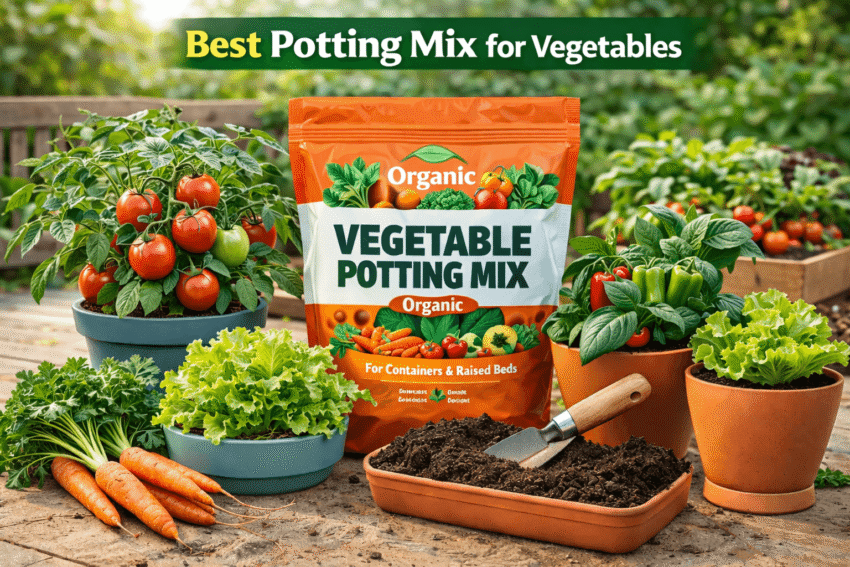
Many gardeners make the mistake of using garden soil in containers, thinking it will work just as well as it does in the ground. Unfortunately, this simple choice can lead to poor drainage, compacted roots, fungal problems, and weak plant growth. If your potted vegetables or flowers look stunted, yellow, or constantly waterlogged, your soil may be the real problem. Garden soil is too dense for pots and doesn’t provide the aeration container plants need to thrive. Instead, using a high-quality potting mix ensures proper drainage, balanced moisture retention, and healthier root development. In this guide, you’ll learn why you should stop using garden soil in pots, what happens when you do, and what to use instead for stronger, faster-growing plants. Small change — massive improvement in your container garden.
Key Takeaways
- Garden soil compacts heavily in containers, which prevents proper drainage and suffocates plant roots. The dense structure lacks the air pockets that potted plants need to thrive, often leading to root rot and stunted growth.
- Potting mix contains specific ingredients like peat moss, perlite, and vermiculite that keep the medium light and airy. These components allow water to drain freely while retaining just enough moisture for healthy root development.
- Garden soil can introduce pests, diseases, and weed seeds into your containers. Using sterilized potting mix eliminates these problems and provides a clean growing environment for your plants.
Factors Limiting Garden Soil Performance in Pots
Garden soil fails in containers because its composition differs fundamentally from what potted plants need. Your outdoor soil contains heavy clay particles, unpredictable organic matter, and microorganisms suited for ground-level conditions. Container environments demand specific characteristics that native earth simply cannot provide:
- Inadequate drainage capacity
- Poor air circulation around roots
- Excessive weight and density
- Pathogen accumulation risks
The confined space of pots magnifies every limitation garden soil possesses.
Soil Compaction and Poor Aeration
Containers trap garden soil in an unnatural state of compression that suffocates plant roots. Your watering routine forces particles together, eliminating the air pockets roots desperately need for oxygen absorption. Dense, compacted soil prevents proper gas exchange, causing roots to struggle and eventually die. The confined pot walls accelerate this compaction far beyond what occurs in garden beds.
Drainage Obstruction and Root Rot Risks
Water becomes trapped in garden soil’s dense structure, creating a breeding ground for fungal diseases and root rot. Your container’s limited drainage holes cannot compensate for soil that refuses to release moisture properly. Roots sitting in waterlogged conditions quickly develop fatal rot. The problem intensifies with each watering cycle you complete.
Root rot develops when oxygen-starved roots become vulnerable to pathogenic fungi like Pythium and Phytophthora. Garden soil’s poor drainage creates anaerobic conditions where these destructive organisms thrive, attacking weakened root systems. Your plant shows symptoms of wilting despite wet soil-a telltale sign of root system collapse. Brown, mushy roots replace healthy white ones as the infection spreads. Recovery becomes nearly impossible once rot establishes itself throughout the root zone. Prevention through proper potting medium selection remains your only reliable defense against this devastating condition.
How to Identify the Ideal Potting Medium
Selecting the right potting medium determines whether your container plants thrive or struggle. Quality potting mixes contain specific ingredients like peat moss, coco coir, perlite, and vermiculite that garden soil lacks. Check the bag label for these components and avoid products labeled simply as “garden soil” or “topsoil” for container use.
Distinguishing Between Soil and Soilless Mixes
Soilless mixes dominate the professional growing industry because they’re sterile, lightweight, and disease-free. Your potting medium should feel fluffy and spring back when squeezed, unlike dense garden soil. Most commercial potting mixes are actually soilless, containing no actual dirt from the ground.
Evaluating Texture and Porosity
Squeeze a handful of moistened potting medium to test its quality. Proper mixes crumble easily and don’t form tight clumps that restrict airflow. You’ll notice visible particles of different sizes that create air pockets vital for root health and drainage.
Porosity affects how water and oxygen reach your plant’s roots. When you water containers filled with quality potting mix, excess moisture drains within seconds rather than pooling on the surface. The medium should contain materials like perlite (white volcanic glass) or chunky bark that prevent compaction over time. Your finger should penetrate the mix easily, even after weeks of watering, indicating the structure remains intact. Dense, clay-heavy materials signal poor drainage and will suffocate roots by blocking oxygen flow.
Critical Factors for Nutrient Management
Container plants demand precise nutrient management because potting mixes lack the natural mineral reserves found in ground soil. Your plants rely entirely on what you provide through fertilization, making regular feeding schedules non-negotiable. Key factors include:
- Cation exchange capacity of your growing medium
- pH balance affecting nutrient availability
- Fertilizer type and application frequency
- Leaching rates from frequent watering
After establishing your container garden, monitor these elements consistently for optimal plant health.
Understanding Cation Exchange Capacity
CEC measures your potting mix’s ability to hold and exchange necessary nutrients like calcium, magnesium, and potassium. Garden soil typically has higher CEC than soilless mixes, meaning nutrients wash away faster in containers. Peat-based and coir mixes have lower CEC values, requiring more frequent fertilization. After testing your medium’s CEC, adjust your feeding program to prevent deficiencies.
Managing pH Levels in Containers
Container growing media experiences rapid pH fluctuations that directly impact nutrient uptake. Most potting mixes start between 5.5 and 6.5 pH, the sweet spot for nutrient availability. Water quality and fertilizer choice shift pH over time, potentially locking out necessary elements. After planting, test pH monthly using a reliable meter or testing kit.
Your container’s pH affects which nutrients your plants can actually absorb, even when they’re present in the mix. Iron, manganese, and zinc become unavailable when pH rises above 7.0, causing yellowing leaves despite adequate fertilization. Conversely, aluminum toxicity becomes a risk when pH drops below 5.0. Limestone in potting mixes buffers pH changes, but this protection diminishes as you water and fertilize repeatedly. Organic fertilizers tend to acidify your mix over time, while synthetic options may raise pH. You can correct acidic conditions with dolomitic lime and address alkaline problems with sulfur or acidifying fertilizers. Testing every 4-6 weeks allows you to catch problems before visible symptoms appear on your plants.
How to Create a Custom Potting Blend
Creating your own potting mix gives you complete control over drainage and nutrient content while saving money. Start with a base of quality ingredients that work together to support root health and plant growth. You’ll need to balance three key components: materials for aeration, moisture retention, and nutrients. Mix these ingredients in ratios suited to your specific plants, adjusting proportions based on whether you’re growing succulents, vegetables, or tropical houseplants.
Incorporating Perlite and Vermiculite for Drainage
Perlite and vermiculite serve as important drainage amendments that prevent root rot in container gardens. Add perlite at 20-30% of your total mix for lightweight aeration and rapid water drainage. Vermiculite holds slightly more moisture while still improving soil structure. Never skip these amendments as they create the air pockets roots desperately need.
Using Coconut Coir or Peat Moss for Moisture Retention
Coconut coir and peat moss form the moisture-retaining foundation of any quality potting mix. These materials absorb water efficiently while releasing it slowly to plant roots. Coir offers a sustainable alternative to peat moss and resists compaction better over time. Aim for 40-50% of your total blend to maintain consistent moisture levels.
Both materials require proper preparation before mixing into your blend. You should rehydrate compressed coir blocks with warm water and break apart any clumps thoroughly. Peat moss needs similar treatment as it becomes hydrophobic when completely dry. Pre-moistening these materials ensures even water distribution throughout your finished potting mix. Consider that coconut coir has a neutral pH while peat moss is acidic, which affects your choice based on plant preferences. Coir also contains natural antifungal properties that protect roots from disease. Store unused portions in sealed containers to maintain their moisture-holding capabilities for future potting projects.
Tips for Successful Plant Transition
Switching from garden soil to proper potting mix requires careful handling to prevent transplant shock. You’ll need to monitor your plants closely during the first two weeks after repotting. Key steps include:
- Gently remove old garden soil from roots
- Water thoroughly with room temperature water
- Keep plants in indirect light for 3-5 days
- Avoid fertilizing for two weeks
Recognizing stress signs early helps you adjust care immediately.
Preparing Roots for New Medium
Your plant’s roots need gentle cleaning before introducing fresh potting mix. Loosen the root ball carefully and shake off excess garden soil without damaging fine root hairs. Trim any black or mushy roots with sterilized scissors. Recognizing healthy white or tan roots ensures successful adaptation.
Proper Potting and Settling Techniques
Fill your container one-third full with quality potting mix before positioning the plant. Center the root ball and add medium around sides, leaving one inch below the rim. Pat down lightly without compacting. Recognizing proper soil level prevents stem rot and drainage issues.
Watering technique after repotting makes the difference between success and failure. You should water slowly until liquid drains from bottom holes, ensuring the new medium settles around roots without creating air pockets. Repeat this process after thirty minutes to fill any remaining gaps. Your plant needs consistent moisture during the first week, but never let it sit in standing water. Check the top two inches of potting mix daily, watering only when it feels dry to your touch.
Maintenance Tips for Long-Term Container Health
Your container plants need consistent care to thrive beyond a single growing season. Regular fertilization becomes necessary since potting mix contains limited nutrients that deplete quickly. Monitor drainage patterns and watch for water pooling on the surface, which signals compaction issues. Check your containers every few weeks for these warning signs:
- Slow water absorption at the soil surface
- Root growth emerging from drainage holes
- Stunted plant development despite proper watering
- Salt buildup appearing as white crust
Perceiving these changes early prevents permanent damage to your plants.
Monitoring Compaction Over Time
Potting mix naturally settles and compacts as organic matter breaks down through repeated watering cycles. You’ll notice the soil level dropping in your containers and water taking longer to penetrate the surface. Gently loosening the top inch with a fork every month improves air circulation and water infiltration. Perceiving compaction early helps you address it before roots suffer oxygen deprivation.
Rejuvenating Old Potting Mix
Your potting mix loses structure and nutrients after one or two growing seasons, requiring refreshment rather than complete replacement. Remove the top third of old mix and replace it with fresh potting medium containing new organic matter and perlite. Perceiving when your mix needs renewal saves money while maintaining plant health.
Completely replacing potting mix every year creates unnecessary waste and expense for your container garden. You can extend the life of your existing mix by removing plants at season’s end and spreading the soil on a tarp for inspection. Pick out old roots, debris, and any pest larvae you discover during this process. Mix in compost, worm castings, or aged manure at a ratio of one part amendment to three parts old mix to restore fertility. Adding fresh perlite or pumice at 10-15% by volume restores drainage capacity that diminishes as organic components decompose. This rejuvenation process works best for mix that’s only one or two years old; older material that’s broken down into fine particles should go into your garden beds instead. Your refreshed potting mix performs nearly as well as new material while reducing costs and environmental impact.
Conclusion
Following this guidance will protect your container plants from poor drainage, compaction, and disease. You now understand why garden soil fails in pots and how potting mix provides the proper aeration and moisture control your plants need. Make the switch to quality potting mix, and you’ll see healthier roots, stronger growth, and thriving container gardens that reward your efforts.
FAQ
Q: Why shouldn’t I use garden soil in my container plants?
A: Garden soil becomes too compact when placed in pots and containers. The soil that works well in your garden beds contains clay particles that compress tightly in the confined space of a container, preventing proper drainage and air circulation. Your plant roots need oxygen to survive, and compressed garden soil suffocates them. Water pools on the surface instead of draining through, which leads to root rot and fungal diseases. Container plants require a lighter, fluffier growing medium specifically designed to maintain its structure in pots. Potting mix contains ingredients like peat moss, perlite, and vermiculite that keep the medium airy and well-draining even after repeated watering cycles.
Q: What problems will my potted plants develop if I use garden soil?
A: Plants growing in garden soil within containers show several distressing symptoms. The leaves turn yellow and drop off because the roots cannot absorb nutrients from the oxygen-deprived, waterlogged environment. Fungus gnats multiply rapidly in the overly moist conditions, and you’ll notice these tiny flying insects around your pots. Root rot sets in quickly, causing the entire plant to wilt despite wet soil. Garden soil also brings weed seeds, pest eggs, and disease pathogens into your home or patio area. The weight of garden soil makes large containers extremely heavy and difficult to move. Your plants grow slowly or stop growing altogether because their roots cannot penetrate the dense, hard-packed medium.
Q: Can I mix garden soil with potting mix to save money?
A: Mixing garden soil with potting mix defeats the purpose of using quality potting medium. Even a 50/50 blend compromises drainage and aeration enough to harm your plants. The clay particles in garden soil still cause compaction issues when combined with lighter materials. You’re better off stretching your potting mix by adding perlite, coconut coir, or compost instead. These amendments maintain the loose, well-draining structure your container plants need. The small amount of money saved by mixing in garden soil costs you more in the long run through plant losses and replacement expenses. Quality potting mix is an investment in your plants’ health and your gardening success.