
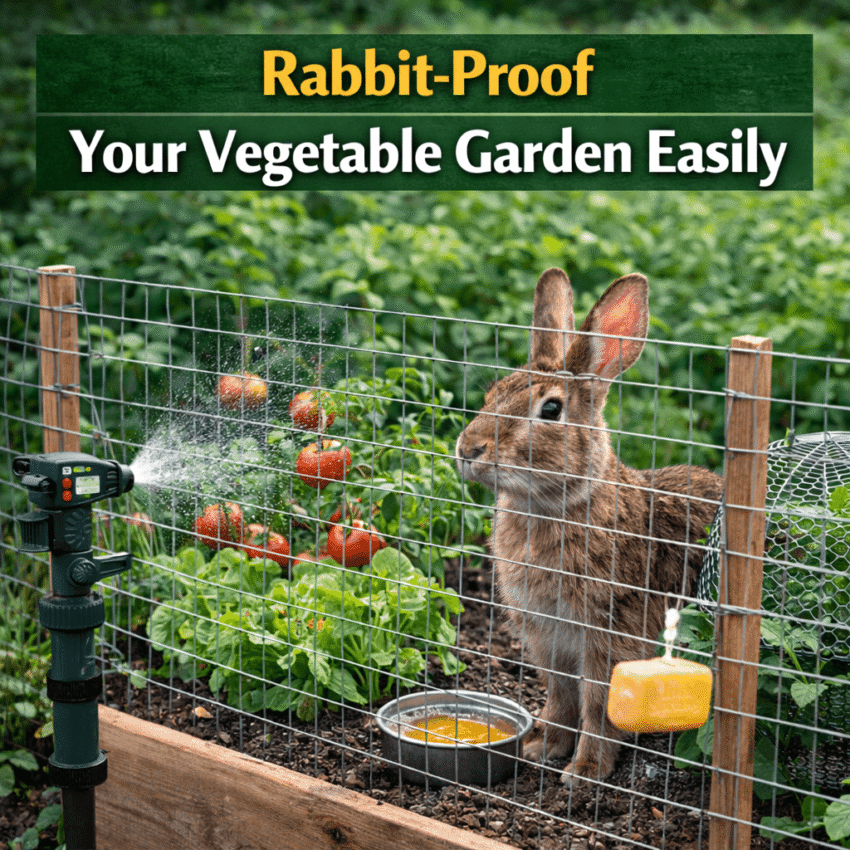
There’s nothing more frustrating than watching rabbits destroy your carefully planted vegetables overnight. You need effective barriers and deterrents to protect your garden from these persistent pests. Physical fencing remains your most reliable defense, but you can combine it with natural repellents for maximum protection. This guide shows you practical methods to keep rabbits out while maintaining your garden’s productivity and appearance.
How to Select and Install Physical Barriers
Physical barriers provide the most reliable defense against hungry rabbits invading your vegetable garden. You’ll need to choose appropriate materials and install them correctly to create an impenetrable boundary. The right barrier extends both above and below ground, preventing rabbits from jumping over or burrowing underneath your fencing.
Choosing Between Chicken Wire and Hardware Cloth
Hardware cloth offers superior durability with its welded galvanized steel construction, lasting 15-20 years compared to chicken wire’s 5-7 years. Your choice depends on budget and longevity needs. Chicken wire costs less initially but requires more frequent replacement, while hardware cloth’s ¼-inch mesh blocks smaller pests too.
Step-by-Step Guide to Trenching and Securing Fencing
| Step | Action |
| 1. Dig Trench | Excavate 6-8 inches deep around garden perimeter |
| 2. Insert Fencing | Place barrier with 6 inches below ground, 24-30 inches above |
| 3. Bend Bottom | Create L-shape with 6 inches extending outward underground |
| 4. Secure Posts | Install support stakes every 6-8 feet |
| 5. Backfill | Pack soil firmly around buried portion |
Proper installation requires attention to the underground L-shaped bend, which prevents rabbits from digging beneath your fence. You must ensure the horizontal portion extends outward from your garden, creating a barrier that stops burrowing attempts. Secure all fencing tightly to posts using zip ties or wire, eliminating any gaps larger than 2 inches where rabbits might squeeze through.
Utilizing Scent and Taste Repellents Effectively
Rabbits rely heavily on their sense of smell to identify food sources, making scent-based deterrents highly effective for garden protection. You can apply commercial or homemade solutions around vulnerable plants to create an unpleasant barrier. Reapplication after rainfall ensures consistent protection. Though patience is required, these methods offer safe, chemical-free alternatives to physical barriers.
Expert Tips for Applying Commercial Deterrents
Commercial rabbit repellents work best when applied to dry foliage during calm weather. You should create a protective perimeter around your garden beds rather than treating individual plants. Rotate between different product types every few weeks to prevent rabbits from becoming accustomed to specific scents. Though initial costs seem high, these products deliver long-lasting results.
- Apply repellents in a consistent schedule every 2-3 weeks
- Target the outer garden perimeter first for maximum effectiveness
- Choose products containing predator urine or garlic compounds
- Spray during early morning or evening hours to avoid rapid evaporation
How to Prepare Organic Homemade Spray Solutions
Homemade repellent sprays offer budget-friendly protection using common household ingredients. You can blend crushed garlic, cayenne pepper, and water to create an effective solution. Strain the mixture thoroughly before transferring to a spray bottle. Though homemade versions require more frequent application, they’re completely safe for edible crops.
Garlic-based solutions prove particularly effective because rabbits find the sulfur compounds extremely offensive. You’ll need approximately six cloves of garlic, one tablespoon of cayenne pepper, and one quart of water for a standard batch. Steep the crushed garlic in hot water for 24 hours before straining and adding the pepper. Test your spray on a small leaf section first to ensure it won’t damage sensitive plants. Store unused portions in your refrigerator for up to two weeks, and shake well before each application. Your homemade spray works best when applied to both foliage and the soil surrounding your plants, creating a comprehensive scent barrier that discourages rabbit browsing.
Implementing Habitat Modification Strategies
Making your garden less attractive to rabbits requires changing the environment they prefer for nesting and feeding. Rabbits seek areas with dense cover, easy access to food, and protection from predators. By modifying these conditions around your vegetable garden, you’ll discourage rabbits from settling nearby and reduce damage to your crops.
Environmental Factors That Encourage Rabbit Nesting
Rabbits prefer locations that offer shelter and concealment for their nests and young. Your garden becomes a target when surrounded by tall grass, overgrown vegetation, and debris piles that provide hiding spots. Any dense ground cover within 50 feet of your garden creates an ideal rabbit habitat.
- Tall grass and unmowed areas near gardens
- Dense shrubs and overgrown hedges
- Wood piles and accumulated yard debris
- Low-hanging branches that touch the ground
- Thick ground cover plants like ivy or vinca
Tips for Eliminating Brush Piles and Low Cover
Clearing brush piles and dense vegetation around your garden creates an unwelcoming zone for rabbits. Remove stacked wood, fallen branches, and leaf accumulations within a 10-foot perimeter of your vegetable beds. This exposed area makes rabbits feel vulnerable to predators and encourages them to nest elsewhere.
- Clear all debris piles and stacked materials
- Maintain a mowed buffer zone around gardens
- Trim low-hanging branches to 12 inches above ground
- Remove dense ground covers near vegetable beds
Regular maintenance of your garden’s perimeter prevents rabbits from establishing nests close to your vegetables. Keep grass trimmed to 3 inches or shorter in a wide band surrounding your growing areas. Store firewood and building materials at least 30 feet away from garden beds, preferably on raised platforms. Prune shrubs to eliminate ground-level hiding spaces, and rake up fallen leaves weekly during growing season. This consistent upkeep eliminates the protective cover rabbits need to feel safe.
- Mow weekly during growing season
- Store materials on elevated platforms
- Prune shrubs to create open space underneath
- Rake leaves and garden debris regularly
- Inspect perimeter for new rabbit burrows monthly
Strategic Gardening with Rabbit-Resistant Varieties
Choosing plants that rabbits naturally avoid can reduce garden damage by up to 80% without installing physical barriers. You’ll save time and money by selecting varieties these pests find unappealing due to strong scents, bitter tastes, or tough textures. This approach works best when combined with other deterrent methods for complete protection.
Selecting Vegetables and Herbs Rabbits Dislike
Rabbits typically avoid onions, garlic, leeks, asparagus, rhubarb, and tomatoes due to their pungent odors and flavors. Herbs like rosemary, oregano, lavender, and sage also repel these pests naturally. Planting these varieties in your main beds gives you a productive garden while minimizing rabbit interference.
How to Design a Protective Perimeter of Unpalatable Plants
Create a border of strong-scented herbs and alliums around your vulnerable crops like lettuce, beans, and peas. Position these deterrent plants in double rows for maximum effectiveness. Your protective barrier should be at least 12 inches wide to discourage rabbits from jumping through.
Design your perimeter by planting the tallest varieties like garlic and onions on the outer edge, followed by medium-height herbs such as oregano and thyme closer to your prized vegetables. You can interplant marigolds and nasturtiums throughout this border since their bitter taste and strong smell create additional deterrence. Space these protective plants closer together than normal-about 6 to 8 inches apart-to form a dense, continuous barrier. Your rabbits will encounter multiple unpleasant scents and tastes before reaching desirable crops, often causing them to seek food elsewhere entirely.
Essential Maintenance for Long-Term Success
Regular upkeep of your rabbit-proof barriers ensures your vegetable garden remains protected throughout the growing season. You must check fencing, repair damage promptly, and refresh deterrents to maintain effectiveness. Consistent monitoring prevents rabbits from exploiting weaknesses in your defense system. This proactive approach saves both time and your harvest.
Seasonal Inspection Tips for Barrier Integrity
Inspect your physical barriers at the start of each season to identify potential vulnerabilities. Look for these signs of compromise:
- Gaps or holes in wire fencing near ground level
- Loose stakes or posts requiring reinforcement
- Rust or corrosion weakening metal barriers
- Vegetation growth creating access points
This quarterly assessment helps you catch problems before rabbits discover them.
Factors to Consider When Adjusting Deterrents Year-Round
Your deterrent strategy must adapt to changing conditions and rabbit behavior patterns. Consider these variables:
- Weather conditions affecting scent-based repellents
- Rabbit population fluctuations during breeding seasons
- Food availability in surrounding areas
- Effectiveness of current deterrent methods
Perceiving these shifts allows you to modify your approach effectively.
Seasonal changes dramatically impact how rabbits interact with your garden space. During spring, increased breeding activity brings more hungry rabbits seeking nutrition for their young. Summer heat may wash away liquid repellents, requiring more frequent applications. Fall scarcity drives rabbits to test barriers more aggressively as natural food sources diminish. Winter demands different tactics since rabbits gnaw on woody plants and tree bark when vegetables aren’t available. You should rotate between multiple deterrent types to prevent rabbits from becoming accustomed to any single method. Track which combinations work best during different months, and adjust your maintenance schedule accordingly. Perceiving these patterns transforms your garden defense from reactive to strategic.
Summing up
As a reminder, protecting your vegetable garden from rabbits requires a multi-layered approach. You need physical barriers like chicken wire fencing buried six inches deep, combined with natural deterrents such as strong-scented plants and predator urine. Regular maintenance of your barriers and rotating repellent methods ensures long-term success. Your garden will thrive when you implement these proven strategies consistently throughout the growing season.
FAQ
Q: What is the most effective fence height to keep rabbits out of my vegetable garden?
A: Your fence should stand at least 2 feet tall above ground, with an additional 6 inches buried below the surface. Rabbits can jump surprisingly high when motivated by fresh vegetables, so this height prevents them from hopping over. The buried portion stops them from digging underneath, which is their most common entry method. Chicken wire with 1-inch mesh works best because rabbits cannot squeeze through the small openings. You can also bend the bottom 6 inches of fencing outward at a 90-degree angle before burying it to create an L-shape that blocks their digging attempts even more effectively.
Q: Which natural repellents actually work to deter rabbits from eating my vegetables?
A: Dried blood meal sprinkled around your garden perimeter creates a scent barrier that rabbits find threatening and will avoid. Human hair clippings placed in mesh bags and hung near vulnerable plants also work because rabbits recognize the smell of potential predators. Garlic spray made from crushed garlic cloves mixed with water can be applied directly to plant leaves every few days, especially after rain. Hot pepper wax sprays provide another effective option that makes plants taste unpleasant without harming the rabbits or your vegetables. You’ll need to reapply these natural repellents regularly, especially after watering or rainfall, to maintain their effectiveness throughout the growing season.
Q: Can I use plants as a natural barrier to protect my vegetable garden from rabbits?
A: Strong-smelling herbs planted around your garden borders work as excellent rabbit deterrents. Lavender, rosemary, sage, oregano, and mint all produce scents that rabbits dislike and actively avoid. Onions, garlic, and chives planted as border rows provide double duty by protecting your vegetables while giving you additional crops to harvest. Marigolds also repel rabbits with their pungent odor and add beautiful color to your garden edges. Plant these protective barriers in thick rows at least 12 inches wide to create an effective buffer zone. This method requires no maintenance beyond normal plant care and becomes more effective as the plants mature and their scents intensify.