
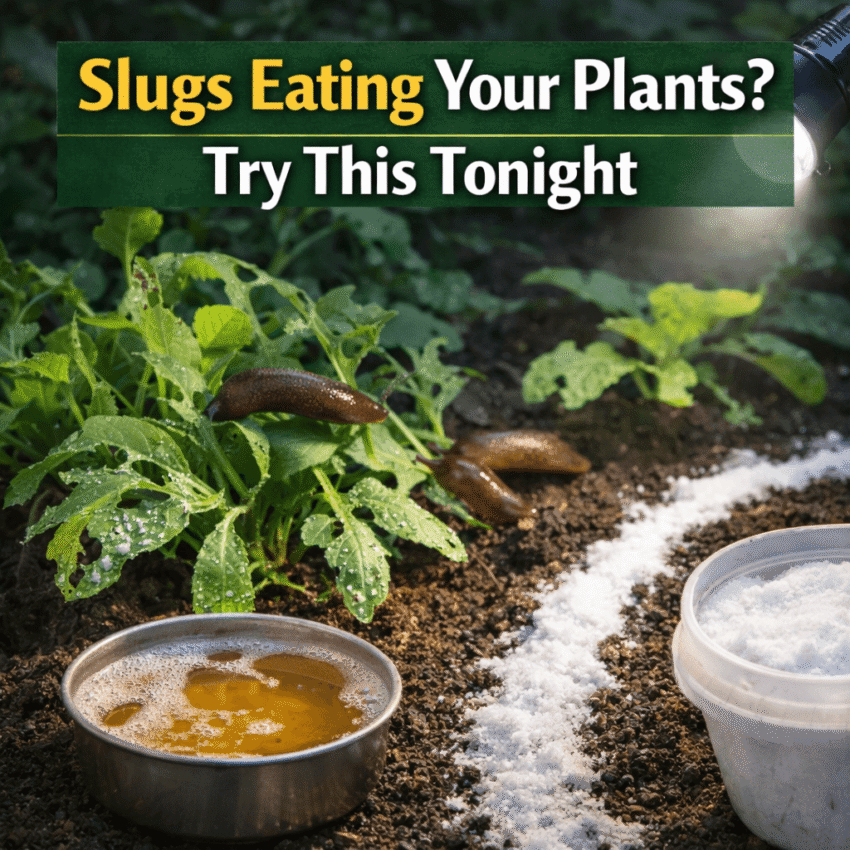
You can stop slugs from destroying your garden using simple household items available right now. These slimy pests cause severe damage overnight, leaving holes in leaves and decimating seedlings before morning. Tonight’s solution requires no chemicals and works while you sleep, protecting your plants through the most active feeding hours.
Key Takeaways
- Beer traps work as an effective overnight solution by attracting slugs to shallow containers filled with beer, which they crawl into and drown, making it one of the simplest methods to reduce slug populations in your garden.
- Copper barriers create a natural defense system around your plants since slugs receive a mild electric shock when their slime touches copper tape or strips, causing them to turn away without using harmful chemicals.
- Diatomaceous earth sprinkled around plant bases acts as a physical deterrent with its microscopic sharp edges that damage slug bodies, though you’ll need to reapply this powder after rain or watering for continued protection.
Identifying Slug Damage and Activity
Recognizing slug damage early helps you protect your garden before these pests destroy entire plants. Look for irregular holes in leaves, especially along the edges, and silvery slime trails across foliage and soil. Your vegetables, hostas, and seedlings are particularly vulnerable to their voracious appetite. This knowledge lets you act quickly.
Visual Signs of Nighttime Feeding
Slugs leave distinctive mucus trails that shimmer in morning light, revealing their nocturnal movements through your garden beds. You’ll notice ragged leaf edges and holes that differ from clean insect cuts, often accompanied by dark droppings near damaged plants. Check undersides of leaves and moist hiding spots at dawn. This evidence confirms active slug populations.
Factors That Make Your Garden a Target
Your garden becomes a slug paradise when specific conditions align to support their survival and reproduction. Dense plantings, excessive mulch, and overwatering create the damp environment these pests need. Shaded areas and debris piles offer perfect daytime hiding spots. This combination attracts slugs from surrounding areas.
- Moisture-rich soil and frequent watering schedules
- Thick organic mulch layers exceeding 2-3 inches
- Dense plant spacing that reduces air circulation
- Overgrown weeds and ground cover
- Wooden boards and garden clutter left on soil
Understanding what draws slugs to your space helps you modify conditions to make your garden less appealing. Poor drainage combined with heavy clay soil retains moisture that slugs desperately need for survival. Your compost bins and rotting vegetation provide both food sources and breeding grounds. Cool, shaded garden corners stay damp longer than sunny spots, creating protected zones where slug populations explode. Plants with tender young leaves release scents that attract these mollusks from impressive distances. This awareness allows you to implement targeted prevention strategies tonight.
How to Implement Immediate Nighttime Control
Tonight offers your best opportunity to catch slugs in action. Wait until full darkness when these pests emerge from hiding to feed on your plants. Arm yourself with a flashlight and prepare to take immediate action using either manual removal or liquid traps for fast results.
The Manual Removal Technique
Grab a flashlight and inspect your garden after 10 PM when slug activity peaks. You’ll spot them easily on leaves and stems. Drop each slug into a container filled with soapy water, which kills them within minutes. Check under pots and mulch where they hide during daylight.
Setting Up Effective Liquid Traps
Shallow containers filled with beer work exceptionally well as overnight slug traps. Bury containers flush with soil level and fill them halfway with beer. Slugs detect the yeast smell from several feet away and crawl in, where they drown.
Position your beer traps strategically throughout affected garden beds, spacing them approximately three to four feet apart for maximum coverage. You can substitute beer with a mixture of water, sugar, and yeast if preferred. Empty and refill traps every two to three days to maintain effectiveness, as decomposing slugs and diluted liquid reduce attraction. Place traps near your most damaged plants first, then expand coverage to create a protective perimeter around vulnerable vegetables and flowers.
Creating Impenetrable Physical Barriers
Physical barriers work by preventing slugs from reaching your plants in the first place. Installing protective boundaries around vulnerable plants creates a defensive perimeter that these pests cannot cross. You can choose from several effective materials, each exploiting slugs’ sensitive bodies and natural aversions to specific textures and substances.
Copper Tape and Metallic Repellents
Copper produces a mild electrical charge when it contacts slug slime, creating an unpleasant shock that repels them instantly. Apply copper tape around pot rims, raised bed edges, or plant stems for maximum protection. You’ll find this method particularly effective because slugs rarely attempt to cross copper barriers once they’ve experienced the reaction.
Abrasive Soil Amendments and Borders
Slugs struggle to move across rough, sharp surfaces that damage their soft bodies. Crushed eggshells, diatomaceous earth, and coarse sand create uncomfortable barriers around your plants. Spread these materials in a two-inch band around vulnerable areas for best results.
Diatomaceous earth stands out as the most effective abrasive option because its microscopic sharp edges actually pierce slug bodies, causing dehydration. Food-grade diatomaceous earth is safe for pets and children while remaining lethal to slugs and other soft-bodied pests. Reapply this powder after rain or heavy watering, as moisture reduces its effectiveness. Crushed eggshells offer a sustainable alternative, though they require deeper layers to work properly. Coarse builder’s sand, volcanic rock, or wood ash also deter slug movement when applied generously. Combining multiple abrasive materials creates even stronger protection for your most prized plants.
Essential Tips for Cultural Prevention
Prevention through cultural practices offers the most sustainable long-term solution to slug problems in your garden. Your daily gardening habits directly influence slug populations by either creating ideal conditions for them or making your garden inhospitable. Key strategies include:
- Reducing moisture levels around plants
- Eliminating hiding spots where slugs shelter during daylight
- Maintaining proper plant spacing for air circulation
- Removing decaying plant material promptly
Any combination of these methods will significantly reduce slug activity without chemicals.
Adjusting Irrigation for Drier Surface Soil
Switching to morning watering schedules allows soil surfaces to dry throughout the day, making conditions less favorable for slug movement. Drip irrigation or soaker hoses deliver water directly to root zones while keeping foliage and surrounding soil dry. Any reduction in surface moisture during evening hours dramatically decreases slug feeding activity.
Managing Organic Mulch and Garden Debris
Organic mulch creates perfect daytime hiding spots for slugs, especially when applied too thickly near plant stems. Keep mulch layers under two inches and maintain a three-inch gap around plant bases. Remove fallen leaves, weeds, and plant trimmings regularly. Any accumulation of decaying organic matter attracts slugs and provides breeding grounds.
Dense mulch layers retain excessive moisture while offering dark, cool refuges where slug populations thrive undisturbed. You’ll find dozens of slugs hiding beneath thick mulch during daylight hours, waiting to emerge and feed at night. Coarse materials like wood chips work better than fine compost or grass clippings, which pack down and stay wet longer. Rake through existing mulch periodically to expose slug eggs and disrupt their habitat. Your compost pile should be located away from growing areas since decomposing material naturally attracts these pests. Check under boards, pots, and garden decorations weekly, as these objects become slug hotels when left undisturbed on moist soil.
Biological Solutions and Natural Predators
Nature provides powerful allies in your fight against slugs without requiring chemical interventions. Ground beetles, toads, frogs, hedgehogs, and certain bird species actively hunt slugs as their primary food source. You can transform your garden into a slug-control ecosystem by welcoming these natural predators into your outdoor space.
Encouraging Beneficial Wildlife
Creating habitats attracts slug-eating creatures to patrol your garden nightly. Install shallow water dishes for frogs and toads, leave small brush piles for ground beetles, and maintain unmowed areas where hedgehogs shelter. Bird feeders and native plantings bring slug-hunting birds to your property year-round.
Utilizing Nematodes for Subsurface Control
Microscopic roundworms called Phasmarhabditis hermaphrodita target slugs beneath the soil surface where most damage begins. You simply water these beneficial nematodes into moist soil during spring or fall. Results appear within one week as infected slugs stop feeding and die underground.
Nematodes work by entering the slug’s body cavity and releasing bacteria that kills the host within days. This biological control remains effective for up to six weeks after application and only affects slugs and snails, leaving earthworms, insects, and plants completely unharmed. You’ll need soil temperatures between 40-70°F for optimal nematode activity, making early spring and autumn the ideal application windows. One treatment can reduce slug populations by 80-90% in treated areas, though you may need to reapply for severe infestations or during peak breeding seasons.
Factors Affecting Eradication Success
Your slug control efforts depend on several environmental and biological factors that determine outcomes. Temperature, moisture levels, and garden conditions play major roles in treatment effectiveness. Key considerations include:
- Soil moisture and drainage patterns
- Weather conditions during application
- Slug population density in your area
- Garden layout and plant spacing
Assume that perfect conditions rarely exist, so adapt your strategy accordingly.
Impact of Local Climate and Humidity
Your region’s humidity levels directly affect slug activity and control methods. Damp, coastal areas experience year-round slug problems, while drier climates see seasonal invasions. Evening dew and rain reactivate slugs regardless of daytime treatments. Assume that higher moisture requires more frequent intervention.
Understanding Slug Life Cycles and Timing
Slugs reproduce rapidly during spring and fall when conditions favor breeding. Each slug lays up to 500 eggs annually in soil clusters. Peak activity occurs at night between 50-70°F. Assume that targeting breeding seasons yields better long-term results.
Your timing strategy should focus on early spring intervention before eggs hatch and population explosions occur. Young slugs emerge approximately three weeks after egg-laying, creating waves of new garden invaders throughout growing seasons. Autumn control becomes equally important since mature slugs lay overwintering eggs that survive freezing temperatures. You’ll notice reduced plant damage when treatments coincide with these reproductive cycles rather than addressing only visible adult populations. Monitoring soil temperatures helps predict emergence patterns, allowing you to apply controls before slugs reach your plants.
To wrap up
With these considerations in mind, you now have proven methods to protect your garden from slug damage. Beer traps, copper barriers, and diatomaceous earth offer effective solutions you can implement tonight. You’ll see results within days as these techniques either repel or eliminate slugs naturally. Your plants deserve protection, and these strategies give you the tools to reclaim your garden from these persistent pests.
FAQ
Q: What natural methods work best to stop slugs from eating my plants overnight?
A: Beer traps are one of the most effective solutions for controlling slug damage in your garden. Fill shallow containers with beer and place them near affected plants in the evening. Slugs are attracted to the yeast smell and will crawl into the containers overnight. Copper tape wrapped around pots and raised beds also works well, as slugs receive a small electrical shock when touching copper. Crushed eggshells, coffee grounds, or diatomaceous earth sprinkled around plant bases create physical barriers that slugs avoid crossing. These methods are safe for pets, children, and beneficial garden insects while providing immediate protection.
Q: Why do slugs cause more damage to plants at night than during the day?
A: Slugs are nocturnal creatures that hide during daylight hours to avoid dehydration and predators. Their bodies are composed of approximately 80% water, making them extremely vulnerable to sun exposure and dry conditions. Night provides the cool, moist environment they need to move freely and feed actively. You’ll find slugs emerging after sunset or on overcast, rainy days when humidity levels are high. They leave behind silvery slime trails as they travel to plants, consuming soft leaves, seedlings, and tender shoots. This feeding pattern explains why you might see extensive damage in the morning without spotting the culprits during afternoon garden checks.
Q: How can I tell if slugs are the real problem versus other garden pests?
A: Slug damage has several distinctive characteristics that set it apart from other pest problems. Look for irregular holes in leaves with smooth edges rather than the clean cuts made by caterpillars or the stippled damage from aphids. Shiny, silvery slime trails on leaves, soil, and pots are the clearest sign of slug activity. The damage typically appears on lower leaves first, as slugs climb up from the ground level. Go outside with a flashlight two hours after sunset to catch slugs in action-this confirms your diagnosis better than any daytime inspection. Seedlings may disappear completely overnight, while mature plants show ragged holes concentrated on outer and lower foliage.