
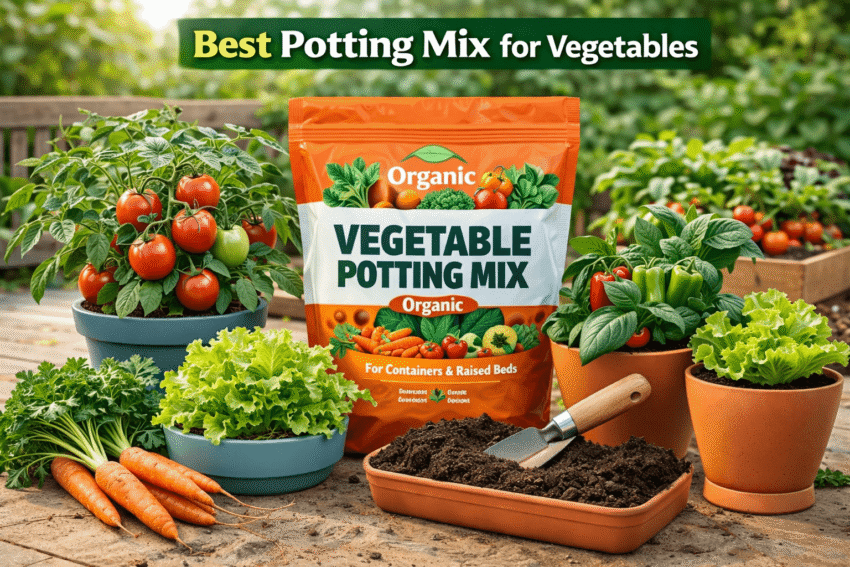
Raised bed gardening success depends entirely on the right soil mixture. You need a balanced blend that provides proper drainage, nutrients, and aeration for your plants to thrive. The ideal formula combines equal parts compost, peat moss or coconut coir, and vermiculite or perlite. Avoid using garden soil alone, as it compacts easily and restricts root growth in raised beds.
Key Takeaways
- The ideal raised bed soil consists of equal parts topsoil, compost, and aeration material like peat moss or coconut coir (following the 1:1:1 ratio known as Mel’s Mix). This balanced formula provides excellent drainage while retaining enough moisture and nutrients for healthy plant growth.
- Avoid using garden soil alone in raised beds, as it compacts easily and restricts root development. The combination of different materials creates air pockets that allow roots to spread freely and access oxygen, which is necessary for strong, productive plants.
- Replenish your raised bed soil annually by adding 1-2 inches of fresh compost on top. This practice restores nutrients that plants consumed during the growing season and maintains the soil’s structure without requiring complete replacement.
Factors for Soil Selection
Selecting the right soil composition determines your raised bed’s long-term success. Your plants need a balanced environment that supports root development, nutrient uptake, and consistent growth throughout the season. Consider texture, organic matter content, and mineral composition when evaluating options. Thou must prioritize quality over cost to ensure optimal harvests.
Porosity and Aeration Requirements
Oxygen availability in your soil directly impacts root health and beneficial microorganism activity. Proper pore space allows roots to breathe while preventing compaction that stunts growth. Your raised bed needs at least 25% air-filled porosity for vegetables to thrive. Thou should test soil structure by squeezing a handful-it should crumble easily.
Moisture Retention vs. Drainage
Balancing water-holding capacity with adequate drainage prevents both drought stress and root rot. Your soil must retain enough moisture for plant access while allowing excess water to escape freely. Aim for a mix that stays moist but never waterlogged. Thou cannot compromise on either characteristic.
Achieving this balance requires understanding your specific growing conditions and plant requirements. Sandy soils drain quickly but dry out fast, while clay-heavy mixes hold water but risk suffocation of roots. Your ideal raised bed soil combines organic matter like compost for moisture retention with coarser materials such as perlite or aged bark for drainage. Test your mix by watering thoroughly-water should drain within 30 minutes while the soil remains evenly moist to touch. Different crops have varying needs; leafy greens tolerate more moisture than root vegetables, which demand excellent drainage to prevent rot.
How-to Prepare the Base Ingredients
Gathering your base materials requires careful attention to quality and proper ratios. You’ll need to combine equal parts of three key components: organic compost, peat moss or coconut coir, and vermiculite or perlite. Measure each ingredient by volume rather than weight to ensure consistency in your final mix.
Sourcing High-Grade Organic Compost
Quality compost forms the nutritional foundation of your raised bed soil. Look for well-aged, dark brown compost with an earthy smell-never purchase compost with a sour or ammonia odor. Your local garden center, municipal composting facility, or certified organic suppliers offer reliable options that provide crucial nutrients your plants need.
Selecting Peat Moss or Coconut Coir
Both materials excel at retaining moisture while maintaining proper drainage. Peat moss offers excellent water retention but raises environmental concerns due to slow regeneration. Coconut coir provides a sustainable alternative with similar properties, making it the preferred choice for eco-conscious gardeners seeking long-term soil performance.
Your choice between these two amendments depends on availability, budget, and environmental priorities. Peat moss typically costs less and compresses well for storage, though harvesting depletes ancient bog ecosystems that take centuries to regenerate. Coconut coir, derived from coconut husk fibers, renews quickly and contains natural antifungal properties that protect plant roots. Both materials require thorough hydration before mixing-dry peat moss and coir expand significantly when moistened. Coir maintains its structure longer than peat moss, breaking down more slowly in your beds and requiring less frequent replacement over multiple growing seasons.
The Perfect Ratio Formula
Your raised bed soil needs equal parts compost, peat moss (or coconut coir), and vermiculite to create the ideal growing environment. This 1:1:1 ratio provides balanced drainage, nutrient retention, and aeration that vegetables and flowers demand. You’ll achieve consistent results across different climates when you stick to these proportions.
Balancing the Three-Part Mix
Each component serves a distinct purpose in your soil blend. Compost delivers nutrients and beneficial microbes, peat moss retains moisture while staying lightweight, and vermiculite ensures proper aeration. Measure by volume, not weight, using buckets or bins to maintain accuracy throughout your mixing process.
Adding Perlite for Structural Integrity
Perlite offers an alternative to vermiculite when you need enhanced drainage in heavy clay conditions. You can substitute up to half the vermiculite with perlite for improved soil structure. This volcanic glass creates permanent air pockets that won’t compress over time.
Your soil structure benefits from perlite’s unique properties that differ from vermiculite in key ways. Perlite doesn’t retain water like vermiculite does, making it perfect for drought-tolerant plants or areas with high rainfall. The white particles reflect sunlight, keeping root zones cooler during summer heat. You’ll notice perlite floats to the surface during watering, which is normal and doesn’t affect its performance. Consider using horticultural-grade perlite rather than construction-grade to avoid dust and ensure proper particle size. Mix it thoroughly throughout your blend to prevent settling and maintain consistent drainage across the entire bed depth.
How-to Mix and Install the Soil
Your raised bed soil components need thorough mixing before installation to create a homogeneous growing medium. You can blend the ingredients directly in the bed or use a tarp laid on the ground for smaller quantities. Layer each component-compost, peat moss or coir, and vermiculite-then work through the pile with a shovel or garden fork, turning repeatedly until no distinct layers remain.
Blending Techniques for Uniformity
Proper mixing requires at least three complete turnings of your soil pile to achieve consistent texture throughout. Use a shovel to create a new pile beside the original, transferring material systematically. Check for clumps of unmixed components, breaking them apart as you work. The finished blend should show no visible separation of individual materials.
Filling the Bed to Optimal Depth
Your raised bed should be filled to within two inches of the top edge to prevent soil spillage during watering. This depth allows adequate root development while maintaining proper drainage. Avoid compacting the soil as you fill-let it settle naturally over the first few weeks.
Settling will occur naturally as you water and plant, typically reducing soil height by 10-15% within the first month. You should plan to top-dress with additional soil mix after this initial settling period. Leave space for mulch application, which helps retain moisture and regulate temperature. Never walk on or compress the soil in your raised bed, as this destroys the air pockets necessary for healthy root growth and beneficial microbial activity.
Expert Tips for Sustainable Fertility
Maintaining long-term soil health requires strategic planning and consistent organic matter additions. Your raised bed thrives when you implement these key practices:
- Apply 2-3 inches of compost each growing season
- Rotate crops to prevent nutrient depletion
- Use cover crops during off-seasons
- Test soil annually for accurate amendments
Though these methods demand patience, they create self-sustaining fertility cycles that reduce your dependence on synthetic fertilizers.
Annual Nutrient Replenishment
Your raised bed loses vital nutrients through plant uptake and natural decomposition processes. Replenish these by top-dressing with aged compost and organic fertilizers at the start of each season. Incorporate worm castings and kelp meal for micronutrient diversity. Though simple, this annual ritual prevents deficiencies and maintains optimal growing conditions.
Managing Soil pH Levels
Soil pH directly affects nutrient availability in your raised beds. Test levels twice yearly and adjust using lime to raise pH or sulfur to lower it. Though most vegetables prefer 6.0-7.0 range, specific crops may need customized adjustments.
Understanding pH management prevents nutrient lockout, where minerals exist in soil but remain inaccessible to plant roots. You’ll notice symptoms like yellowing leaves or stunted growth when pH strays outside optimal ranges. Limestone applications work slowly, requiring 3-6 months for full effect, while elemental sulfur acts faster in raising acidity. Your local extension office provides free or low-cost testing services that reveal precise pH levels and recommend specific amendment quantities. Organic matter naturally buffers pH fluctuations, which explains why compost-rich beds maintain stability better than mineral-only mixes.
Environmental Factors for Success
Your raised bed’s location and exposure directly impact plant health and productivity. Consider these imperative environmental elements:
- Sunlight exposure – minimum 6-8 hours daily for vegetables
- Wind protection – shields delicate plants from damage
- Drainage patterns – prevents waterlogging issues
- Temperature fluctuations – affects soil warmth and plant growth
Any raised bed positioned in full sun with proper wind barriers will outperform shaded locations.
Mulching for Temperature Regulation
Applying a 2-4 inch mulch layer stabilizes soil temperature throughout growing seasons. Organic materials like straw, wood chips, or shredded leaves insulate roots from extreme heat and cold while retaining moisture.
Irrigation Strategies for Raised Beds
Your raised beds dry out faster than ground-level gardens due to increased drainage and air exposure. Install drip irrigation or soaker hoses for consistent moisture delivery directly to root zones, reducing water waste by up to 50%.
Checking soil moisture at a 2-3 inch depth helps you determine watering frequency rather than following rigid schedules. Your finger serves as the best moisture meter-if soil feels dry at knuckle depth, it’s time to water. Deep, infrequent watering encourages stronger root development compared to shallow daily watering. Early morning irrigation reduces evaporation losses and prevents fungal diseases that thrive in overnight moisture. Raised beds typically require watering 2-3 times weekly during hot weather, though sandy soils need more frequent attention while clay-amended beds retain moisture longer.
Conclusion
From above, you now have the complete formula for creating optimal raised bed soil. You need equal parts compost, peat moss or coco coir, and vermiculite to build a well-draining, nutrient-rich growing medium. This blend provides your plants with proper aeration, moisture retention, and important nutrients for healthy growth. Mix these components thoroughly before filling your beds for best results.
FAQ
Q: What is the ideal soil mix ratio for a raised bed garden?
A: The perfect raised bed soil formula follows a simple 1:1:1 ratio of compost, peat moss (or coconut coir), and vermiculite. This combination creates well-draining soil that retains adequate moisture while providing important nutrients for plant growth. Compost supplies organic matter and beneficial microorganisms, peat moss improves water retention and aeration, and vermiculite prevents compaction while maintaining proper drainage. For a standard 4×8 foot raised bed that’s 12 inches deep, you’ll need approximately 8 cubic feet of each component, totaling 24 cubic feet of soil mix.
Q: Can I use garden soil or topsoil in my raised bed instead of this formula?
A: Garden soil and topsoil are not recommended as primary components for raised beds. These materials become compacted easily, leading to poor drainage and restricted root development. The weight of traditional soil also places unnecessary stress on raised bed structures. The specialized formula using compost, peat moss, and vermiculite weighs significantly less while providing superior growing conditions. If you want to incorporate some topsoil for cost savings, limit it to no more than 25% of your total mix and ensure it’s high-quality, screened topsoil free from clay, rocks, and weed seeds.
Q: How often should I refresh or replace the soil in my raised beds?
A: You don’t need to completely replace raised bed soil each season. Adding 1-2 inches of fresh compost to the top of your beds annually maintains soil fertility and structure. The soil level naturally drops 2-3 inches per year as organic matter decomposes and settles. Test your soil pH and nutrient levels every 2-3 years to identify any deficiencies. Complete soil replacement becomes necessary only after 5-7 years, or sooner if you notice persistent drainage problems, disease issues, or significant nutrient depletion that amendments can’t correct.