
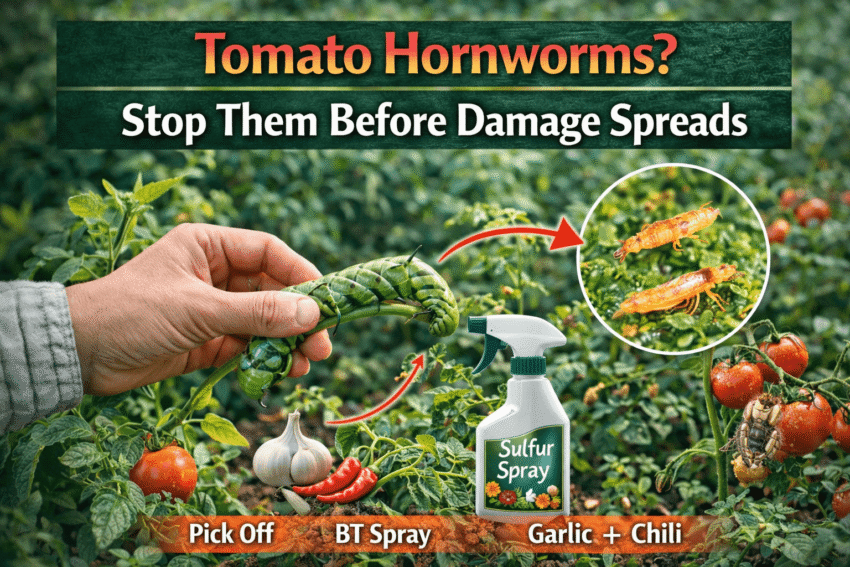
You need to act fast when tomato hornworms invade your garden because these voracious pests can strip entire plants within days. These large green caterpillars blend perfectly with foliage, making early detection challenging but absolutely necessary. This guide shows you proven methods to identify, eliminate, and prevent these destructive insects before they devastate your tomato crop.
Key Takeaways
- Tomato hornworms can strip an entire tomato plant of its leaves within just a few days, so early detection is imperative. Check the undersides of leaves regularly for these large green caterpillars, which blend in perfectly with foliage and can grow up to 4 inches long.
- Handpicking remains the most effective control method for small infestations. Wear gloves and remove the hornworms in early morning or evening when they’re most active. Drop them into soapy water to eliminate them quickly.
- Natural predators like braconid wasps serve as excellent biological control agents. If you spot a hornworm covered with white cocoons on its back, leave it alone-these parasitic wasps are already doing the work for you and will help protect future crops.
Identifying the Culprit: Key Factors and Signs
Your tomato plants show specific telltale signs when hornworms attack. Look for large green caterpillars with distinctive white diagonal stripes, dark droppings on leaves, and rapid defoliation patterns. These pests can strip entire plants within days if left unchecked. Key identification markers include:
- Horn-like protrusion on the rear segment
- Caterpillars measuring up to 4 inches long
- Black or green pellet-shaped frass beneath plants
- Stripped stems with only main veins remaining
Perceiving these warning signs early allows you to implement control measures before extensive damage occurs.
Physical characteristics of Manduca quinquemaculata
Manduca quinquemaculata displays a bright green body with seven white V-shaped markings along each side. The caterpillar’s most distinctive feature is its black horn projecting from the eighth abdominal segment. Your identification becomes easier when noting their smooth texture and pale blue-green coloration. Perceiving their excellent camouflage explains why they often go undetected until significant damage appears.
Recognizing early foliage and fruit damage patterns
Damage typically begins on upper leaves where hornworms feed voraciously on tender growth. You’ll notice irregular holes expanding rapidly into completely defoliated branches within 24-48 hours. Fruit scarring appears as shallow gouges on green tomatoes. Perceiving these early warning signs prevents total crop loss.
Your plants exhibit specific damage progression that helps pinpoint infestation severity. Initial feeding creates small notches along leaf edges that quickly escalate to entire leaves consumed down to the midrib. The caterpillars prefer young, succulent foliage at branch tips before moving to older growth. Frass accumulation on lower leaves and soil surface directly beneath damaged areas serves as your most reliable indicator. You may spot partially eaten fruit with distinctive shallow cavities rather than deep penetration, distinguishing hornworm damage from other pests. The feeding pattern moves systematically from top to bottom as caterpillars grow larger and require more nutrition.
Environmental Factors Favoring Infestation
Warm temperatures between 70-90°F create ideal conditions for hornworm development and reproduction. Your garden becomes particularly vulnerable during humid summer months when adult sphinx moths actively lay eggs on tomato plants. Dense foliage and poor air circulation provide perfect hiding spots for larvae. Perceiving these environmental triggers helps you anticipate and prevent severe infestations.
Soil conditions and overwintering pupae locations
Loose, well-draining soil allows hornworm pupae to burrow 3-4 inches deep for winter survival. Your garden beds with sandy or loamy compositions become prime overwintering sites. Pupae remain dormant until spring warmth triggers emergence. Perceiving these underground threats requires fall soil inspection and treatment.
Host plant proximity and garden layout vulnerabilities
Concentrated tomato plantings attract sphinx moths and enable rapid larval spread between plants. Your garden layout with closely spaced nightshade family members creates a hornworm buffet. Perceiving layout weaknesses allows strategic plant spacing adjustments.
Garden designs that cluster tomatoes, peppers, eggplants, and potatoes together magnify your infestation risk exponentially. Monoculture arrangements eliminate natural barriers that would otherwise slow hornworm migration. Your plants positioned near wild nightshade or tobacco weeds face increased moth activity, as these serve as alternative host plants that maintain breeding populations. Inadequate spacing between tomato rows prevents thorough inspection and creates shaded microenvironments where hornworms thrive undetected. Consider implementing companion planting strategies with marigolds, basil, or borage to disrupt moth attraction patterns and create natural deterrent zones throughout your garden beds.
How to Monitor Your Garden Effectively
Your tomato plants require consistent observation to catch hornworm infestations early. Check the undersides of leaves where these pests hide during daylight hours. Look for dark green droppings on leaves and soil, which signal hornworm presence above. Examine stems and fruit for feeding damage that appears as irregular holes.
Best practices for daily visual inspections
Start your garden walk in the early morning when hornworms are most active and visible. Focus on middle and lower foliage where mature caterpillars typically feed. You should inspect at least three plants thoroughly rather than scanning your entire garden superficially for better detection rates.
Using ultraviolet light for high-visibility night detection
Hornworms glow bright green under UV light, making nighttime detection remarkably effective. Shine a blacklight flashlight across your tomato plants after sunset. This method reveals hidden caterpillars instantly, even those camouflaged among foliage, allowing you to remove them immediately.
Blacklight detection works because hornworm bodies contain fluorescent proteins that react to ultraviolet wavelengths. You can purchase inexpensive UV flashlights at hardware stores or online retailers for under twenty dollars. Sweep the beam slowly across each plant section, paying attention to stems and leaf clusters. The caterpillars appear as glowing specimens against dark foliage, creating an unmistakable contrast. This technique proves especially useful for large gardens where daytime inspections become time-consuming. Many experienced gardeners prefer UV detection because it eliminates guesswork and reveals the true extent of infestations that might otherwise go unnoticed until significant damage occurs.
Immediate Eradication Tips
Act fast when you spot these destructive pests on your tomato plants. Your best defense includes multiple approaches:
- Daily inspection of plants during peak season
- Manual removal of visible hornworms
- Organic sprays targeting young larvae
- Natural predators like parasitic wasps
Assume that hornworms are already present if you notice defoliation patterns on your plants.
Safe handpicking and sanitary disposal techniques
Wear gloves when removing hornworms by hand, as their size makes them easy to spot and grasp. Drop collected pests into soapy water to ensure they die quickly, then dispose of the solution away from your garden. Never compost hornworms since they may survive and return to damage plants. Assume that checking plants early morning yields the best results.
Applying organic Bacillus thuringiensis treatments
Bacillus thuringiensis works as a biological pesticide that specifically targets caterpillars without harming beneficial insects. Spray Bt solutions on foliage where hornworms feed, focusing on leaf undersides and stems. Applications work best on young larvae before they grow large. Assume that reapplication after rain ensures continued protection.
Your Bt treatment schedule should begin at the first sign of hornworm activity or egg deposits on leaves. This naturally occurring soil bacterium produces proteins that paralyze the digestive system of caterpillars, causing them to stop feeding within hours and die within days. Organic certification makes Bt safe for use on edible crops right up until harvest, and it breaks down quickly in sunlight, requiring applications every 5-7 days during active infestations. Mix the product according to label directions and apply during early morning or evening hours when temperatures are cooler and beneficial pollinators are less active. The treatment remains most effective when you spray thoroughly, ensuring complete coverage of all plant surfaces where hornworms might feed.
Utilizing Natural Biological Controls
Nature provides powerful allies in your fight against tomato hornworms. Biological controls work silently in your garden, eliminating pests without chemicals or constant intervention. Your role becomes creating an environment where these natural predators thrive and multiply. The most effective strategy combines multiple beneficial species that target hornworms at different life stages.
Attracting and supporting parasitic braconid wasps
Braconid wasps are your garden’s most effective hornworm assassins. These tiny beneficial insects lay eggs inside hornworm bodies, and their larvae consume the pest from within. Plant nectar-rich flowers like dill, fennel, and yarrow near your tomatoes to attract and sustain these natural pest controllers throughout the growing season.
Encouraging beneficial predatory birds and insects
Predatory species provide continuous hornworm population control when you create welcoming habitats. Birds like chickadees, wrens, and mockingbirds actively hunt hornworms, while ground beetles and lacewings target eggs and young larvae. Installing birdhouses, water sources, and diverse plantings establishes a self-sustaining pest management ecosystem.
Ladybugs, praying mantises, and assassin bugs will patrol your tomato plants when you avoid broad-spectrum pesticides that kill beneficial insects alongside pests. Creating permanent habitat features like brush piles, native perennial borders, and small water features gives predators year-round shelter and breeding grounds. Your garden becomes more balanced each season as predator populations establish themselves. Companion planting with herbs and flowers provides the nectar and pollen that many beneficial insects need during their adult stages. This multi-species approach means you’ll have multiple layers of defense working simultaneously, catching hornworms that one predator type might miss.
Long-Term Prevention and Cultural Practices
Breaking the hornworm life cycle requires consistent year-round strategies that target every stage of development. Your garden’s soil harbors overwintering pupae that will emerge as adult sphinx moths in spring, ready to lay hundreds of eggs on your tomato plants. Implementing proper cultural practices now prevents exponential population growth in future seasons and reduces your reliance on reactive control methods.
Post-harvest tilling to disrupt the life cycle
Tilling your garden beds immediately after harvest exposes buried pupae to freezing temperatures, predators, and desiccation. You should work the soil to a depth of 4-6 inches in late fall, physically destroying the protective cocoons where hornworms overwinter and preventing next season’s moth emergence.
Implementing strategic crop rotation and companion planting
Rotating your tomato family crops to different garden locations annually confuses emerging moths and disrupts their reproductive patterns. Planting basil, marigolds, and borage alongside tomatoes creates natural pest deterrents while attracting beneficial parasitic wasps that prey on hornworm eggs.
Strategic companion planting works because certain aromatic herbs mask the chemical signals that sphinx moths use to locate host plants. Your basil plants release volatile oils containing eugenol and linalool that interfere with moth olfactory receptors, making it difficult for females to identify suitable egg-laying sites. Marigolds produce thiophenes that repel many garden pests while their bright flowers attract predatory insects like lacewings and ladybugs. Borage serves double duty by drawing parasitic braconid wasps that lay eggs inside hornworm larvae, and its blue star-shaped flowers support pollinator populations. Plant these companions in alternating rows or clusters throughout your tomato beds rather than isolating them to perimeter areas. This interplanting method creates multiple scent barriers and maximizes beneficial insect activity across your entire growing space.
Conclusion
Tomato hornworms can devastate your garden within days if left unchecked. You must inspect your plants regularly, looking for telltale signs like stripped leaves and dark droppings. Hand-picking remains the most effective control method, though beneficial insects and organic sprays provide excellent backup options. Act quickly when you spot these pests to protect your harvest and maintain healthy tomato plants throughout the growing season.
FAQ
Q: How can I identify tomato hornworms on my plants before they cause serious damage?
A: Tomato hornworms are large green caterpillars that can grow up to 4 inches long with white V-shaped markings along their sides and a distinctive horn-like projection on their rear end. You’ll often spot the damage before seeing the worms themselves-look for missing leaves, stripped stems, and dark green or black droppings on the foliage below. The caterpillars blend perfectly with tomato plant leaves, making them difficult to detect. Check your plants in early morning or evening when they’re most active. Inspect the undersides of leaves and along the main stems where they tend to feed. The worms can strip a plant of its foliage in just a few days if left unchecked, so daily inspection during peak summer months is your best defense.
Q: What’s the most effective method to get rid of tomato hornworms organically?
A: Hand-picking remains the most effective organic control method for tomato hornworms. Wear gloves and drop the caterpillars into a bucket of soapy water to eliminate them quickly. Bacillus thuringiensis (Bt) is an organic bacterial spray that targets caterpillars specifically without harming beneficial insects-apply it in the evening when hornworms are actively feeding. You can attract natural predators like braconid wasps, which lay eggs inside the hornworms; if you see white cocoons on a hornworm’s back, leave it alone because the wasps are doing your work for you. Companion planting with marigolds, borage, or dill can help repel adult sphinx moths before they lay eggs. Tilling your garden soil in fall destroys pupae overwintering in the ground, breaking the lifecycle before next season begins.
Q: When is the best time to start monitoring for tomato hornworms?
A: Begin monitoring your tomato plants in late spring when nighttime temperatures consistently stay above 60°F, as this is when adult sphinx moths emerge and start laying eggs. The eggs hatch within a week, and the tiny caterpillars start feeding immediately. Peak hornworm activity occurs during mid to late summer, typically from June through August in most regions. Check your plants every 2-3 days during this period since the caterpillars grow rapidly and can defoliate plants quickly. Pay special attention after spotting large gray or brown moths hovering near your garden at dusk-these are the adult sphinx moths laying eggs. Early detection makes control much easier, as young hornworms cause less damage and are simpler to manage than fully grown caterpillars.