
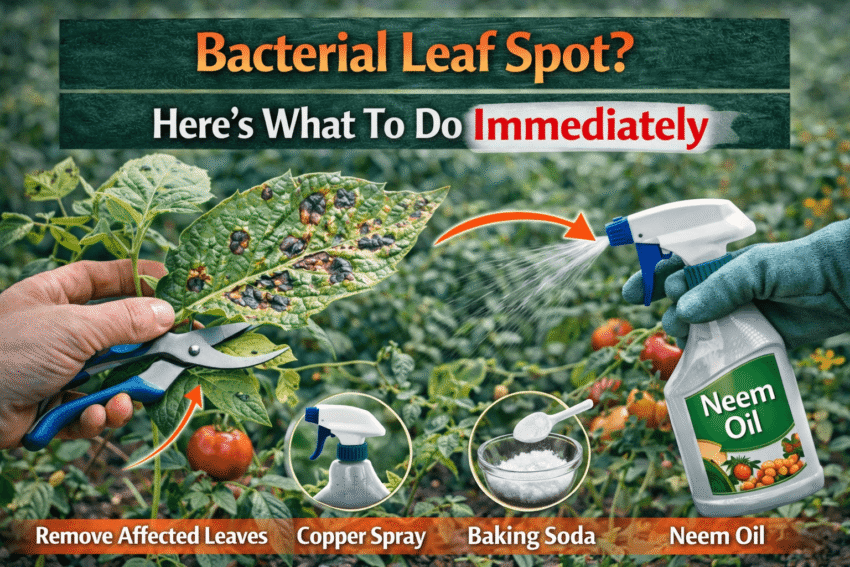
This bacterial infection can destroy your entire plant collection within days if you don’t act fast. You’ll notice dark, water-soaked spots with yellow halos appearing on leaves, signaling an aggressive pathogen at work. Isolate infected plants immediately to prevent spread through water splashes and contaminated tools. Your quick response determines whether you’ll save your garden or watch it deteriorate completely.
Key Takeaways
- Remove infected leaves immediately and dispose of them away from your garden to prevent the bacteria from spreading to healthy plants. Sterilize your pruning tools with rubbing alcohol between cuts to avoid cross-contamination.
- Apply copper-based fungicides or bactericides as soon as you spot the characteristic dark, water-soaked lesions on leaves. Spray early in the morning so foliage can dry quickly, and repeat applications every 7-10 days according to product instructions.
- Improve air circulation around affected plants by spacing them properly and avoiding overhead watering. Water at the base of plants in the morning instead, since bacterial leaf spot thrives in wet, humid conditions with poor airflow.
Identifying Symptoms and Early Warning Signs
Your plants will show distinct warning signs within 24-48 hours of bacterial infection. Small, dark spots appear on leaves, starting as tiny pinpricks before expanding into larger lesions. Leaf undersides reveal the earliest symptoms, so check them regularly during your morning inspections. Stems and fruit can also develop these characteristic spots as the disease progresses.
Recognizing water-soaked lesions and yellow halos
Water-soaked lesions appear translucent and greasy when you hold affected leaves up to light. Yellow halos surrounding dark spots are the telltale signature of bacterial leaf spot. These halos expand outward as the infection spreads, eventually causing leaf tissue to die and drop off.
Distinguishing bacterial spots from fungal infections
Bacterial spots feature angular shapes that follow leaf veins, while fungal spots typically appear circular. Hold a suspect leaf to the light-bacterial lesions look water-soaked and oily, whereas fungal infections appear powdery or fuzzy with visible spores.
Texture differences become your most reliable diagnostic tool when examining infected foliage. Bacterial infections create smooth, wet-looking lesions that feel slightly slimy to the touch, especially during humid morning hours. Fungal problems produce raised, textured growths with visible mycelia or spore structures on the leaf surface. Bacterial spots spread rapidly in warm, wet conditions and often emit a foul odor when you crush affected tissue between your fingers. The infection pattern also differs significantly-bacterial leaf spot jumps from plant to plant through water splash, creating random distribution patterns across your garden, while fungal diseases often start in one area and spread outward in a more predictable pattern. You can perform a simple test by placing an infected leaf in a clear glass of water; bacterial ooze will stream from the lesions within minutes, appearing as cloudy threads in the water.
Environmental Factors Contributing to Outbreaks
Your garden’s environmental conditions play a major role in bacterial leaf spot development. High humidity levels above 85%, poor air circulation, and overhead watering practices create perfect breeding grounds for bacterial pathogens. Temperature fluctuations between 75-85°F accelerate disease spread, while crowded plant spacing traps moisture around leaves. Any combination of these factors significantly increases infection risk in your plants.
Impact of High Humidity and Overhead Watering
Moisture on leaf surfaces acts as a highway for bacterial movement and infection. Overhead watering keeps foliage wet for extended periods, allowing pathogens to enter through natural openings and wounds. Humidity above 90% for just 6-8 hours provides sufficient time for bacteria to multiply and penetrate plant tissue. Any watering method that wets leaves should be avoided during outbreak management.
Role of Temperature in Pathogen Replication
Temperature directly controls how quickly bacteria multiply on your plants. Warm conditions between 75-85°F allow bacterial populations to double every 20-30 minutes, leading to rapid disease progression. Cooler temperatures below 60°F slow pathogen activity but don’t eliminate the threat. Any temperature stress weakens plant defenses against infection.
| Temperature Range | Bacterial Activity Level |
| Below 60°F | Slow replication, minimal spread |
| 60-75°F | Moderate growth, steady infection |
| 75-85°F | Optimal replication, rapid outbreak |
| Above 90°F | Reduced activity, plant stress increases |
Bacterial pathogens thrive within specific temperature windows that maximize their reproductive capacity. Your plants face the greatest risk during warm, humid periods when conditions favor exponential bacterial growth. Nighttime temperatures that remain above 70°F prevent the natural slowdown in pathogen activity, allowing continuous infection cycles. Monitoring your local weather patterns helps you anticipate high-risk periods and take preventive action before outbreaks escalate.
How to Guide Immediate Containment Procedures
Quick action stops bacterial leaf spot from spreading throughout your garden. Remove all infected plant material immediately and isolate affected plants from healthy ones. You must work during dry conditions to minimize bacteria transfer through water droplets. Create a minimum three-foot buffer zone around infected plants to reduce contamination risk.
Pruning and disposing of infected foliage
Cut away all leaves showing brown spots, yellowing, or water-soaked lesions using sharp, clean pruning shears. Bag infected material in sealed plastic bags and dispose of them in household trash-never compost diseased foliage. Prune at least two inches below visible symptoms to ensure complete removal of infected tissue.
Sterilizing tools to prevent cross-contamination
Disinfect your pruning tools between each cut to prevent spreading bacteria to healthy plants. Dip blades in a solution of one-part bleach to nine-parts water for thirty seconds. Alternatively, use 70% isopropyl alcohol or commercial disinfectant sprays designed for garden tools.
Your sterilization routine must become automatic when dealing with bacterial diseases. Bacteria survive on tool surfaces for hours and transfer easily to the next plant you touch. Keep a bucket of disinfectant solution near your work area for convenient access. Wipe tools dry after sterilizing to prevent rust, and consider having multiple pairs of pruners so one set can soak while you use another. Clean your gloves, hands, and any other equipment that contacted infected plants before moving to different garden areas.
Essential Tips for Chemical and Organic Control
Combining chemical and organic treatments provides the most effective defense against bacterial leaf spot. You should apply treatments during early morning hours when leaf surfaces are dry to maximize absorption. Rotate between different control methods to prevent bacterial resistance from developing in your plants. Perceiving the first signs of infection allows you to act quickly and save your garden.
Applying copper-based sprays effectively
Copper-based fungicides work by disrupting bacterial cell membranes and preventing disease spread. Apply these sprays every 7-10 days during wet conditions when bacterial infections spread most rapidly. Your plants need thorough coverage on both leaf surfaces for maximum protection. Perceiving proper application timing makes the difference between success and failure.
Utilizing bio-fungicides for sustainable management
Bacillus subtilis and Bacillus amyloliquefaciens offer eco-friendly alternatives to chemical treatments. These beneficial bacteria colonize leaf surfaces and outcompete pathogenic organisms naturally. You can safely use bio-fungicides throughout the growing season without harming beneficial insects. Perceiving their preventative nature helps you understand they work best before infection occurs.
Bio-fungicides represent a long-term sustainable approach to managing bacterial leaf spot in your garden. These products contain living microorganisms that establish themselves on plant tissues and create a protective biological barrier against disease-causing bacteria. You’ll find they work exceptionally well when combined with proper cultural practices like adequate spacing and drip irrigation. The beneficial bacteria in these products produce natural antibiotics and enzymes that suppress pathogen growth while remaining completely safe for humans, pets, and pollinators. Your success with bio-fungicides depends on consistent application intervals and maintaining optimal environmental conditions for the beneficial organisms to thrive.
Cultural Modifications to Stop Disease Spread
Changing your garden management practices can significantly reduce bacterial leaf spot transmission. You’ll need to adjust watering schedules, plant spacing, and handling techniques to create an environment where the disease struggles to survive. These modifications work alongside other treatments to prevent reinfection and protect healthy plants from contamination.
Improving airflow through strategic plant spacing
Proper spacing between your plants allows air to circulate freely, which keeps foliage dry and prevents bacterial growth. You should space plants according to their mature size, not their current dimensions. Overcrowded gardens create humid microclimates where bacterial leaf spot thrives and spreads rapidly between touching leaves.
Implementing drip irrigation techniques
Switching to drip irrigation keeps water off plant leaves, eliminating the moisture bacteria need to spread. You’ll deliver water directly to the soil rather than spraying foliage. This method prevents splash-back that carries bacteria from soil to leaves.
Drip irrigation systems consist of tubes with small emitters that release water slowly at the plant base. You can install these systems on timers to water during early morning hours when any incidental moisture will evaporate quickly. The targeted watering approach also reduces overall humidity in your garden while ensuring roots receive adequate moisture. Avoid overhead sprinklers and hand-watering methods that wet the foliage, as water droplets serve as transportation vehicles for bacterial pathogens. Your investment in drip irrigation pays off through reduced disease pressure and lower water consumption compared to traditional watering methods.
Strategies for Future Resistance
Prevention becomes your strongest weapon once you’ve dealt with an active bacterial leaf spot infection. You can reduce future outbreaks by up to 80% through proper planning and cultivar selection. Your garden’s long-term health depends on implementing these protective measures now, before the next growing season begins.
Selecting disease-resistant cultivars
Choosing plant varieties bred for natural resistance to bacterial pathogens gives you a significant advantage. Look for seed packets and plant labels marked “resistant” or “tolerant” to bacterial leaf spot. These cultivars have genetic traits that help them withstand infection while maintaining healthy growth and productivity.
Maintaining optimal soil nutrition levels
Balanced soil nutrition strengthens your plants’ natural defense systems against bacterial invasion. Test your soil annually and adjust pH levels between 6.0-6.8 for most vegetables. Proper fertilization creates healthier plant tissues that resist pathogen penetration more effectively than nutrient-deficient specimens.
Your soil’s nutrient profile directly impacts how well plants can fight off bacterial infections. Nitrogen, phosphorus, and potassium must exist in proper ratios-excessive nitrogen creates soft, succulent growth that bacteria easily penetrate. Calcium deficiency weakens cell walls, making leaves more susceptible to pathogen entry. Apply compost or well-aged manure to improve soil structure and microbial diversity, which naturally suppresses harmful bacteria. Micronutrients like zinc and manganese activate plant enzymes that produce antimicrobial compounds. Regular soil testing every 12-18 months allows you to make precise amendments rather than guessing at your garden’s needs.
Final Words
Considering all points, you must act fast when bacterial leaf spot appears on your plants. Remove infected leaves immediately, improve air circulation, and apply copper-based fungicides to prevent spread. You should avoid overhead watering and disinfect your tools between cuts. Success depends on your quick response and consistent treatment. Monitor your plants regularly to catch future outbreaks early and protect your garden from recurring infections.
FAQ
Q: How can I tell if my plant has bacterial leaf spot versus a fungal disease?
A: Bacterial leaf spot creates water-soaked lesions that appear greasy or oily, especially on the undersides of leaves. The spots typically have a yellow halo surrounding dark brown or black centers. Fungal spots tend to be drier with concentric rings and powdery or fuzzy growth. You can perform a simple test by holding an affected leaf up to light – bacterial spots often appear more translucent. The disease spreads rapidly during warm, wet conditions and affects multiple leaves simultaneously. Bacterial infections also produce a distinctive slimy substance when you crush infected tissue between your fingers.
Q: What immediate steps should I take when I discover bacterial leaf spot on my plants?
A: Remove all infected leaves immediately using sterilized pruning shears, cutting at least one inch below visible symptoms. Bag the diseased material in plastic and dispose of it in the trash – never compost infected plant parts. Isolate affected plants from healthy ones to prevent transmission through water splash or contact. Stop overhead watering and switch to drip irrigation or watering at soil level only. Apply a copper-based bactericide to remaining foliage within 24 hours of removing infected parts, following label instructions carefully. Sterilize all tools with a 10% bleach solution between cuts and after finishing the job. Reduce humidity around plants by improving air circulation through proper spacing.
Q: Can plants recover from bacterial leaf spot, and how do I prevent it from returning?
A: Plants can recover if you catch the infection early and remove diseased tissue promptly, though severely affected plants may need replacement. The bacteria survive in plant debris, soil, and on seeds for extended periods. Space plants according to recommended guidelines to ensure adequate airflow between them. Water only in the morning so foliage dries quickly, and avoid wetting leaves entirely. Sanitize garden tools regularly and wash hands between handling different plants. Choose disease-resistant varieties when replacing plants or starting new gardens. Rotate crops annually if growing vegetables susceptible to bacterial spot. Apply preventive copper sprays during humid weather or after heavy rainfall when plants are most vulnerable to infection.