
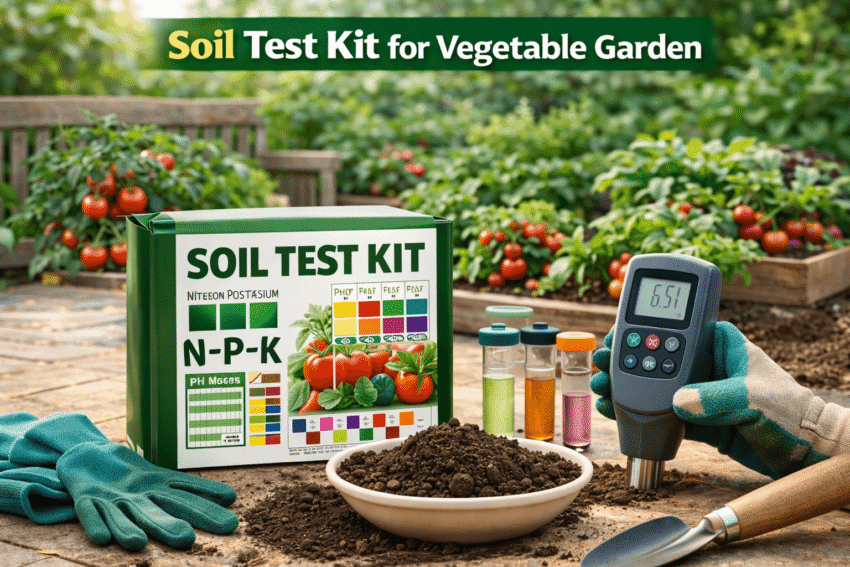
Most gardeners guess soil needs, but you must test to prevent pH extremes and nutrient imbalances that harm plants; use reliable kits to get clear, actionable results and improve yields.
Key Takeaways
- Accuracy and scope differ: mail-in lab kits deliver the most comprehensive pH, NPK, organic matter, and micronutrient analyses; DIY strips and meters offer faster, more limited pH and nutrient estimates.
- Ease of use and turnaround vary: handheld meters and test strips provide instant results for quick decisions; lab kits include detailed reports and fertilizer recommendations but require days to weeks for results.
- Match kit type to goals and budget: choose lab testing for vegetable gardens, soil remediation, or persistent issues; choose basic kits for routine lawn or container checks and lower-cost, frequent testing.
Key Factors to Consider When Choosing a Soil Test Kit
Consider practical needs like sample size, turnaround time, and which metrics the kit measures so you can act on results. Thou should favor kits with lab certification and broad NPK plus pH coverage.
- Accuracy
- Lab-certified
- NPK & pH
- Micronutrients
Accuracy and Laboratory Certification Standards
Lab-certified services give you verifiable numbers and reduce the chance of misleading recommendations, so you can apply amendments safely.
Comprehensive Nutrient Coverage vs. Basic pH Testing
Coverage differences mean you may miss a deficiency: basic pH strips inform acidity, but full panels reveal N, P, K and micronutrient gaps you need to fix.
Detailed full-panel testing detects limiting elements and dangerous buildups; you should weigh cost against insight because micronutrients like Fe, Zn, and Mg influence yields, and heavy metal contamination creates safety risks, whereas pH-only tests can overlook salinity and specific nutrient imbalances, so choose based on crop needs and site history.
How to Collect a Soil Sample for Maximum Accuracy
You should sample multiple representative spots, avoid borders and recently amended areas, and combine subsamples to produce an accurate composite that minimizes the risk of contamination skewing lab results.
Selecting the Proper Sampling Tools and Depth
Use a clean probe or trowel and sample the active root zone—typically 6-8 inches for vegetables and 2-4 inches for lawns; sterilize tools between sites to prevent cross-contamination and label each sample clearly.
Creating a Composite Sample from Multiple Locations
Collect 10-15 evenly spaced subsamples across the test area, skip anomalous spots, and mix them in a clean bucket so the lab receives a well-mixed composite reflecting overall soil health.
Ensure you use a consistent scoop size at each location, break apart clods, remove roots and debris, and combine equal-volume portions; map points, label the container, and keep the composite cool and dry to avoid sample degradation before shipping.
Top-Rated Professional Laboratory Kits Reviewed
Professional lab kits deliver in-depth reports you can use to optimize soil fertility and safety, covering pH, macronutrients, micronutrients, and heavy metals with laboratory-grade accuracy and clear recommendations.
Best Overall for Detailed Nutrient Analysis
Opting for the best overall detailed nutrient analysis gives you precise N-P-K and trace mineral levels plus lab interpretation, so you can tailor amendments; look for ICP or ion chromatography testing for highest accuracy.
Most Reliable Mail-In Services for Home Gardeners
Many reliable mail-in services simplify sampling for you, provide prepaid kits, fast turnaround, and professional recommendations, making it easy to detect problems; expect clear reports and actionable guidance.
When using mail-in labs, ensure you follow sampling instructions exactly, note turnaround times and costs, and check that the lab tests for heavy metals and micronutrients; this protects your garden and clarifies safety issues.
Expert Tips for Interpreting Your Soil Test Report
Use your report to match amendments to deficiencies, weigh pH against nutrient levels, and flag any heavy metals. Perceiving patterns across samples helps you prioritize fixes quickly.
- pH – target range
- N-P-K—macronutrients
- CEC & texture—retention and structure
Understanding Macronutrient and Micronutrient Levels
Interpret the numbers to see if N, P, and K match your crop’s needs, and watch micronutrients like zinc or iron for deficiency or toxicity signals.
Identifying Soil Texture and Cation Exchange Capacity
Assess your soil’s texture class and CEC to judge water and nutrient retention; low CEC means you will need to apply nutrients more frequently to avoid losses.
Texture determines water flow: sandy soils drain fast and lose nutrients, clay holds water and can cause root oxygen stress, while loam balances retention and aeration. CEC measures charge sites-values under 5 cmolc/kg indicate low CEC and frequent feeding, 5-15 is moderate, above 15 supports more stable nutrient reserves; you can use jar tests and CEC readings to tailor amendment timing and types.
How to Amend Your Soil Based on Test Results
You should follow test priorities: correct pH, balance macronutrients, then adjust organic matter; apply amendments in measured doses and avoid overapplication to prevent plant damage and nutrient runoff.
Adjusting pH Levels Using Lime or Elemental Sulfur
When your soil test shows pH off-target, you can raise pH with lime or lower it with elemental sulfur; overliming can harm roots, so follow recommended rates and retest after a few months.
Calculating Fertilizer Requirements for Optimal Growth
Calculate fertilizer needs using your test’s N-P-K deficits and your crop’s target yield; you should apply only recommended amounts and account for existing soil reserves to avoid runoff and nutrient burn.
Apply calculation steps: you convert test ppm to pounds per acre, subtract soil-supplied nutrients, then select fertilizer grade to match remaining N-P-K; overapplication wastes money and pollutes waterways, so verify math and retest midseason.
Conclusion
As a reminder, you should choose a soil test kit that matches your crop, budget, and accuracy needs; simple pH strips suit casual gardeners, while lab-style kits give detailed nutrient analysis so you can adjust fertilization and soil amendments confidently.
FAQ
Q: What should I look for when choosing the best soil test kit?
A: Choose a kit based on the tests you need: pH-only kits for basic acidity checks, N-P-K kits for macronutrient ranges, micronutrient kits for trace elements, and lab-style mail-in kits for full analyses (including organic matter and cation exchange capacity). Check accuracy and method: colorimetric strips and liquid reagents give quick, categorical results; digital meters provide faster, often more repeatable pH and moisture readings but need calibration. Look for clear instructions, a reliable color chart or app reference, included sampling tools, and customer support or lab verification. Consider cost and turnaround time: handheld kits cost under $30, multi-parameter kits $30-$80, and professional lab tests $25-$100+, depending on the depth of analysis. Match kit features to your garden type: lawns and houseplants have different depth and nutrient priorities than vegetable beds or fruit trees.
Q: How accurate are at-home soil test kits compared to professional lab tests?
A: Home kits provide useful directional guidance but vary in precision. pH measurements from handheld meters and quality reagent kits are generally within 0.2-0.5 pH units of lab results when properly calibrated and sampled. N-P-K color tests typically indicate low/medium/high ranges rather than exact concentrations, so they guide fertilization but can miss subtle deficiencies. Micronutrient results from DIY kits are the least reliable; labs use instruments such as ICP or atomic absorption for accurate trace element quantification. Labs also measure organic matter and CEC and provide tailored recommendations. Choose lab testing when starting a new planting area, diagnosing persistent crop failure, or where soil amendment mistakes could be costly.
Q: What is the correct way to collect soil samples and interpret the results?
A: Use a clean trowel or soil probe and collect 10-15 subsamples from a uniform area, avoiding spots near compost piles, fence lines, or recent fertilizer bands. Sample at the rooting depth relevant to the crop: about 2-4 inches for lawns, 6-8 inches for annual vegetables, and 8-12 inches for shrubs and trees. Combine subsamples in a clean bucket, mix thoroughly, air-dry a portion if required by the kit or lab, then follow the kit’s directions for preparation and testing or submission. Interpret pH results against crop targets: most vegetables prefer pH 6.0-7.0, acid-loving plants like blueberries prefer around 4.5-5.5. For nutrient categories, treat low N as a signal to add compost or a nitrogen source, low P with bone meal or rock phosphate where appropriate, and low K with potash or wood ash depending on crop needs. Avoid adding more of a nutrient labeled as high. Re-test annually for new beds and every 2-3 years for established areas, or after major amendments to verify changes.